Do you find your home service business struggling to stand out in an increasingly crowded marketplace? You're not alone. With the U.S. home services market projected to reach $1.42 trillion by 2030 and growing at a CAGR of 10.23%, competition for customer attention has never been fiercer. This growth forecast has been verified by recent market research from Mordor Intelligence.
But there's a secret weapon that can make your plumbing, HVAC, roofing, or cleaning business irresistible: a compelling value proposition.
In this comprehensive guide, we'll walk you through creating value propositions that not only engage your audience but also convert prospects into loyal customers. You'll learn how to highlight your business's distinct advantages with a special focus on building trust and pricing transparency – two elements that matter most to today's home service customers.

Written By: Chad J. Treadway | September 29, 2025
Chad is a Partner and our Chief Smarketing Officer. He will help you survey your small business needs, educating you on your options before suggesting any solution. Chad is passionate about rural marketing in the United States and North Carolina. He also has several certifications through HubSpot to better assist you with your internet and inbound marketing.
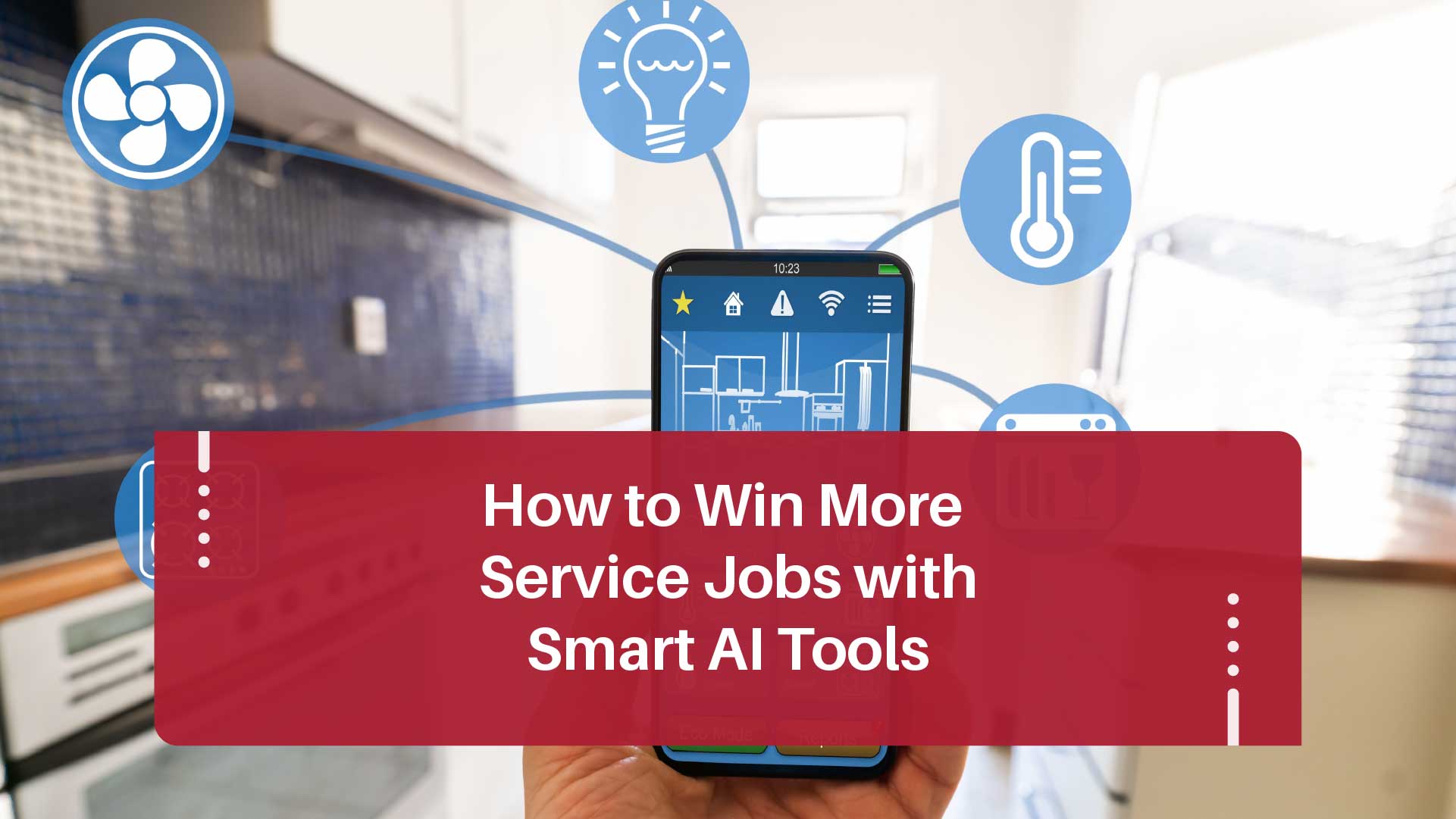
If you're drowning in paperwork, juggling technician schedules on a whiteboard, and losing jobs to competitors who show up faster, you're not alone. The typical home service business owner spends 17+ hours weekly on administrative tasks that could be automated. Meanwhile, your most experienced technicians waste hours driving between jobs that could have been routed more efficiently, and customers are increasingly choosing competitors who offer real-time updates and precise appointment windows.
Welcome to 2025, where artificial intelligence isn't just for tech giants; it's revolutionizing how plumbers fix leaks, handymen hang shelves, and cleaners tackle that mysterious stain in the corner of your client's basement.
"The global field service management market is projected to reach $11.61 billion by 2032, growing at a compound annual growth rate (CAGR) of 12.7% during the forecast period (2025-2032)." (Source: SkyQuest)
Mordor Intelligence reports, "The field service management market size is expected to reach $5.52 billion in 2025 and grow at a CAGR of 11.70% to reach $9.60 billion by 2030."
Here's your comprehensive guide to understanding and implementing AI in your home service business, no computer science degree required.

Written By: Adam Bennett | September 26, 2025
Adam is the president and founder of Cube Creative Design and specializes in private school marketing. Since starting the business in 2005, he has created individual relationships with clients in Western North Carolina and across the United States. He places great value on the needs, expectations, and goals of the client.

Did you know that according to the National University, "77% of companies are either using or exploring the use of AI" in their businesses, and this trend is rapidly extending to home service companies? In fact, studies suggest AI adoption in home service businesses could boost productivity by up to 40% in 2025. As someone who's worked with dozens of home service businesses on their tech strategies, I've seen firsthand how the right AI tools can completely transform operations.
Verified Market Research stated, "The home service industry, covering everything from plumbing and HVAC to landscaping and cleaning, faces unique challenges that AI is particularly well-suited to address. With the U.S. home services market valued at $211.71 billion in 2023 and projected to reach $893.18 billion by 2031, businesses that embrace AI will have a significant competitive advantage."
But here's the thing: many home service business owners aren't sure where to start with AI or how it applies to their daily operations. If you're wondering how AI fits into a world of physical tools and hands-on work, you're not alone. Let's break down how this technology is changing the game for home service professionals and why it matters for your business in 2025.
Written By: Chad J. Treadway | September 24, 2025
Chad is a Partner and our Chief Smarketing Officer. He will help you survey your small business needs, educating you on your options before suggesting any solution. Chad is passionate about rural marketing in the United States and North Carolina. He also has several certifications through HubSpot to better assist you with your internet and inbound marketing.
Let's be honest; most homeowners don't think about you until something breaks. Their basement is flooding at 2 AM, their AC dies during a heatwave, or that weird smell in the kitchen finally becomes unbearable. By then, they're frantically searching for anyone who can help them right now.
How do you make sure your home service business is the one they call first? The secret lies not in flashy ads or discount coupons, but in understanding what makes your customers tick.
The human mind is predictable in its unpredictability. While psychologists have spent decades mapping its quirks and tendencies, smart home service business owners can leverage these same insights to connect with customers before emergencies strike.
From plumbing to roofing, HVAC to general contracting, these four psychological principles will give you the edge your business needs in a crowded marketplace. No manipulative tactics or sleazy sales pitches required; just smart marketing that speaks directly to how homeowners actually make decisions.
Written By: Adam Bennett | September 23, 2025
Adam is the president and founder of Cube Creative Design and specializes in private school marketing. Since starting the business in 2005, he has created individual relationships with clients in Western North Carolina and across the United States. He places great value on the needs, expectations, and goals of the client.