It is 4:10 p.m. on a Tuesday. A commercial account calls with a rooftop unit down, your dispatcher scans the whiteboard, and the only technician with the right skill set is 40 minutes out with a full afternoon already booked. Somebody gets bumped. Nobody calls the homeowner who got bumped.
That moment is where field service management stops being a software category and becomes the thing that decides whether a home service company can add trucks without adding chaos. We market for local home services businesses every day, and the same story turns up in HVAC, plumbing, roofing, electrical, and lawn care. The schedule holds fine at three trucks. At 12, it starts costing real money.
This post covers what field service management actually includes, what a badly planned truck roll costs, how dispatch discipline shows up in your reviews, and a four-stage check you can run on your own shop this week.
What Does Field Service Management Cover in a Home Service Business?
Field service management covers the daily operating systems of a home service business: scheduling, dispatch, technician routing, job tracking, and the customer communication attached to every visit. The software is the container. The process you run inside it decides whether the schedule holds when you add the next truck.
Most shops already own the container. The ACCA HVAC Blog reported, "Fifty-six percent of HVACR contractors now have field service management software, but most underutilize it." That finding comes from the 2025 Contractor of the Future Study, a survey of more than 1,000 HVACR contractors run by ACCA with Farmington Consulting Group.
TJ O'Connor, president of Farmington Consulting Group, presenting the findings on the ACCA HVAC Blog, said many contractors treat their system like "a glorified QuickBooks," using it mostly for invoicing instead of the marketing automation, inventory, and proposal tools already sitting in the same login.
That gap is the whole story. A different platform will not fix a dispatch process nobody ever wrote down.
Full use looks like this: capacity planned by week instead of by morning, jobs assigned by skill and geography instead of by whoever answers the radio, arrival windows sent automatically, and job history visible on the truck before the technician knocks. None of that requires a new vendor. It requires somebody owning the process.
What Does It Cost Every Time You Roll a Truck?
About $84.40 an hour, before you earn a dollar of profit. That number covers wages, benefits, vehicle expenses, insurance, and the windshield time your technician cannot bill to anyone. Any scheduling decision that adds unbilled drive time or a second trip spends that money without producing revenue.
Jim Fultz, with Copeland, laid out that math at ACCA 2025 in a session on the cost of rolling a truck, and stated, "The average cost to roll a truck is hovering around $84.40 per hour. That's before you've made a single dollar of profit."
Fultz pointed at supply house runs as the biggest single drain. A technician who leaves a job site to pick up a part gives up roughly an hour of billable time. Run that arithmetic against the hourly cost, and five parts runs a month lands near $22,000 a year per truck. Fifteen runs a month pushes it past $60,000.
Read that as a dispatch and inventory problem, not a technician problem. Truck stock lists, a parts runner, and a restock routine keep people on site and billing. So does grouping calls by geography instead of booking them in the order the phone rang.
How Does Dispatch Discipline Change What Customers Think of You?
Dispatch discipline changes the two things homeowners complain about most: when you showed up, and whether anyone told them anything. Scheduling and communication problems outrank price as a source of frustration, so the same dispatch decisions that protect your billable hours also protect your review average.
In a survey of 1,000 U.S. homeowners who had hired an HVAC professional in the past year, FIELDBOSS found that roughly 38% named a communication or scheduling problem as their biggest frustration, compared with 21% who named costs higher than expected. Technicians arriving late or outside the window accounted for 13.0% on its own, and difficulty getting an appointment accounted for another 12.6%.
The same FIELDBOSS survey put expectations on a clock. Homeowners expect service within 24 hours when the heat or the air conditioning quits (74%), and nearly 30% want same-day help.
The pressure is not limited to HVAC. Jobber survey results show that more than 70% of home service customers expect a same-day response and more than half expect one within the hour. That report, built on responses from over 1,000 owners across HVAC, plumbing, roofing, cleaning, and lawn care, also ranked workmanship first among satisfaction drivers at 69%, with clear communication second at 32%.
Speed also decides who gets the call in the first place. Research by Moneypenny shows that 83% of U.S. consumers choose whichever business responds first. Censuswide fielded that survey among 500 home services decision-makers and 2,000 consumers in the spring of 2026.
None of those numbers are marketing problems. They are dispatch problems wearing a marketing costume.
Which Numbers Tell You Your Job Tracking Is Working?
Four of them: billable hour percentage, net profit per hour, on-time arrival rate, and callback rate. Revenue tells you how busy the month was. These four tell you whether the schedule actually earned anything. All of them come out of job tracking data most shops already collect and never read.
- Billable hour percentage. Business consultant Ruth King, speaking at ACCA 2025, put the realistic annual ceiling around 91% once you account for holidays, vacations, training, and drive time. If you are well under that, the schedule is leaking.
- Net profit per hour, by technician and by crew. King's point at that same session was blunt: "You cannot take your percentages to the bank." Two jobs at the same margin can pay wildly different hourly returns. Track it per crew, and the patterns show up fast.
- On-time arrival rate. Measure it against the window you promised the customer, not the one you wish you had promised.
- Callback rate. In the FIELDBOSS survey, 7.1% of homeowners said the problem was not fixed right the first time. Every one of those is a second truck roll you paid for twice.
Pick two of the four and report them weekly. A metric nobody reads on a schedule is a metric nobody has.
How Mature Is Your Scheduling and Dispatch Process?
Score your shop against four stages: reactive, recorded, planned, and measured. Most companies in the 5-to-30-employee range sit at stage two, where the work gets logged but nobody plans capacity. The stage you are in predicts whether your next three trucks make money or just make noise.
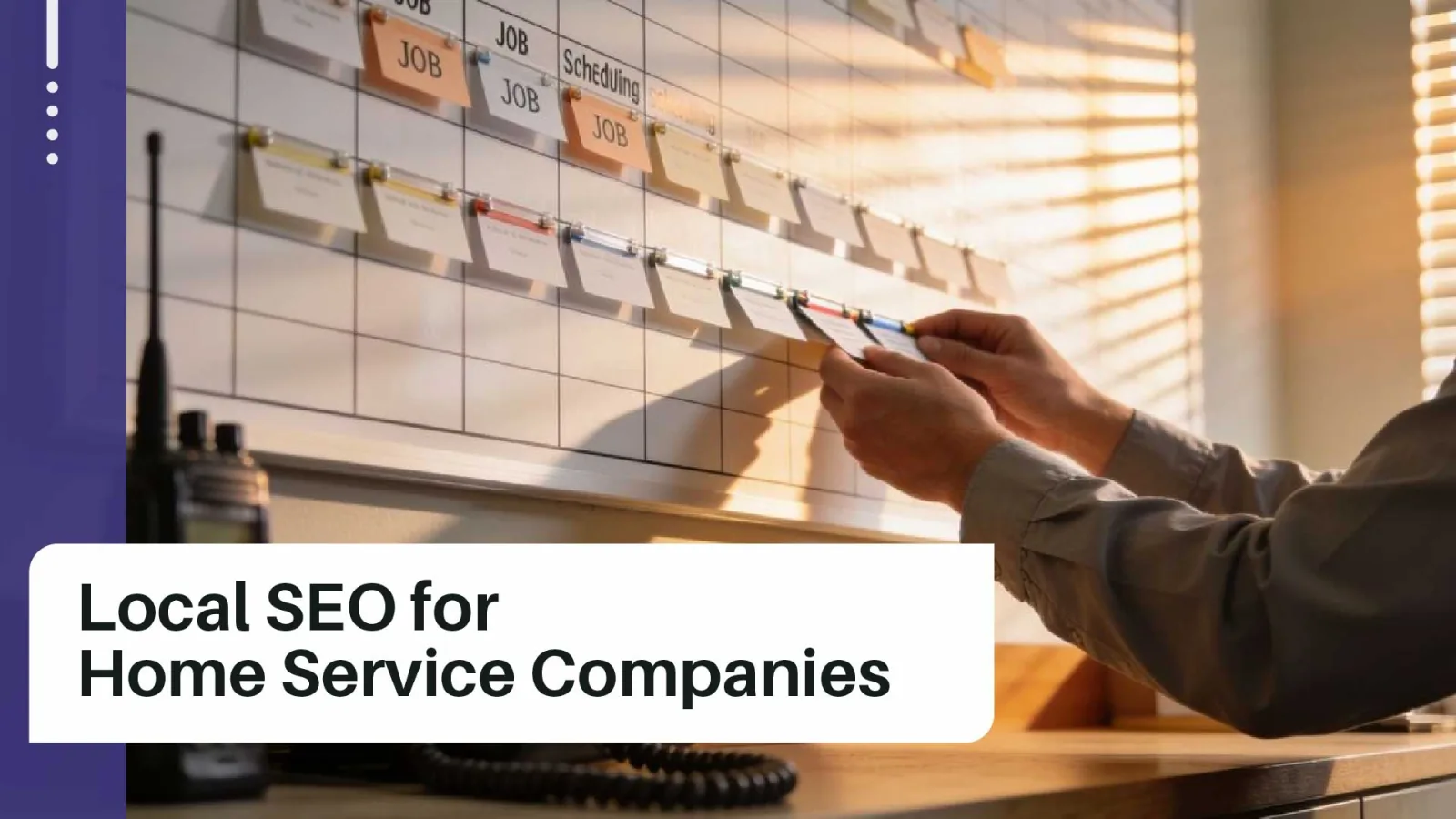
- Stage one, reactive. The schedule lives on a whiteboard, in a text thread, or in one person's head. Dispatch is whoever picks up. When that person takes a vacation, the week gets ugly.
- Stage two, recorded. Jobs land in software, but after the fact. The system knows what happened yesterday and has no opinion about Thursday.
- Stage three, planned. Capacity is set a week out by skill and by service area. Emergency slots are held back on purpose. Customers get an arrival window and a message when the technician is on the way.
- Stage four, measured. Everything in stage three, plus weekly numbers on billable hours, on-time arrivals, and callbacks, with a named person accountable for each.
Here is what moving one stage looks like in practice. Picture a 19-person operation running 12 trucks across three counties, somewhere between $1 million and $2.5 million a year. The platform is already paid for and already handles invoicing. The change is not a purchase. It is a Friday capacity meeting, a written rule for which jobs hold which slots, a truck stock list, and an on-my-way text that fires without anyone remembering to send it.
That shop does not triple its profit in 90 days. It gets two things instead: fewer bumped appointments, and a dispatcher who can answer "can you take this Thursday" without walking over to a whiteboard. Those two things are what make the 13th truck survivable.
What Your Dispatch Board Has to Do With Your Marketing
Marketing sells a promise your dispatch board has to keep. Faster response times, windows you actually hit, and fewer communication complaints are what turn ad spend into five-star reviews and repeat calls. When operations run loose, more leads only means more people who get bumped.
The two investments compound. Evidence from the ACCA HVAC Blog points to contractors who put at least 12% of revenue into marketing and advertising seeing net profits rise from 5% to 9%. Spending more to bring in calls pays off when the shop can answer them, book them, and show up in the window it promised.
We are not a field service software vendor, and I am not going to tell you which platform to buy. What we do handle is the customer-facing half of the same system: a scheduling page that reflects real availability instead of a generic form, review requests timed to job completion while the work is fresh, service area pages that match your actual dispatch zones, and confirmation messaging that stops the "when are you coming" phone calls before they start.
That side only works if the operations side is honest. Send review requests from a shop that misses windows, and you will get exactly the reviews you deserve.
Fix the Process Before You Shop for a Platform
Field service management is not a product you buy once. It is scheduling, dispatch, and job tracking run with enough discipline that adding a truck is a decision instead of a gamble. Most home service companies past five employees already own the tools. What they usually lack is a written process, a weekly capacity review, and two or three numbers somebody actually reads.
Start this week. Score your shop on the four stages above, pick the two metrics you can pull today, and stock the trucks so nobody burns an $84.40 hour driving to the supply house.
If you want a second set of eyes on the customer-facing half of your operation, schedule a conversation. No pitch, just an honest read on where the handoffs are breaking.
Frequently Asked Questions
What Is Field Service Management Software, and Does a Small Home Service Company Need It?
Field service management software handles scheduling, dispatch, technician routing, job tracking, invoicing, and customer messaging in one place. A one-truck or two-truck shop can usually run on a shared calendar. Once you pass roughly five employees or two service areas, the coordination cost of doing it by hand starts to exceed the software cost.
How Do I Know Whether I Have a Software Problem or a Process Problem?
Ask whether anyone could write down your dispatch rules on one page. If the answer is no, it is a process problem, and new software will not solve it. ACCA research demonstrates that 56% of HVACR contractors already own a platform and mostly use it for invoicing, which is the same gap in a different shop.
What Is the Fastest Way to Cut Unbilled Drive Time?
Stock the trucks. Parts runs are the single biggest source of unbilled hours, and at the roughly $84.40 hourly cost of a truck roll documented on the ACCA HVAC Blog, a handful of them a month adds up to real money per truck. Build a stock list from your last 90 days of jobs, then group calls by geography instead of by the order they came in.
How Fast Do Home Service Customers Expect a Response?
Faster than most shops answer. Jobber findings suggest that over 70% of home service customers expect a same-day response and more than half expect one within the hour, and Moneypenny data shows that 83% of consumers choose whichever business gets back to them first. For a no-heat or no-cooling call, FIELDBOSS reported that 74% of homeowners expect service within 24 hours.
Should I Replace My Field Service Management Software or Fix How We Use It?
Fix how you use it first, unless the platform is missing a feature you have specifically identified as a bottleneck. Run the four-stage maturity check, move up one stage using what you already own, and give it a quarter. If you are still blocked after that, you will at least know exactly which feature you are shopping for. Either way, the customer-facing half (your scheduling page, arrival messaging, and review timing) is separate work, and it is the piece we handle for home services companies.