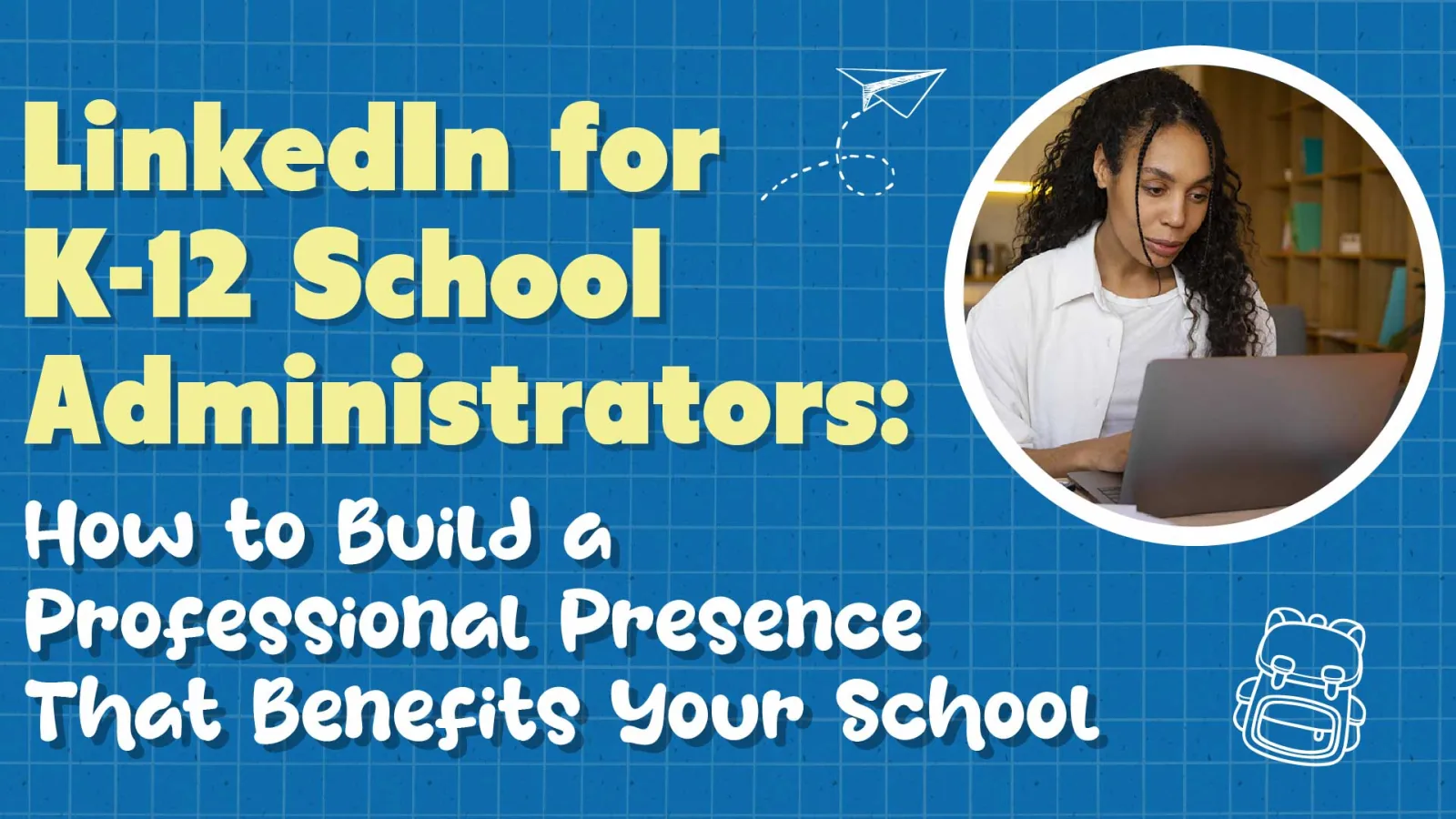
LinkedIn matters for school leaders because it's the one platform where your professional identity directly serves your school's institutional goals. When a prospective family researches your school and finds your profile showcasing your credentials, philosophy, and engagement with the education community, it builds confidence in your leadership.
This isn't about vanity metrics or chasing followers. It's about the practical reality that people look you up. Parents look you up before their campus tour. Board candidates look you up before they agree to an interview. Faculty candidates look you up before they apply. Donors look you up before they write a check.
What they find matters. A LinkedIn profile with a professional photo, a compelling headline, and regular posts about your school's community and achievements tells a story of active, engaged leadership. A profile with a blurry photo from 2016 and no activity in three years tells a different story.
And there's a networking benefit that extends beyond your immediate school community. LinkedIn connects you with other school leaders, educational organizations, potential speakers, and professional development opportunities. The relationships you build on LinkedIn can open doors for your school that you wouldn't have access to otherwise.
The Subtle Enrollment Connection
Here's something most school leaders don't consider: when you post about your school on LinkedIn, that content reaches a professional audience that overlaps significantly with your prospective parent demographic. Private school parents tend to be professionals. They're on LinkedIn. When they see your school's head of school thoughtfully discussing education, sharing student achievements, or reflecting on campus life, it reinforces their decision (or plants the seed for one).
This isn't direct enrollment marketing. It's reputation-building that supports enrollment indirectly. And it works. When paired with direct enrollment channels like email marketing campaigns, your leadership presence multiplies the effectiveness of your whole strategy.
How Should a School Administrator Set Up Their LinkedIn Profile?
A school administrator's LinkedIn profile should clearly communicate who they are, what school they lead, and what they believe about education. The profile photo, headline, and summary section do most of the heavy lifting; these should be optimized for both search visibility and human connection.
Profile Photo
Use a professional headshot. Not a group photo cropped to show your face. Not a photo from a school event where you're standing behind a podium.
A clear, well-lit photo where you look approachable and professional. This is the first visual impression people get, and it matters more than you think.
Headline
Your headline isn't just your job title. It's a 220-character opportunity to communicate who you are and what you stand for. Most school leaders default to "Head of School at [School Name]," which tells people your title but nothing about your approach or values.
Better examples:
- "Head of School at [School Name] | Building a K-12 Community Where Every Student Belongs."
- "Principal | K-8 Faith-Based Education Leader | Passionate About Preparing Kids to Think, Lead, and Serve."
- "School Leader | Bridging Academic Excellence and Character Development at [School Name]"
Summary Section
This is your space to tell your story. Write in first person, keep it conversational, and cover three things:
- What drives you as an educator (your educational philosophy in plain language)
- What your school is about (not a mission statement; a human description of your community)
- What you're focused on right now (current priorities, goals, or challenges you're tackling)
Keep it under 300 words. Write it the way you'd introduce yourself at a conference, not the way you'd write a board report.
Experience Section
List your current role with a description that goes beyond job responsibilities. What have you accomplished? What initiatives have you launched? What makes your leadership distinctive? Include two to three bullet points for each role, focused on outcomes rather than duties.
Education and Certifications
List your degrees, certifications, and relevant professional development. For school leaders, advanced degrees and leadership certifications carry weight. Include them.
What Should School Administrators Post on LinkedIn?
School administrators should post one to three times per week, sharing a mix of school community highlights, educational insights, leadership reflections, and professional achievements.
The tone should be thoughtful and genuine; LinkedIn rewards authenticity over polish.
Content Categories
School Community Highlights (40%) Share photos and stories from your school's daily life. A post about your students' service project, a photo from your fall festival, or a note about a faculty member's accomplishment. These posts humanize your school and give your network a window into your community.
Keep the tone warm and personal. "We had our annual science fair today, and I spent two hours talking to kids about everything from solar energy to the mating habits of Madagascar hissing cockroaches. This is why I do what I do." That's a real, engaging post.
Educational Insights (25%) Share your perspective on education topics: curriculum decisions, assessment approaches, how you handle technology in the classroom, and what you're learning about student well-being. Position yourself as someone who thinks deeply about education, not just manages a school.
You don't need to write long essays. A five-sentence post sharing what you observed in a classroom today and what it taught you about learning is more engaging than a 1,000-word article.
Leadership Reflections (20%) Be open about the challenges and rewards of school leadership. Posts about what you learned from a difficult decision, how you approach faculty development, or what keeps you motivated resonate with other education leaders and with parents who value transparent, self-aware leadership.
Professional Development and Networking (15%) Share what you're reading, conferences you're attending, and ideas from other leaders that inspire you. Tag relevant people and organizations. Engage with other school leaders' posts. LinkedIn is a two-way platform; the more you engage with others' content, the more visibility your own content gets.
Posting Tips
- Frequency: One to three times per week is sufficient. Consistency matters more than volume.
- Format: Short text posts (under 300 words) with a photo perform best. Carousel posts (PDF uploads that create swipeable slides) also perform well.
- Timing: Post during business hours (8 AM to 10 AM or 12 PM to 1 PM on weekdays).
- Engagement: Respond to every comment on your posts. Spend 10 minutes a few times per week commenting on other people's posts.
- Hashtags: Use two to three relevant hashtags (#PrivateSchool, #K12Education, #SchoolLeadership).
How Can LinkedIn Help with Faculty Recruitment?
LinkedIn is the most effective professional platform for recruiting experienced educators and administrators. School leaders with active profiles and engaged networks attract better candidates because talented professionals want to work for leaders they can research, respect, and connect with.
Faculty recruitment is one of the biggest challenges facing private schools, especially for specialized positions. A strong leader presence on LinkedIn works alongside your broader enrollment and recruitment strategy to build a cohesive institutional brand. LinkedIn gives you three recruitment advantages:
Passive candidate discovery: Many of the best educators aren't actively job hunting but are open to the right opportunity. LinkedIn's "Open to Work" feature and your own network connections surface these candidates.
School reputation building: When a teacher researches your school before applying, finding an active, engaged principal on LinkedIn signals a healthy, forward-thinking institution. It's a differentiator, especially when you're competing with schools that offer higher salaries.
Direct outreach: LinkedIn InMail allows you to reach candidates directly. A personal message from the head of school ("I came across your profile and was impressed by your approach to project-based learning. We're building something special at [School Name], and I'd love to chat.") is far more compelling than a job posting on an education job board.
How Would a Head of School Build This Practice?
Consider the leader of an independent college prep school serving 260 students. He's a 51-year-old Ph.D. in Educational Leadership who reports to a board of trustees and oversees a $54,000 annual marketing budget. He has a LinkedIn account he created years ago, but hasn't posted in over a year. His profile photo is from a school event, his headline is just his job title, and his summary section is empty.
Week 1: Profile Update
He schedules a 30-minute appointment with himself to update his profile. He gets a new headshot taken during a school photo day. He rewrites his headline to "Head of School at [School Name] | Developing Thoughtful Leaders Through Rigorous Academics and Character Formation." He writes a 250-word summary describing his educational philosophy, his pride in the school's community, and his current focus on growing the school's STEM offerings.
Week 2: First Post
He publishes his first post in over a year. It's simple: a photo from a classroom observation he did that morning, with a three-sentence reflection on what he noticed about how the teacher engaged students. It gets 15 likes and 4 comments from colleagues and parents.
Weeks 3-8: Building the Habit
He commits to one post per week. On Monday mornings, he spends 10 minutes writing about something that happened at school the previous week. Some posts are about students. Some are about faculty. Some are about leadership challenges he's thinking through. He also spends five minutes three times per week commenting on other school leaders' posts.
Results at 3 Months
- LinkedIn connections: 180 → 340
- Average post impressions: 400-800 per post
- Two faculty candidates reached out after seeing his posts
- A board member shares one of his posts with a prospective donor, leading to a meeting
- Several current parents comment on posts, strengthening community connection
He didn't become a LinkedIn influencer. He became a school leader who shows up professionally online. That distinction matters.
Getting Started Without Overthinking It
If you've read this far and you're thinking, "I don't have time for this," consider this: you spend hours each week representing your school in person. Spending 30 minutes a week representing your school online is a proportional investment with disproportionate returns.
Start with your profile. Update your photo, rewrite your headline, and add a summary. That takes one focused session. Then post once a week about something that happened at your school. That takes 10 minutes.
You don't need to be a content creator. You need to be a school leader who's visible, professional, and present in the spaces where your community, your candidates, and your peers are paying attention.
If you'd like to build a broader digital strategy that includes social media, content marketing, and online visibility for your school, contact me, and we'll figure out the right approach for your situation. We help school leaders develop comprehensive marketing strategies that integrate personal brand with institutional goals.
Frequently Asked Questions
Should a School Administrator Have a Separate LinkedIn Page for Their School?
Yes, your school should have a LinkedIn Company Page in addition to your personal profile. The Company Page serves as the institutional presence (for job postings, school news, and organizational updates), while your personal profile serves as the human presence (thought leadership, community stories, and professional networking). Both are valuable, but your personal profile will typically generate more engagement because LinkedIn's algorithm favors personal content over company page content. Most school leaders should focus their posting effort on their personal profile while keeping the school's Company Page updated with jobs, events, and major announcements.
How Much Time Should a School Leader Spend on LinkedIn Each Week?
Thirty minutes per week is enough to maintain a meaningful presence. Break it down: 10 minutes writing one post, 10 minutes responding to comments and engaging with others' posts, and 10 minutes browsing your feed and connecting with relevant people. You can batch this into one 30-minute block or spread it across three 10-minute sessions. The key is consistency rather than volume. One thoughtful post per week with genuine engagement on a few others' posts outperforms sporadic bursts of activity followed by weeks of silence.
What Should School Leaders Avoid Posting on LinkedIn?
Avoid anything that could be perceived as airing internal grievances, criticizing other schools, or sharing confidential information about students, families, or faculty. Don't post about controversial political topics unrelated to education. Avoid overly promotional content that reads like a sales pitch ("Enroll at [School Name] today!"). LinkedIn works best for school leaders when the content is authentic, educational, and community-focused. When in doubt, ask yourself: "Would I be comfortable if every parent, board member, and faculty member at my school read this?" If the answer is yes, post it.
Does LinkedIn Activity Actually Help with School Enrollment?
Not directly in the way Facebook ads or SEO drive enrollment inquiries. LinkedIn's value for enrollment is indirect: it builds credibility and trust in your school's leadership, which reinforces families' decisions to enroll or re-enroll. When a prospective parent researches your school and finds a thoughtful, active head of school on LinkedIn, it contributes to the overall impression of a well-led institution. Some school leaders report that parents have mentioned seeing their LinkedIn posts during admissions interviews. It's one piece of a larger digital presence puzzle, not a standalone enrollment strategy.