Picture this: You've just wrapped up your school's spring open house. As you review the family information cards, you notice a fascinating pattern. One parent spent the entire time grilling your AP Calculus teacher about curriculum details, while another couldn't stop asking about your arts program. A third family seemed most interested in your school's character development approach, barely glancing at the academic displays.
Sound familiar? That's because parents shopping for private education aren't a monolithic group with identical priorities. Yet many schools market to "parents" as if they all share the same concerns, communication preferences, and decision-making processes. It's like trying to sell both a vegan cookbook and a meat smoker with the exact same pitch—awkward, ineffective, and a waste of everyone's time.
In my 20+ years working with private schools, I've watched countless admissions directors waste precious marketing dollars by failing to recognize one critical truth: different parent segments require different messaging strategies. The solution? Developing detailed, research-backed parent personas that transform generic marketing into targeted conversations with specific types of educational consumers.
This comprehensive guide walks you through creating and implementing parent personas that will revolutionize your recruitment efforts. You'll get access to our proven template, step-by-step process, and concrete examples from schools that have doubled their qualified applicant pools by embracing persona-driven marketing.
Whether you're struggling with declining enrollment, ineffective marketing spend, or simply want to work smarter instead of harder in your admissions office, understanding exactly who your parent audiences are is the foundation of everything that follows. Much like understanding that an open bar at your board meeting might not be the best idea, though it would certainly make the budget discussions more entertaining.
"If You're Marketing to Everyone, You're Marketing to No One"
Let's cut to the chase: a parent persona is a semi-fictional representation of your ideal parent-customer based on market research, real data, and educated speculation about demographics, motivations, concerns, and behaviors. Think of it as a detailed dossier on the different types of parents who might consider your school, minus the creepy surveillance photos and redacted government information.
But these aren't just fancy marketing exercises to impress your board. Parent personas deliver tangible returns when properly implemented—unlike that $20,000 branding exercise that gave you a slightly modified logo and a 40-page "brand guidelines" PDF that no one has opened since 2019.
The Hard Numbers Behind Persona-Driven School Marketing
Schools implementing detailed parent personas report significant improvements across key metrics:
- Research shows that websites utilizing persona-based design are 2-5 times more effective and easier to navigate for target audiences. "The use of buyer personas has been shown to increase email click-through rates by 21% and lead quality by 58%." (Source: HubSpot Research)
- 71% of companies that exceed revenue and lead goals have documented personas compared to just 37% that meet goals and 26% who miss them. (Source: Cintell)
Why Traditional School Marketing Falls Flat
The uncomfortable truth is that most school websites, brochures, and advertisements suffer from an acute case of "we-itis" – endless proclamations about "we offer," "we believe," and "we provide." This self-centered approach fundamentally misunderstands how parents make educational decisions. It's like going on a first date and talking about yourself for two hours straight. (Pro tip: That approach doesn't work in dating OR marketing.)
Parents don't care about your programs in isolation. They care about how those programs solve their specific concerns about their children's futures. An "Academic Excellence" parent and a "Whole-Child Developer" parent might both enroll their children in your school, but for entirely different reasons. When you understand these distinct motivations, you can craft messaging that makes each parent type think, "This school gets me."
The Psychological Edge of Parent Personas
Investing in parent personas isn't just about targeting different demographics; it's about creating psychological resonance in your marketing materials. Parents making educational decisions are highly emotional, even when they present as analytical. They're not just choosing curriculum – they're choosing the environment that will shape their child's future.
When your communications demonstrate that you understand a parent's specific hopes, fears, and priorities, you create the most powerful marketing advantage possible: trust. Studies show that "77% of customers have selected, recommended, or paid more for a company that provides personalized experiences," while "74% of buyers feel frustrated when website content is not personalized." (Source: Protocol80) And unlike that SEO "expert" who promised to get you to #1 on Google for $499 a month, this approach actually delivers results.
Traditional Marketing vs. Persona-Based Marketing: The Stark Contrast
Before diving deeper into persona development, let's look at how traditional private school marketing compares to a persona-based approach:
|
Aspect |
Traditional Marketing |
Persona-Based Marketing |
|---|---|---|
|
Message Focus |
School features and offerings |
Parent and student needs and solutions |
|
Content Style |
Generic "one-size-fits-all" |
Tailored to specific parent priorities |
|
Key Question |
"What do we offer?" |
"What does this specific parent need?" |
|
Website Structure |
Organized by departments and programs |
Organized by parent journeys and interests |
|
Imagery |
Generic school photos |
Targeted imagery that resonates with specific personas |
|
ROI Tracking |
Broad metrics like total inquiries |
Segmented conversion rates by persona type |
|
Tour Experience |
Standardized for all visitors |
Customized based on identified persona |
|
Follow-up Process |
Same sequence for all prospects |
Tailored nurture sequences by persona |
|
Marketing Budget |
Spread evenly across channels |
Allocated based on persona media preferences |
|
Admissions Training |
General sales techniques |
Recognition and response to persona types |
As you can see, the persona-based approach is far more strategic and targeted. It's the difference between using a shotgun and a sniper rifle—one makes a lot of noise and occasionally hits something, while the other delivers precision results.
5 Persona Mistakes Most Schools Make (And How to Avoid Them)
Before we get into creating your personas, let's talk about the common pitfalls that derail most private schools' efforts. These mistakes don't just waste your time—they can actively harm your marketing effectiveness.
1. Creating "Aspirational" Rather Than Realistic Personas
The Mistake: Crafting personas that represent the families you wish you had rather than the ones you actually serve or could realistically attract. I've seen schools in modest communities create personas of ultra-wealthy financiers when their actual market consists primarily of local professionals.
The Solution: Base your personas on data from your current families and recently enrolled parents. What does your actual addressable market look like? Be honest about your school's positioning and the families who are genuinely good fits. Research indicates that "70% of companies who missed their revenue goals did not conduct qualitative research for their personas," while "82% of companies that exceeded their revenue goals conducted qualitative research." (Source: Stephen Zoeller Marketing Blog)
2. Developing Too Many Personas
The Mistake: Creating 10+ personas in an attempt to capture every possible family variation. This leads to diluted marketing efforts and confusion among your team about which personas to prioritize.
The Solution: Start with 3-5 core personas that represent your largest or most strategically important segments. You can always add more later, but beginning with a manageable number ensures you'll actually implement them.
3. Making Personas Too Shallow
The Mistake: Creating surface-level personas focused only on demographics ("Suburban Mom," "Urban Professional Dad") without the psychological insights that actually drive decision-making.
The Solution: Dig deeper into motivations, fears, and decision-making processes. A 45-year-old doctor might choose your school for completely different reasons than another 45-year-old doctor. Demographics are just the starting point.
4. Treating Personas as a One-Time Exercise
The Mistake: Creating personas that sit in a drawer (or more likely, a forgotten Google Drive folder) rather than integrating them into daily marketing and admission operations.
The Solution: Build regular persona reviews into your marketing calendar. Train admission staff to identify persona types during interactions. Reference personas in marketing planning meetings. Make them living, breathing tools, not theoretical exercises. Studies show that "47% of companies who exceeded sales and revenue goals consistently maintain their personas," highlighting the importance of ongoing persona management. (Source: Boardview)
5. Failing to Address Private School-Specific Challenges
The Mistake: Using generic marketing personas that don't account for the unique challenges and considerations specific to private education decisions.
The Solution: Ensure your persona development addresses education-specific concerns like:
- How each persona justifies tuition costs against free public options
- Religious or values alignment for faith-based schools
- Transportation and logistics challenges
- Balancing cost against perceived educational value
- Concerns about social fit and peer environments
Recent data shows that nearly 8 out 10 customers have selected, recommended, or paid more for a company that provides personalized experiences. For schools, this means customizing communication based on parents' specific concerns, such as sending academic-focused parents different content than those primarily concerned with arts programs.
Avoiding these mistakes will put you ahead in the education marketplace. According to research, only 44% of B2B marketers currently use buyer personas, while 83% plan to implement them in the future. (Source: Rock Content) Schools that adopt persona marketing now gain a significant competitive advantage. As I always tell my school clients: in the land of the blind, the one-eyed marketer is king. And I'm here to give you both eyes and a pair of binoculars.
Example Parent Personas
1. The Traditionalist:
Who They Are:
John and Lisa Smith are both professionals in their mid-40s with two children, Emma (11) and Daniel (14). They have a strong preference for structure and discipline in education. They carefully research schools that align with their values and appreciate institutions with clear rules and expectations. Their home is well-organized, and they maintain consistent routines for their family.
Primary Motivations:
- Traditional values and methodologies in education
- Clear discipline policies and structured learning environment
- Strong moral and religious foundation (if applicable)
- Uniform policies that promote equality and reduce distractions
- Emphasis on respect for authority and proper conduct
- Time-tested teaching approaches with proven track records
Core Concerns:
- Fear of progressive or experimental approaches replacing proven methods
- Worry about lack of discipline or structure in modern schools
- Concerned about moral relativism or value-neutral education
- Skeptical of technology replacing traditional learning foundations
- Need reassurance about maintenance of academic standards
Communication Preferences:
- Formal, professional communication style
- Appreciate in-person meetings and formal written correspondence
- Value clear hierarchies and proper communication channels
- Prefer detailed information presented in a structured format
- Respond to evidence of established traditions and history
Decision-Making Process:
- Methodical, thorough research of all options
- Places high importance on school reputation and heritage
- Seeks input from trusted authority figures and like-minded families
- Values recommendations from established community members
- Makes decisions based on alignment with traditional family values
How to Reach Them Effectively:
- Emphasize your school's history, traditions, and enduring values
- Showcase structured learning environments and discipline policies
- Present faculty credentials and experience in traditional teaching methods
- Highlight character education and moral development programs
- Share testimonials from like-minded families who value tradition
Sample Marketing Message:
"At Greenfield Academy, we honor the timeless educational principles that have shaped generations of successful students. Our structured environment, with clear expectations and consistent discipline, provides the foundation for academic excellence and character development. Students like Emma and Daniel thrive in our orderly classrooms, where our experienced faculty—including 75% with advanced degrees—guide them through a rigorous curriculum that emphasizes both intellectual growth and moral development. As parent Thomas Williams notes, 'Greenfield provides the structure and values our family was looking for, with teachers who maintain high expectations for both academics and behavior.'"
2. The Tech-Savvy Parents:

Who They Are:
David and Sarah Johnson are a tech-savvy couple in their early 30s with their 9-year-old son, Ethan. Both work in fields that utilize the latest technology and digital tools. They're constantly connected, using the latest apps to manage their busy lives, and expect the same level of digital integration in their son's education. Their home features smart technology throughout, and they're early adopters of new digital platforms.
Primary Motivations:
- Integration of technology in the learning environment
- Digital communication tools for parent-school interaction
- Modern approaches to education that embrace innovation
- Online portals for tracking assignments, grades, and progress
- Tech-enabled learning that prepares children for future careers
- Flexibility in accessing school information and resources remotely
Core Concerns:
- Fear of outdated teaching methods that don't prepare for digital future
- Worry about schools resistant to technological advancement
- Concerned about lack of communication or accessibility to information
- Skeptical of institutions that don't embrace digital efficiency
- Need evidence of digital literacy development and technological resources
Communication Preferences:
- Digital-first communication (email, text, apps)
- Appreciate real-time updates and information access
- Value efficient, streamlined communication processes
- Prefer visual, interactive content over text-heavy materials
- Respond well to social media and digital marketing
Decision-Making Process:
- Research-driven, with extensive online investigation
- Places high value on a school's digital presence and online reviews
- Explores school websites, social media, and digital resources thoroughly
- Values demonstrations of technological integration in education
- Makes decisions based on evidence of innovation and digital readiness
How to Reach Them Effectively:
- Showcase your school's technology integration and digital resources
- Highlight online parent portals and communication platforms
- Create engaging digital content (virtual tours, interactive websites)
- Demonstrate how technology enhances learning outcomes
- Share examples of digital literacy development in your curriculum
Sample Marketing Message:
"At Greenfield Academy, we understand that today's digital natives like Ethan need an education that embraces technology while teaching critical digital skills. Our integrated learning platform allows you to track assignments, communicate with teachers, and monitor progress in real-time through our parent portal and mobile app. In our Innovation Lab, students develop coding skills starting in first grade, while our 1:1 device program ensures seamless technology integration across subjects. As parent and tech executive Jennifer Miller shares, 'I appreciate how Greenfield blends traditional learning with digital tools—my son is developing both the tech skills and critical thinking he'll need for future success.'"
3. The Community Builders:

Who They Are:
Carlos and Maria Garcia are an energetic couple in their late 30s with their 8-year-old daughter, Sofia. They're deeply involved in their local community, regularly volunteering and participating in neighborhood events. They value strong interpersonal connections and see education as a collaborative effort between family and school. Their calendar is filled with family activities, community service, and social gatherings.
Primary Motivations:
- Strong school community with active parent involvement
- Regular community events and family engagement opportunities
- Collaborative relationship between parents and teachers
- Volunteer opportunities within the school
- Inclusive environment that welcomes all families
- Building lasting relationships with other school families
Core Concerns:
- Fear of disconnected or impersonal educational environments
- Worry about lack of parent involvement opportunities
- Concerned about barriers between school administration and families
- Skeptical of schools that don't foster community connections
- Need evidence of strong parent-teacher collaboration
Communication Preferences:
- Warm, personable communication style
- Appreciate regular community updates and newsletters
- Value face-to-face interactions and community gatherings
- Prefer communication that highlights community achievements
- Respond well to stories about school community impact
Decision-Making Process:
- Community-influenced, seeking input from their social networks
- Places high importance on feeling welcomed during school visits
- Researches parent organizations and community involvement
- Values testimonials about the school community experience
- Makes decisions based on sense of belonging and connection
How to Reach Them Effectively:
- Highlight your parent-teacher association and volunteer opportunities
- Showcase community events and family engagement activities
- Share stories of collaborative projects between school and families
- Feature testimonials about the supportive school community
- Invite them to community-building events at your school
Sample Marketing Message:
"At Greenfield Academy, we believe education thrives within a strong community partnership between families and school. From our active Parent-Teacher Association with over 90% participation to our monthly Family Fun Nights, we create meaningful opportunities for families like yours to connect and contribute. Parents like Carlos and Maria appreciate our open-door policy, where they're welcome to volunteer in classrooms, join our cultural celebration committees, or participate in our community service initiatives. As the Rodriguez family shared after joining our community, 'From day one, we felt welcomed into a family, not just a school. The relationships we've built with other parents and teachers have enriched our lives beyond what we ever expected.'"
4. The High Achiever:

Who They Are:
Michael and Emily Anderson are accomplished professionals in their early 40s with two academically-focused children, Olivia (12) and Benjamin (16). Both parents have advanced degrees and place high value on educational excellence. They actively research educational methods and track their children's academic progress meticulously. Their home features a dedicated study area, and family discussions often center around intellectual topics and current events.
Primary Motivations:
- Rigorous academic curriculum that challenges students
- Advanced learning opportunities and accelerated programs
- Measurable academic outcomes and achievement metrics
- College preparation and competitive advantages
- Recognition of academic excellence and achievement
- Faculty with strong credentials and subject expertise
Core Concerns:
- Fear of insufficient academic challenge or rigor
- Worry about limited opportunities for advanced learners
- Concerned about curriculum depth and breadth
- Skeptical of schools without proven academic track records
- Need evidence of student achievement and outcomes
Communication Preferences:
- Data-driven, detailed communication about academic progress
- Appreciate regular updates on curriculum and academic opportunities
- Value clear articulation of educational philosophy and methods
- Prefer substantive content focused on academic excellence
- Respond to evidence-based presentations of outcomes
Decision-Making Process:
- Research-intensive evaluation of educational options
- Places high importance on academic rankings and outcomes
- Scrutinizes curriculum details and advanced offerings
- Values demonstrated results and college placement statistics
- Makes decisions based on academic reputation and opportunities
How to Reach Them Effectively:
- Showcase advanced curriculum and accelerated learning options
- Highlight academic achievements and college acceptance rates
- Present faculty credentials and teaching expertise
- Share data on standardized test scores and academic outcomes
- Feature stories of high-achieving students and alumni
Sample Marketing Message:
"At Greenfield Academy, we nurture academic excellence through our advanced curriculum that consistently challenges students like Olivia and Benjamin to reach their full potential. Our accelerated math program places 85% of students two grade levels ahead by eighth grade, while our writing-intensive approach has led to multiple national recognition awards for student publications. With 26 AP and honors courses available to high school students, we provide the academic rigor that prepares graduates for success at top universities—92% of our students are accepted to their first or second-choice colleges. As parent and professor Dr. James Wilson notes, 'The depth of academic challenge at Greenfield exceeds what we found anywhere else, pushing my children to develop critical thinking skills that will serve them throughout their lives.'"
5. The Nurturer:
Who They Are:
Robert and Susan Wilson are caring, empathetic parents in their early 40s with their sensitive 10-year-old daughter, Lily. They prioritize emotional well-being and personal development over strictly academic achievements. They create a supportive home environment where feelings are openly discussed, and their parenting style emphasizes encouragement over pressure. Their home is a warm, accepting space where their daughter feels safe to express herself.
Primary Motivations:
- Supportive, nurturing educational environment
- Emphasis on social-emotional learning and development
- Character education and values-based approach
- Individualized attention to each child's needs
- Low-pressure atmosphere that reduces anxiety
- Building confidence and positive self-image
Core Concerns:
- Fear of high-pressure academic environments
- Worry about emotional needs being overlooked
- Concerned about competitive atmospheres creating stress
- Skeptical of schools focusing solely on academics
- Need reassurance about bullying prevention and emotional safety
Communication Preferences:
- Warm, empathetic communication style
- Appreciate updates about social-emotional learning
- Value personal stories and relationship-building
- Prefer communications that highlight student well-being
- Respond to evidence of caring teacher-student relationships
Decision-Making Process:
- Intuition-driven, often making decisions based on "feeling right"
- Places high importance on their child's comfort during school visits
- Observes how teachers interact with students
- Values recommendations from counselors or child development specialists
- Makes decisions based on perceived emotional safety and support
How to Reach Them Effectively:
- Highlight your social-emotional learning curriculum
- Showcase teacher-student relationships and pastoral care
- Feature small class sizes and individualized attention
- Share stories of personal growth and character development
- Demonstrate your approach to building student confidence
Sample Marketing Message:
"At Greenfield Academy, we recognize that Lily isn't just a student—she's a young person with unique emotional needs and gifts that deserve nurturing. Our Whole Child approach places equal emphasis on academic growth and emotional well-being, with daily advisory sessions and our award-winning character education program. Our 12:1 student-teacher ratio ensures that every child is truly known and supported by caring educators trained in social-emotional learning techniques. As parent Rebecca Thompson shares, 'What impressed us most wasn't test scores or facilities—it was watching how teachers genuinely connected with each child, creating a safe space where our daughter blossomed both academically and emotionally.'"
6. The Networker:
Who They Are:
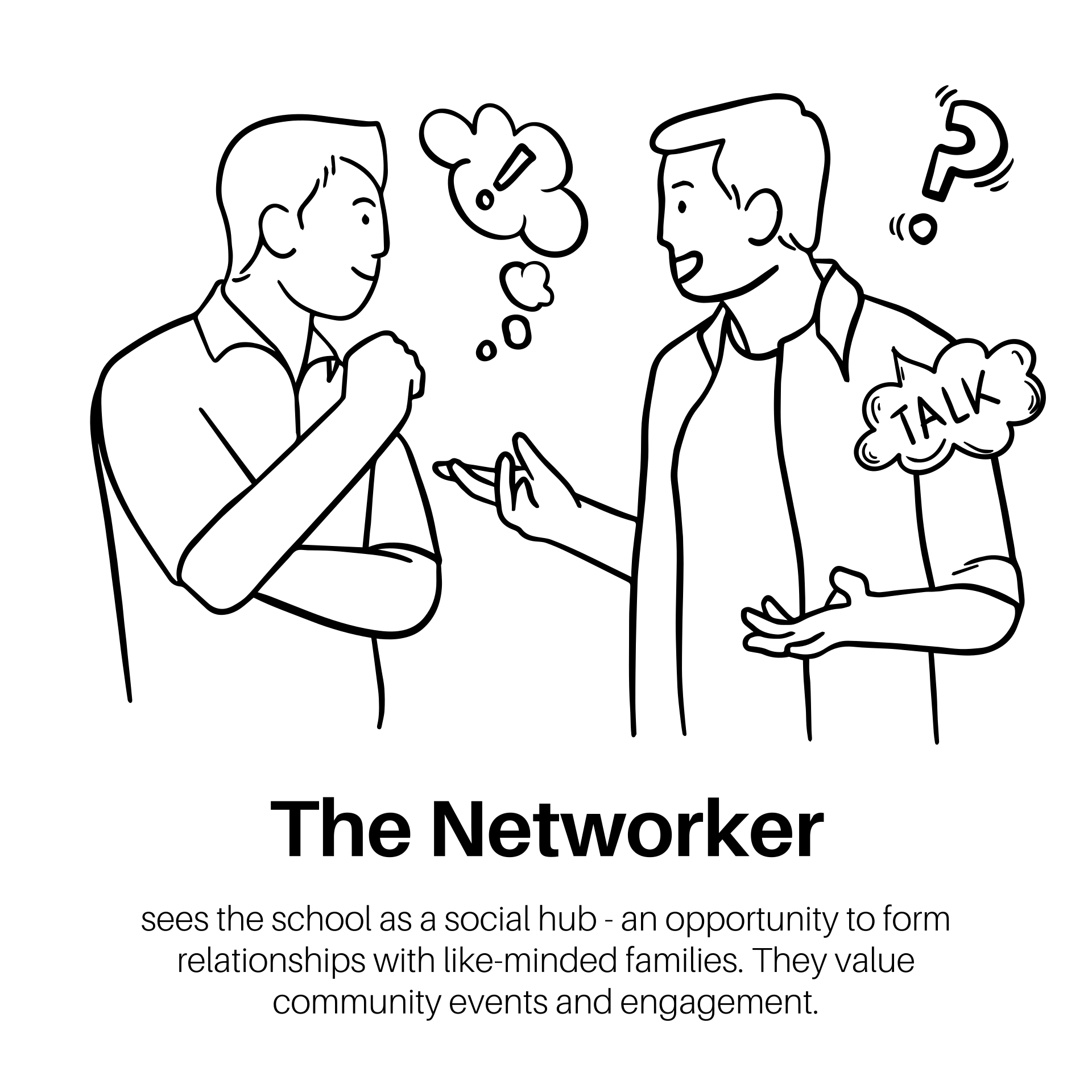
James and Laura Davis are social, outgoing parents in their late 30s with their 13-year-old daughter, Ava. They have an extensive network of friends and connections, and view school as much more than just an educational institution—it's a hub for social connections and relationship building. They're active in various community organizations and enjoy hosting gatherings at their home, which features plenty of space for entertaining.
Primary Motivations:
- Building relationships with like-minded families
- Social networking opportunities through school events
- Sense of belonging to an exclusive community
- Regular social events and parent gatherings
- Long-term connections that extend beyond the classroom
- Opportunities to expand professional and personal networks
Core Concerns:
- Fear of isolated educational environment without community
- Worry about lack of parent social integration
- Concerned about limited networking opportunities
- Skeptical of schools without active parent social scenes
- Need evidence of strong parent community and regular events
Communication Preferences:
- Social, conversational communication style
- Appreciate invitations to events and gatherings
- Value updates about community news and parent activities
- Prefer communications highlighting community connections
- Respond well to social media and community platforms
Decision-Making Process:
- Network-influenced, seeking input from social connections
- Places high importance on the social reputation of the school
- Researches parent social events and networking opportunities
- Values recommendations from socially connected families
- Makes decisions based on perceived social fit and opportunities
How to Reach Them Effectively:
- Showcase parent social events and networking opportunities
- Highlight the connected nature of your school community
- Feature testimonials about friendships formed through school
- Invite them to parent mixers and social gatherings
- Demonstrate how your school fosters lasting relationships
Sample Marketing Message:
"At Greenfield Academy, education extends beyond the classroom to create a vibrant community where families like yours build meaningful connections that often last a lifetime. Our active Parents' Club hosts monthly social events from wine tastings to family picnics, while our grade-level parent cohorts create natural networking opportunities. Many parents tell us that the friendships formed through Greenfield have become central to their family's social circle. As the Thompsons discovered after joining our community three years ago, 'The unexpected benefit of Greenfield has been the amazing families we've met—we've found our tribe, with friendships that extend well beyond school functions to vacation planning and regular dinner clubs.'"
7. The Innovator:

Who They Are:
Raj and Priya Patel are forward-thinking parents in their late 30s with their curious 11-year-old son, Aiden. Both work in innovation-focused fields and value creative thinking and novel approaches in all aspects of life. They stay informed about cutting-edge educational methodologies and seek schools that push boundaries rather than maintaining the status quo. Their home features creative spaces for exploration and experimentation, and they encourage their son to think outside conventional boundaries.
Primary Motivations:
- Innovative teaching methods and approaches
- Integration of latest educational research
- Project-based and experiential learning opportunities
- Forward-thinking educational philosophy
- Adaptability to emerging educational trends
- Creative problem-solving and design thinking
Core Concerns:
- Fear of outdated or stagnant educational approaches
- Worry about rigid, one-size-fits-all teaching methods
- Concerned about schools resistant to pedagogical innovation
- Skeptical of traditional lecture-based instruction
- Need evidence of continuous educational improvement and adaptation
Communication Preferences:
- Progressive, innovative communication style
- Appreciate content about new educational approaches
- Value demonstrations of cutting-edge methodologies
- Prefer communications highlighting innovation and creativity
- Respond to evidence of educational thought leadership
Decision-Making Process:
- Trend-conscious evaluation of educational options
- Places high importance on educational innovation
- Researches schools' approach to integrating new methodologies
- Values demonstrations of progressive educational practices
- Makes decisions based on evidence of innovation and adaptability
How to Reach Them Effectively:
- Showcase innovative teaching methods and approaches
- Highlight teacher professional development in emerging practices
- Feature project-based and experiential learning opportunities
- Share examples of how your school stays ahead of educational trends
- Demonstrate your commitment to educational evolution
Sample Marketing Message:
"At Greenfield Academy, we're reimagining education for a rapidly changing world. Through our Design Thinking Lab and project-based learning approach, students like Aiden develop the creative problem-solving skills needed for tomorrow's challenges. Our faculty regularly participates in leading educational innovation conferences, bringing back the latest research-based methodologies to implement in our classrooms. Our flexible learning spaces adapt to different teaching approaches, from collaborative projects to maker-centered learning. As innovative education expert and parent Dr. Samantha Chen observes, 'What sets Greenfield apart is their willingness to evolve beyond traditional models—they're creating an educational experience that prepares students not just for today's world, but for the future they'll help create.'"
8. The Advocates for Individuality:
Who They Are:
Mark and Jessica Carter are creative, open-minded parents in their early 40s with their artistically talented 15-year-old daughter, Mia. They value self-expression and the development of individual gifts over conformity. Their parenting approach emphasizes discovering and nurturing their daughter's unique interests and abilities. Their home is filled with art, music, and creative expression, and they encourage their daughter to develop her authentic voice.
Primary Motivations:
- Personalized learning approaches tailored to individual students
- Recognition and development of unique talents and abilities
- Opportunities for self-expression and creativity
- Flexible curriculum that accommodates different learning styles
- Celebration of student individuality and diverse perspectives
- Support for students to discover and pursue their passions
Core Concerns:
- Fear of conformist educational environments
- Worry about one-size-fits-all teaching approaches
- Concerned about suppression of creativity or unique thinking
- Skeptical of rigid curriculum without room for personalization
- Need evidence of support for individual expression and development
Communication Preferences:
- Creative, personalized communication style
- Appreciate content showcasing student individuality
- Value stories about student self-discovery and expression
- Prefer communications highlighting diverse student experiences
- Respond to authentic, genuine messaging
Decision-Making Process:
- Individual-focused evaluation of educational options
- Places high importance on school's approach to personalization
- Researches opportunities for creative expression and individual growth
- Values demonstrations of how different learning styles are accommodated
- Makes decisions based on perceived support for their child's unique path
How to Reach Them Effectively:
- Showcase your personalized learning approaches
- Highlight opportunities for creative expression and talent development
- Feature stories of students pursuing diverse passions
- Share examples of curriculum flexibility and learning style accommodation
- Demonstrate your commitment to celebrating student individuality
Sample Marketing Message:
"At Greenfield Academy, we believe Mia's unique talents deserve to be discovered, celebrated, and nurtured. Our personalized learning approach begins with understanding each student's individual strengths, interests, and learning style, then adapting our teaching to help them thrive. Through our Passion Project program, students explore their interests with faculty mentors, from film production to molecular gastronomy. Our arts curriculum offers 14 different specialized studios where creative expression is encouraged and technical skills are developed. As parent and professional musician David Reynolds shares, 'Greenfield didn't try to fit my daughter into a predetermined mold—they recognized her unique voice and helped her develop it in ways I never imagined possible.'"
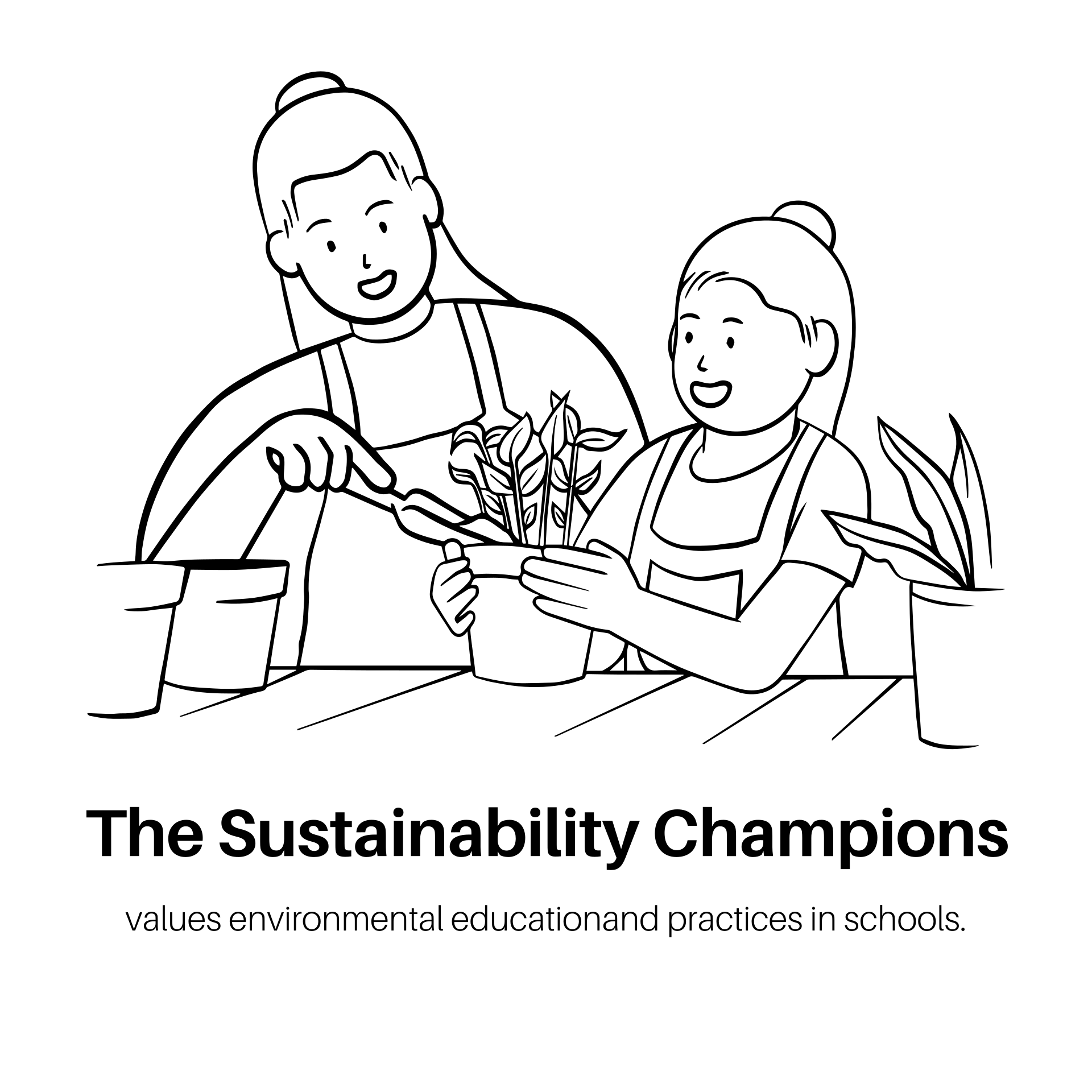
9. The Sustainability Champions:
Who They Are:
Adam and Rebecca Miller are environmentally conscious parents in their early 40s with their nature-loving 12-year-old son, Noah. They prioritize sustainability in all aspects of their lives and seek to instill these values in their child's education. Their home incorporates eco-friendly practices, from composting to renewable energy, and they're actively involved in environmental causes. They spend family time outdoors and teach their son to respect and protect the natural world.
Primary Motivations:
- Environmental education and sustainability practices
- Outdoor learning opportunities and nature connection
- School commitment to reducing environmental impact
- Integration of ecological awareness across curriculum
- Community environmental initiatives and service projects
- Campus design that incorporates sustainable features
Core Concerns:
- Fear of environmental values being overlooked in education
- Worry about disconnection from nature in traditional classrooms
- Concerned about schools without sustainability commitments
- Skeptical of institutions that don't model environmental responsibility
- Need evidence of genuine environmental practices, not greenwashing
Communication Preferences:
- Authentic, values-driven communication style
- Appreciate content about sustainability initiatives
- Value transparency about environmental practices
- Prefer communications highlighting ecological awareness
- Respond to evidence of genuine commitment to sustainability
Decision-Making Process:
- Values-aligned evaluation of educational options
- Places high importance on school's environmental practices
- Researches sustainability initiatives and outdoor programs
- Values demonstrations of ecological integration in curriculum
- Makes decisions based on alignment with environmental values
How to Reach Them Effectively:
- Showcase your school's sustainability initiatives and practices
- Highlight outdoor education and nature-based learning opportunities
- Feature your environmental curriculum and ecological awareness
- Share examples of student environmental service projects
- Demonstrate your commitment to reducing environmental impact
Sample Marketing Message:
"At Greenfield Academy, environmental stewardship isn't just taught—it's lived daily through our comprehensive sustainability program. Our LEED-certified campus features solar arrays that provide 40% of our energy needs, while our student-managed garden supplies fresh produce for our farm-to-table lunch program. Through our weekly outdoor education program, students like Noah develop a deep connection to nature while learning ecological principles firsthand. Our curriculum integrates environmental awareness across subjects, from calculating carbon footprints in math to analyzing climate literature in English. As parent and environmental scientist Dr. Michael Reynolds notes, 'Greenfield doesn't just talk about sustainability—they embed ecological thinking into everything they do, preparing students to become the environmental leaders we desperately need.'"
10. The Global Citizens:

Who They Are:
Minho and Mei Kim are internationally-minded parents in their late 20s with their multicultural 9-year-old son, Kai. With diverse backgrounds themselves, they value global awareness and cultural competence in education. They travel frequently as a family and expose their son to different languages, cuisines, and cultural experiences. Their home features art and artifacts from around the world, and they regularly discuss global events and perspectives with their son.
Primary Motivations:
- Global awareness and international perspective in education
- Cultural diversity and inclusion throughout the school
- Language learning opportunities and multilingual development
- Exposure to world cultures and international issues
- Preparation for global citizenship and cross-cultural competence
- Diverse student body and multicultural community
Core Concerns:
- Fear of ethnocentric or nationally limited education
- Worry about lack of exposure to diverse perspectives
- Concerned about insufficient preparation for global society
- Skeptical of schools without international dimensions
- Need evidence of genuine commitment to diversity and inclusion
Communication Preferences:
- Inclusive, globally-minded communication style
- Appreciate content showcasing cultural diversity
- Value messaging that acknowledges different perspectives
- Prefer communications highlighting global connections
- Respond to multilingual or culturally inclusive content
Decision-Making Process:
- Globally-conscious evaluation of educational options
- Places high importance on school's international dimension
- Researches diversity initiatives and language programs
- Values demonstrations of multicultural learning and inclusion
- Makes decisions based on perceived global preparedness
How to Reach Them Effectively:
- Showcase your global education initiatives and international perspective
- Highlight language learning opportunities and cultural studies
- Feature diversity within your school community
- Share examples of global awareness in your curriculum
- Demonstrate your commitment to raising global citizens
Sample Marketing Message:
"At Greenfield Academy, we prepare students like Kai to thrive as citizens of our interconnected world. Our Global Perspectives curriculum introduces students to diverse cultures and viewpoints, while our language program offers immersive instruction in Spanish, Mandarin, and French beginning in kindergarten. Through our Global Connections program, students collaborate on projects with partner schools in six countries, developing cross-cultural communication skills firsthand. Our diverse community, with families representing 27 nationalities, creates a rich multicultural learning environment. As international business consultant and parent Lin Wang shares, 'Greenfield provides the global mindset, language skills, and cultural fluency my child needs to navigate an increasingly borderless world—they're not just teaching subjects, they're preparing global citizens.'"
How to Create Your School's Unique Parent Personas
"From Generic to Specific: Building Custom Personas That Drive Enrollment"
The five personas above provide a solid starting point, but your school's parent audience likely has unique characteristics based on your location, mission, and differentiators. Here's my battle-tested step-by-step process for developing custom parent personas that will transform your marketing efforts.
Step 1: Gather Your Raw Materials
Before jumping into creative persona development, you need solid data. The most effective parent personas are built on facts, not assumptions. Here's what to collect:
Quantitative Data:
- Website analytics (which pages get the most traffic from parents?)
- Email engagement metrics (which subject lines and content get clicked?)
- Admission funnel conversion rates (where do you lose prospects?)
- Survey responses (use rating scales and multiple-choice for easy analysis)
- Geographic and demographic information about current families
Qualitative Data:
- Transcripts of parent interviews (current and recently enrolled)
- Feedback from admission counselors about common questions and concerns
- Notes from parent focus groups or informal feedback sessions
- Comments from social media and review sites
- Recorded testimonials and parent endorsements
Pro Tip: Send a 5-question survey to parents who recently enrolled, asking them about their decision-making process, key concerns, and what ultimately convinced them to choose your school. The insights will be invaluable, especially if you segment the responses by grade level and program.
Step 2: Identify Patterns and Segment Your Audience
Now comes the detective work. Look for trends, commonalities, and natural groupings in your data. Some guiding questions:
- Do certain types of parents consistently ask the same questions?
- Are there demographic clusters among your current families?
- Do parents from different geographic areas have different priorities?
- Can you see distinct communication preferences among different groups?
- Are there clear differences in what drives the decision for different programs?
In Practice: Greenfield Academy noticed that parents interested in their STEM program overwhelmingly researched faculty credentials and college outcomes, while parents interested in their arts program focused on facilities and performance opportunities. This observation led to the development of two distinct personas with separate marketing journeys.
Step 3: Create Your Persona Workshop Template
I recommend a collaborative workshop approach for developing personas. Gather key stakeholders (admissions, marketing, academic leadership) and use this template for each persona:
- Demographics: Age range, profession types, family structure, location
- Background Story: Brief narrative of their situation and educational journey
- Primary Motivations: Top 3-5 factors driving their school search
- Key Concerns: Top 3-5 worries or objections they need addressed
- Information Sources: Where they research schools and whose opinion they trust
- Decision Triggers: What specific factors would cause them to apply or enroll
- Communication Preferences: How, when, and where they want to be contacted
- Objection Points: Common reasons they might say "no" to your school
- Key Messages: The most important things this persona needs to hear
- Marketing Channels: Most effective ways to reach this audience
Step 4: Bring Your Personas to Life
Flat personas remain unused. To make your personas actionable marketing tools, add these key elements:
Name and Photo: Give each persona a memorable name and find a stock photo that represents them visually. This humanizes the abstract data.
Quotable Statements: Create 2-3 verbatim-style quotes that capture their voice, concerns, and priorities. Use actual parent quotes from your research when possible.
Persona Story: Write a brief narrative (2-3 paragraphs) that tells their backstory and educational journey. Make it specific enough to be meaningful but general enough to represent the segment.
Decision Journey Map: Create a simple flowchart showing how this persona typically moves from awareness to consideration to decision, including key touchpoints and potential barriers.
Step 5: Validate Your Personas
Before finalizing, test your personas against reality:
- Review with admission counselors who interact with parents daily
- Cross-check with recently enrolled parents who fit each persona
- Ensure the personas are distinctive enough to drive different marketing approaches
- Confirm that each persona represents a significant segment worth targeting
Common Pitfall: Many schools create overly aspirational personas representing families they wish they could attract rather than those they realistically serve. Your personas should reflect your actual addressable market, not an idealized version.
Step 6: Implement Your Personas in Marketing Planning
Personas aren't just theoretical exercises—they should drive tangible marketing activities:
- Create dedicated website paths optimized for each persona's interests
- Develop email nurture sequences tailored to each persona's concerns and journey
- Train admission counselors to recognize and adapt to different personality types
- Segment your CRM and communications by persona type when possible
- Develop content marketing calendars that address each persona's needs
Implementation Example: After developing their parent personas, Greenfield Academy restructured their admissions events calendar to include specialized events for each persona type: "Academic Excellence Night" featuring department heads and college counselors, "Whole-Child Open House" showcasing their arts and personalized learning approach, and "Community Connection Picnic" where prospective families could meet current parents in a relaxed setting.
Implementing Personas in Your Marketing Strategy
"From Theory to Practice: Making Personas Work for Your School"
Having well-crafted parent personas is only half the battle. The real magic happens when you use them to transform your marketing communications and admissions process. Here's how successful schools put personas into action:
Content Mapping by Persona
Different parent personas need different content at each stage of their decision journey. Create a content matrix that looks something like this:
|
Persona |
Awareness Stage |
Consideration Stage |
Decision Stage |
|---|---|---|---|
|
The Traditionalist |
Blog: "The Value of Structure in Education" |
Virtual Tour: "Our Disciplined Learning Environment" |
Comparison Chart: "How Our Traditional Approach Delivers Results" |
|
The High Achiever |
Blog: "5 Questions to Ask About Academic Rigor" |
Case Study: "How Our Curriculum Prepares Students for Elite Universities" |
Report: "Our Academic Outcomes vs. Local Competitors" |
|
The Nurturer |
Podcast: "Supporting the Whole Child in Today's World" |
Teacher Interviews: "Our Approach to Character Development" |
Guide: "How We Foster Personal Growth Beyond Academics" |
|
The Tech-Savvy Parent |
Video: "Technology Integration Across All Subjects" |
Interactive Demo: "Our Digital Learning Platforms" |
FAQ: "How We Use Technology for Parent-Teacher Communication" |
|
The Community Builder |
Instagram Stories: "A Day in the Life at Greenfield" |
Parent Panel: "Building Lifelong School Relationships" |
Guide: "How Our Parents Get Involved" |
|
The Advocate for Individuality |
Blog: "Celebrating Each Child's Unique Talents" |
Virtual Tour: "Our Creative Arts and Expression Spaces" |
FAQ: "How We Personalize Learning for Every Student" |
|
The Sustainability Champion |
Infographic: "Our Green Campus Initiatives" |
Virtual Tour: "Our Outdoor Learning Environments" |
Case Study: "Environmental Education in Action" |
|
The Global Citizen |
Video: "Raising Children for a Connected World" |
Webinar: "Our Approach to Cultural Competency" |
Testimonials: "How Our Students Develop Global Awareness" |
Pro Tip: Don't try to create everything at once. Start by identifying the most critical content gaps for your highest-priority persona and fill those first. Then build incrementally as resources allow. Even the most comprehensive school content strategy wasn't built in a day (unlike that questionable bathroom addition on your campus that somehow appeared overnight).
Channel Selection Based on Persona Preferences
Each parent persona has distinct preferences for how they consume information. Align your marketing channels accordingly:
The Academic Excellence Seeker:
- Detailed, information-rich website content
- Email campaigns with data and outcomes
- PDF downloads of curriculum guides and college matriculation lists
- Smaller, focused in-person events with academic leadership
The Whole-Child Developer:
- Visual-heavy Instagram and YouTube content
- Personal stories and testimonials
- Interactive virtual tours
- Community-based events with current students
The Community Connection Parent:
- Facebook Groups and community-based platforms
- Email newsletters highlighting school culture and events
- Parent ambassador outreach programs
- Family-oriented open houses and community events
The Future-Focused Pragmatist:
- LinkedIn content showcasing innovation
- Webinars on educational trends and futures
- Interactive digital experiences on your website
- Technology demonstrations and student project showcases
The Value-Conscious Educational Consumer:
- Clear, transparent website information about costs and aid
- Comparison guides and ROI calculators
- Email sequences addressing common financial concerns
- Smaller information sessions focused on affordability options
Messaging Adjustments for Different Personas
The same school feature can be positioned differently depending on your audience. Consider these examples:
Feature: 12:1 Student-Teacher Ratio
- For Academic Excellence Seekers: "Our 12:1 ratio ensures accelerated pacing for advanced students and deeper exploration of complex topics."
- For Whole-Child Developers: "With just 12 students per teacher, we build relationships that help us understand and nurture each child's unique gifts."
- For Community Connection Parents: "Classes of only 12 students create a family-like atmosphere where lasting friendships develop."
- For Future-Focused Pragmatists: "Our 12:1 ratio allows for the project-based, collaborative learning that employers increasingly value."
- For Value-Conscious Consumers: "Unlike public schools, where teachers manage 25+ students, our 12:1 ratio ensures your child receives over twice the individual attention."
Feature: College Counseling Program
- For Academic Excellence Seekers: "Our dedicated college counselors maintain relationships with admission officers at over 150 selective universities."
- For Whole-Child Developers: "Our counselors help students find colleges that align with their unique passions and learning styles."
- For Community Connection Parents: "Our college counseling process includes parent workshops starting in 9th grade to keep families informed and connected."
- For Future-Focused Pragmatists: "Beyond college selection, our counselors help students identify emerging fields and build portfolios that showcase their innovation skills."
- For Value-Conscious Consumers: "Our comprehensive college counseling program has helped students earn an average of $34,800 in merit scholarships."
Addressing Private School-Specific Challenges
Each persona also has unique concerns related to private education specifically. Consider these targeted approaches:
Competing with Free Public Options:
- For Academic Excellence Seekers: "While public schools focus on standardized test requirements, our curriculum goes two grade levels deeper in core subjects."
- For Whole-Child Developers: "Unlike public schools that have reduced arts and creative programming, we dedicate 25% of our schedule to creative development."
- For Community Connection Parents: "Our class size allows for the community connections that become increasingly difficult in consolidating public districts."
- For Future-Focused Pragmatists: "Public schools are constrained by standardized tests and state requirements, while we're free to incorporate emerging technologies and future-ready skills."
- For Value-Conscious Consumers: "The individualized attention at our school helped 92% of students with learning differences advance to grade level, compared to 46% in local public schools."
Justifying Tuition Increases:
- For Academic Excellence Seekers: "Our tuition increase allows us to add three new AP courses and recruit faculty with advanced degrees."
- For Whole-Child Developers: "The upcoming tuition adjustment funds our new arts center with specialized studios for digital media, ceramics, and music production."
- For Community Connection Parents: "Our tuition structure ensures we maintain the 8:1 student-teacher ratio that creates our close-knit community environment."
- For Future-Focused Pragmatists: "This year's investment allows us to upgrade our innovation lab with cutting-edge equipment students will encounter in future careers."
- For Value-Conscious Consumers: "Even with this adjustment, our tuition remains 15% below the regional average for comparable private schools, while our aid budget has increased by 12%."
Measuring Effectiveness of Persona-Targeted Campaigns
How do you know if your persona strategy is working? Track these metrics:
1. Engagement Metrics by Persona:
- Email open and click rates for persona-specific campaigns
- Time on page for persona-targeted website content
- Conversion rates on persona-specific calls to action
- Attendance at events designed for specific personas
2. Journey Progression Metrics:
- Application starts by persona type
- Tour-to-application conversion rates by persona
- Application completion rates by persona
- Yield rates (accepted to enrolled) by persona
3. Qualitative Feedback:
- Admission counselor reports on prospect qualification
- Parent testimonials about feeling "understood" during the process
- Comments on targeted content and communications
- Word-of-mouth referrals within specific persona segments
Parent Persona Template (Downloadable Resource)
"Your Ready-to-Use Blueprint for Parent Persona Development"
To help you implement everything we've covered, I've created a comprehensive Parent Persona Development Kit specifically for K-12 private schools. This template package includes everything you need to create, document, and utilize effective parent personas.
What's Included in the Template
1. Parent Persona Profile Template
This core document provides structured fields for capturing all essential persona elements:
- Persona Name and Photo
- Demographics and Family Structure
- Professional Background
- Media Consumption Habits
- Educational Values and Priorities
- Primary Motivations (with ranking)
- Key Concerns and Objections
- Decision-Making Process
- Information Sources and Trusted Advisors
- Communication Preferences
- Barriers to Enrollment
- Key Messages That Resonate
2. Persona Development Workshop Guide
A step-by-step facilitator's guide for conducting a 90-minute persona development session with your team, including:
- Pre-workshop preparation checklist
- Sample agenda and timing
- Discussion prompts and exercises
- Methods for reaching consensus
- Post-workshop action items
3. Data Collection Tools
Ready-to-use resources for gathering the information needed to build accurate personas:
- Parent Survey Template (with Google Forms version)
- Parent Interview Question Guide
- Website Analytics Analysis Worksheet
- Admission Counselor Feedback Form
- Current Parent Focus Group Protocol
4. Persona Implementation Toolkit
Practical resources for putting your personas to work immediately:
- Content Mapping Matrix
- Channel Strategy Planner
- Messaging Framework by Persona
- Tracking and Measurement Dashboard
- Persona-Based Campaign Planner
5. Example Personas
Fully developed example personas for reference:
- Detailed examples of all five common parent types
- Annotated notes explaining key elements
- Suggestions for customization for your school
How to Use This Template
Step 1: Download and Review
Begin by downloading the complete template package and reviewing all components. Familiarize yourself with the structure and information required.
Step 2: Gather Your Data
Use the data collection tools to gather information about your current and prospective parents. The more data you collect, the more accurate your personas will be.
Step 3: Schedule Your Workshop
Identify key stakeholders from admissions, marketing, and school leadership, and schedule a 90-minute persona development workshop. Send the preparation materials in advance.
Step 4: Develop Your Personas
Follow the workshop guide to collaboratively create your school's unique parent personas. Aim to develop 3-5 distinct personas that represent your major parent segments.
Step 5: Document and Share
Use the profile templates to formally document your personas. Create visual representations and share with all relevant team members.
Step 6: Implement and Iterate
Use the implementation toolkit to immediately begin applying your personas to your marketing efforts. Track results and refine your personas over time.
Example: Completed Persona
Here's a snapshot of what a completed persona might look like using our template:
Persona: The Academic Excellence Seeker
Demographics: Dual-professional household, advanced degrees, income $200K+, two children, lives in affluent suburban neighborhood within 20 minutes of campus.
Backstory: Michael and Jennifer Thompson are successful professionals who highly value education and achievement. Having both attended selective universities, they want the same opportunities for their children. They're currently researching private schools for their daughter Emma, who is academically gifted but not being sufficiently challenged in her current school.
Primary Motivations:
- Academic rigor and advanced learning opportunities
- College preparation and admissions advantage
- Exceptional faculty credentials and experience
- Measurable academic outcomes and rankings
- Selective peer group of similarly motivated students
Key Concerns:
- Will the curriculum be sufficiently challenging?
- How do standardized test scores compare to other schools?
- What percentage of graduates attend top-50 universities?
- What advanced courses and acceleration options exist?
- What are the faculty's qualifications and credentials?
Information Sources: Education-focused websites, school rankings, college matriculation data, direct research on curriculum and outcomes, conversations with current parents about academic experience.
Decision Triggers: Evidence of academic rigor, impressive outcome metrics, opportunities for acceleration, strong STEM or liberal arts focus (depending on child's interests), selective admission standards.
Communication Preferences: Data-rich email content, detailed website information, in-person meetings with academic leadership, evidence-based presentations.
Key Messages:
- "Our curriculum exceeds state standards by 1-2 grade levels in core subjects."
- "87% of our graduates are accepted to their first or second choice college."
- "Our faculty includes 14 teachers with advanced degrees in their subject areas."
- "Students consistently score in the top 10% nationally on standardized tests."
- "We offer 16 AP courses and dual enrollment options with [Local University]."
Conclusion
"Personas: Your Secret Weapon in an Increasingly Competitive Landscape"
The private education landscape grows more competitive every year. With declining birth rates, increasing school options, and more discerning parents, the days of "if we build it, they will come" are long gone. Your marketing efforts need to be laser-focused, addressing the specific concerns and motivations of parents who would be an ideal fit for your school.
Parent personas are no longer an advanced marketing tactic—they're an essential foundation for any school that wants to:
- Target the right families instead of wasting resources on poor-fit prospects
- Craft messaging that resonates with specific parent priorities and concerns
- Allocate marketing budget more effectively across channels and content types
- Train admission staff to recognize and address different parent types
- Measure and improve marketing effectiveness with meaningful segmentation
By implementing the parent persona framework outlined in this guide, you'll transform your marketing from generic school promotion to strategic, targeted communication that speaks directly to your ideal families.
The schools that thrive in the coming years will be those that truly understand their parent audiences and communicate with relevance and resonance. Generic school marketing simply doesn't cut it anymore.
Your next steps are clear:
- Download our Parent Persona Template Package to jumpstart your process
- Gather your stakeholders for a collaborative persona development workshop
- Collect the necessary data to inform accurate persona development
- Create your school's unique parent personas using our proven framework
- Implement persona-based marketing across your admissions and communications
Remember, effective parent personas aren't static—they should evolve as your school and market change. Plan to review and refine your personas annually, incorporating new data and insights from your admission team.
Ready to transform your school's marketing effectiveness with targeted parent personas? Contact me for a free 30-minute consultation to discuss how we can help implement this approach at your institution.