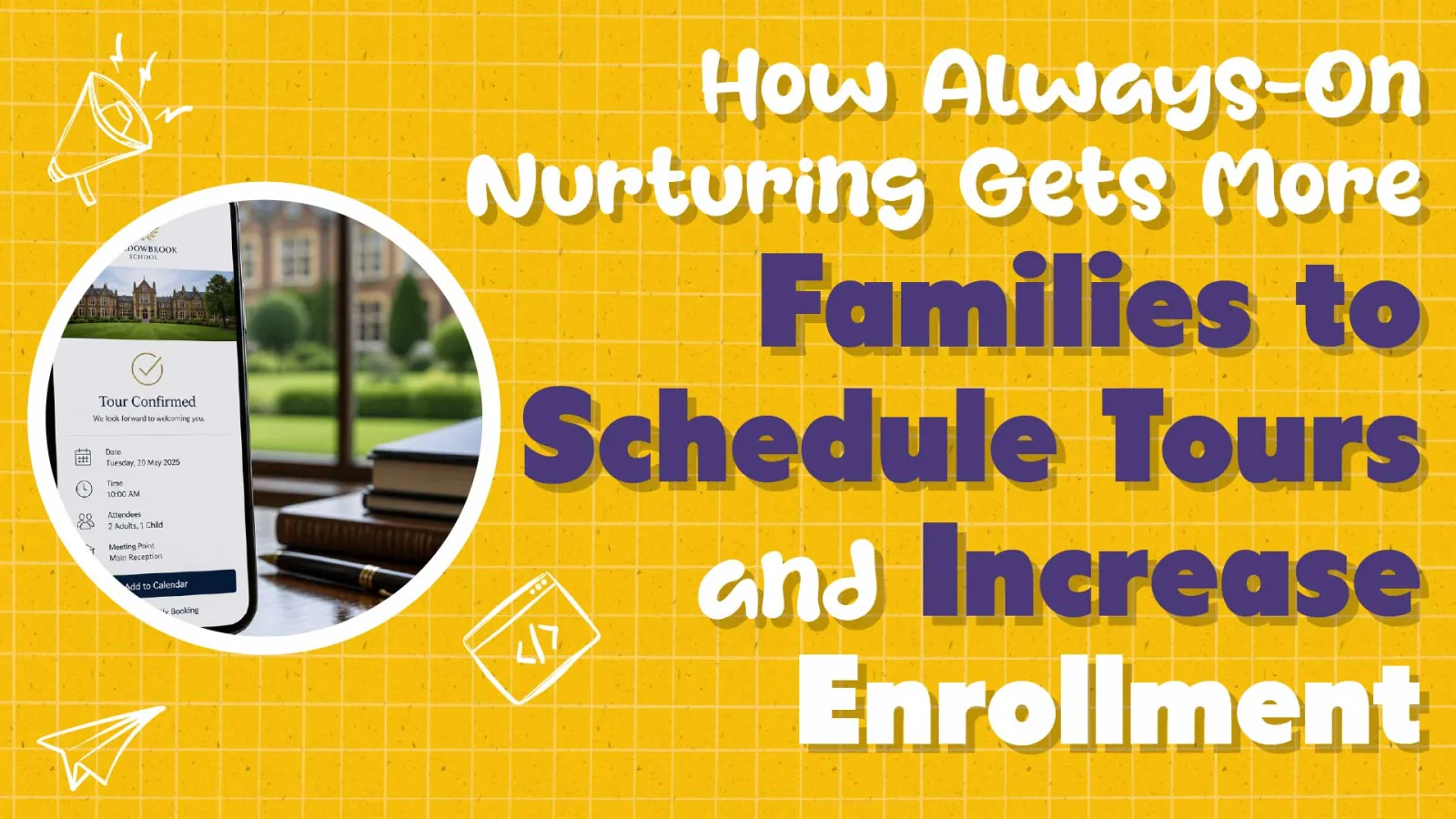
Timing is everything in admissions. Families research on their own schedule. late at night, on weekends, between meetings. They compare schools, download guides, and click through your email campaigns. But if your admissions team only follows up during business hours or when someone has bandwidth, you're watching enrollment opportunities slip away.
Here's the hard truth: if your school only responds to inquiries when someone notices them, you've already lost momentum. Private school marketing teams are stretched thin, especially during peak season. You're managing tour requests, student applications, financial aid questions, and parent calls. often with just one or two people. Something has to give, and usually it's the speed of first contact.
That's where automating the first response comes in. It's not about replacing your team. It's about ensuring that families hear from you immediately, consistently, and with relevance, regardless of when they reach out. No more families waiting days for a reply. No more inconsistent follow-ups. No more lost chances because your admissions director was in a meeting or out sick.
Let's walk through how always-on nurturing works and why it's the competitive edge your school needs.
What Automating First Contact Actually Means
Automating first contact doesn't mean sending a robot to schedule tours. It means using technology to detect when families show high intent and respond with the right message at the right time. instantly.
Here's the mechanics: When a prospective family downloads your school overview, views your pricing page twice, or opens three emails in a row, your system triggers an automatic, relevant response. Not a generic newsletter. A timely, targeted message that acknowledges their specific action and offers the next logical step.
The system runs in the background, working while your team sleeps, while the admissions director is in meetings, while enrollment peaks overwhelm your inbox. It gathers signals about each family's intent and readiness. It keeps conversations warm until someone is genuinely ready to talk. By the time your admissions staff steps in, the family already understands the basics, feels recognized, and knows exactly how to take the next step.
Why Manual Follow-Up Breaks Down During Busy Season
Most schools still rely on manual follow-up, and it fails for predictable reasons.
Delays are Inevitable
A form comes in at 7 p.m. on a Tuesday. Your admissions director gets to it on Thursday morning. By then, the family had already contacted two other schools; those schools responded within hours. Momentum is gone.
Volume Causes Bottlenecks
During peak enrollment season (September, January, March), your team gets slammed. Fifty inquiries in one week. You're triaging which ones matter, which ones are "serious," which ones you have time for. Families fall through the cracks because there aren't enough hours in the day.
Consistency Suffers
One staff member sends a warm, detailed first response. Another sends a template. A third forgets to follow up at all because they're juggling three jobs. Families get mixed signals about your school's professionalism.
Timing Rarely Matches Family Behavior
Families don't research schools during normal business hours. They explore at night, on weekends, and during their lunch break. If your response comes 24 or 48 hours later, you've missed the window when they were most engaged.
The result: up to 70% of education inquiries never receive a direct human response, according to data on enrollment management. Families assume your school is either disorganized or not interested. They move on to schools that are faster.
How Always-On Nurturing Triggers Tour Bookings
When you automate first contact and early follow-up, the mechanics change. Families get immediate responses, consistent messaging, and personalized next steps, without stretching your team.
Instant Response, Maintained Momentum
Research shows that a five-minute response is 100x more likely to connect with a lead compared to a 30-minute response. Your automated system captures that five-minute window. A family submits a tour request at 8:47 p.m.? They get an acknowledgment and the next steps immediately. No waiting. No "we'll get back to you" delay.
That speed signals professionalism. It keeps your brand top-of-mind while families are actively engaged. More importantly, it works. Data from admissions research indicates that up to 78% of students choose the first institution that replies to their inquiry. Speed doesn't just help. It's often the deciding factor.
Consistent Messaging Builds Trust
When every family receives a well-designed, brand-aligned first response. regardless of whether your admissions director is available. You establish trust. They see a school that's organized, responsive, and systematic. That consistency matters, especially when families are comparing your school to competitors.
Automated nurturing sequences are built once, then delivered consistently to every family at every touchpoint. No variation. No crossed wires. Just reliable, professional communication that represents your school well.
Behavioral Scoring Qualifies Leads Before Outreach
Automation doesn't just send messages. It watches what families do and scores them accordingly. A family downloads your enrollment guide, returns to your site three times, and clicks through two email campaigns? Your system flags them as "high-intent" and moves them up the priority list. A one-time form fill with no follow-up engagement? Stays in the nurture sequence for now.
By the time your admissions director or marketing coordinator reaches out personally, they already know the family is genuinely interested. That changes the conversation from "Are you interested?" to "What questions can I answer about our program?" Warmer. More productive. Higher conversion likelihood.
Companies using marketing automation to nurture leads see a 451% increase in qualified leads, according to industry data, for schools, which translates to fewer cold outreach calls and more conversations with families who are already engaged.
Scaled Personalization Without Extra Work
Modern nurturing systems adapt messages based on what families reveal about themselves. A parent exploring your 6-12 middle school program gets different messaging than a family interested in your preschool. A family viewing financial aid materials gets information about tuition assistance. A family clicking tour scheduling links repeatedly gets a gentle reminder with an easy booking option.
This personalization feels like 1:1 attention, but it's delivered by a system, not by hours of manual work. Your team isn't writing 50 custom emails. They're building smart sequences that respond to family behavior, then letting automation do the delivery.
Real-World Scenarios: Automation in Action
Let's see how this works in practice.
Scenario 1: Guide Download Triggers a Welcome Sequence
A parent downloads your "Day in the Life" school guide at 10 p.m. on a Tuesday. Immediately, they receive a thank-you email acknowledging the download, with a brief introduction to your school. Two days later, they get a follow-up with a closer look at your curriculum model. Three days after that, a soft call to schedule a shadow day if the program resonates.
The parent wasn't sitting in your admissions office. They were researching on their own time. But by the time they get to Thursday or Friday, you've built awareness and familiarity. If they're genuinely interested, the next step is clear. Schedule a shadow day. If they're still considering, the nurture keeps you front-of-mind until they're ready.
Scenario 2: Pricing Page Revisit Triggers Targeted Follow-Up
A family you've been nurturing visits your pricing page for the second time. Your system detects this high-intent signal and triggers a targeted response about tuition, payment plans, and financial aid. Not a generic "we'd love to talk" message. A specific, relevant response that acknowledges they're evaluating cost. This positions your school as transparent and helpful, not evasive.
Scenario 3: Email Engagement Without Action Gets Gentle Nudge
A family opens your emails consistently but hasn't scheduled a tour. They're interested but maybe hesitant, overwhelmed, or unsure. Your system sends a gentle check-in: "I notice you've been exploring our programs. Do you have questions about admissions, our campus, or your family's fit? Let's talk." It's human, non-pushy, and provides an easy path forward (a direct email reply or a link to book time).
In each case, the first move is automated. But the path is designed so that when a human wants to step in, or when the family is ready. The handoff is natural and informed.
Where Human Touch Comes In
Automation handles detection and first response. Your admissions team handles everything that matters: conversation, relationships, enrollment decisions.
When a family books a tour through an automated scheduling link, your admissions director greets them as a warm, engaged prospect who already understands your school. When someone replies to an automated follow-up with a specific question, your team has context. When a family is clearly ready to talk, the transition from nurture to personal outreach is seamless.
Automation doesn't replace admissions professionals. It frees them up to do their actual job: building relationships, answering nuanced questions, closing enrollment decisions. Your team spends less time chasing cold leads and more time deepening conversations with families who are already interested.
The Competitive Advantage in Meeting Families Where They Are
Many schools still rely on manual, inconsistent follow-up, even when they have the technology and staff to do better. They're hoping someone notices the latest form fill. They're crossing their fingers that a family will reach out again if they don't hear back. They're running on adrenaline and goodwill instead of systems.
That's where the opportunity lies. Schools that automate first contact and deploy always-on nurturing gain an immediate edge:
- Faster response times create the first-mover advantage when 78% of families choose the school that responds first; being first matters.
- Consistent follow-up ensures no family falls through the cracks, regardless of staff turnover, vacation, or busy seasons.
- Smart qualification means your team spends time on warmer opportunities, not cold outreach.
- Scalable personalization lets you grow inquiry volume without proportionally growing your team's workload.
You're not replacing human judgment or relationships. You're building a system that keeps your best people focused on the conversations that drive enrollment.
Getting Started: Build Your Always-On Nurturing System
If you're ready to turn more early interest into tour bookings, start here:
Step 1: Map Your Inquiry Sources
Where do families enter your funnel? Website contact form? Tour request page? Email inquiry? Event signup? Each entry point is an opportunity for an automated first response.
Step 2: Design Your Early Nurture
What should families hear from you in the first 48 hours? A day after that? A week later? What messages feel natural given where they are in the journey? Keep it simple: acknowledge their interest, provide one clear next step, and make it easy to connect.
Step 3: Identify Your Behavioral Triggers
What actions signal high intent? Repeat visits? Multiple email opens? Pricing page view? Set up your system to catch those signals and respond with targeted messages.
Step 4: Build In A Handoff To Your Team
When should automation step aside and let your admissions director take over? Usually, it's when a family books a tour, replies with a specific question, or hits a qualification threshold. Make that transition obvious and warm.
You don't need a complex system. You need a reliable one. Most admissions-focused platforms (like Element451, Finalsite Lead Capture Intelligence, or HubSpot) offer automation templates designed specifically for schools. Start with their pre-built sequences, customize them to your voice, and activate.
The Edge Is Yours
Automating first response isn't futuristic. It's pragmatic. It acknowledges that families don't work on your school's schedule, and your team can't be available 24/7. It's the difference between hoping someone notices an inquiry and knowing that every inquiry gets a timely, relevant response.
When you meet families when they're engaged, not weeks later when momentum has faded, enrollment conversations start differently. They're warmer. More informed. Closer to action. Admissions staff spend less time chasing and more time building relationships. Your school's conversion from inquiry to tour to enrollment improves.
If you're ready to stop leaving enrollment on the table and start converting more inquiries into tour bookings, let's talk. I'll help you build an always-on nurturing system that works for your school's size, budget, and enrollment goals.
Frequently Asked Questions
How long does it take to see results from automated nurturing?
Families typically show engagement within the first 48-72 hours of receiving your initial response. especially if the message is relevant to their action. Tour bookings often follow within 1-2 weeks for high-intent families. That said, not every family is ready immediately. Your nurture sequences should continue for 6-8 weeks, moving families at their own pace. Schools report meaningful increases in tour bookings within 30 days of activating first-response automation.
Do I need an expensive marketing automation platform to set this up?
No. Many platforms designed for schools (Element451, Finalsite, Blackbaud Enrollment) have automation built in at reasonable price points. Even HubSpot's free tier allows basic automated email sequences. The key is consistency and relevance, not sophistication. Start simple. a welcome sequence, a pricing follow-up, and a gentle nudge for engaged-but-quiet families. Add complexity only if it's needed.
What if automating feels too impersonal for our school?
The goal isn't to remove the human touch. It's to preserve it by removing the friction. When your admissions director spends 80% of their day chasing lukewarm leads, they have no time for meaningful conversations with genuinely interested families. Automation handles the detection and initial response, so your team can focus on the deeper, more relationship-building conversations. Families consistently report satisfaction with fast, timely responses followed by genuine human engagement.
How do I know which families are truly interested versus just curious?
Your automation system tracks behavior: email opens, link clicks, page visits, return frequency, and guide downloads. Families who take multiple actions show higher intent. Score them accordingly. A family who opens one email and disappears is different from a family who opens three emails, downloads a guide, visits your pricing page, and clicks a tour link. Use those behavioral patterns to prioritize. Your automation identifies intent; your team converts it.
Can I use automation if I only have one admissions person?
Absolutely. That's actually the ideal case for automation. A single admissions director handling 200+ annual inquiries simply cannot respond quickly to all of them manually. Automation means that every inquiry gets a professional, timely first response; families are pre-qualified before your one staff member ever picks up the phone. That person can then focus on warm conversations, tours, and enrollment decisions instead of chasing cold leads.