A homeowner pulls up your website at 9 p.m. with water pooling under the kitchen sink. Before they read a single word, they have already decided whether you look like a company worth calling. That decision happens in about 0.05 seconds. Professional design is what wins that split-second, and for many home service companies, it is doing more selling than their best closer.
This matters most for local home services businesses trying to compete against bigger names. Your website, your trucks, your uniforms, and your printed materials all send a signal about trust before you ever pick up the phone. The good news is that you control every one of them. Here is how each one builds credibility, and how to make them work for you instead of against you.
Why Do First Impressions Matter So Much for Home Service Companies?
First impressions matter because homeowners judge your company before they ever meet you in person. Research published in Behaviour & Information Technology shows that people form an opinion of a website's look in roughly 50 milliseconds, about 0.05 seconds. That snap judgment colors everything that follows.
Here is the hard part for an owner who takes pride in the work. The competitor with the sharp trucks and the clean website is not always better at HVAC or plumbing than you are. They just look more credible at the moment a stressed homeowner is choosing who to call. Looking like a coin flip risk costs you jobs you never even hear about.
Every touchpoint is a small marketing moment that happens whether you invest in it or not. The truck in the driveway, the tech at the door, and the invoice on the counter are all telling a story. If you want proof that this is worth your time, the web design statistics that matter for service companies are hard to argue with.
How Does Your Website Design Build Trust Before the Phone Rings?
Your website builds trust by looking clean, loading fast, and working well on a phone. The Stanford Web Credibility Project found that "people quickly evaluate a site by visual design alone." A dated or clunky site signals a dated, clunky company, even when your service in the field is excellent.
Start with mobile. Most homeowners search for a plumber or an HVAC tech from their phone, often in the middle of a problem. If your site is hard to read, slow, or buried the phone number three taps deep, you lose them. A fast, simple professional website for your home service business keeps that visitor from bouncing to the next result.
Design also has to earn the call. Clear contact buttons, real photos of your crew, honest reviews, and service-area pages all tell a homeowner you are a legitimate local outfit. These are the same trust-building website strategies that separate a busy company from a quiet one.
A site can look fine and still fail to convert. The difference between a digital brochure and a lead machine is website design that converts visitors into callers. Every page should make the next step obvious: call, book, or message.
What Do Your Trucks and Vehicle Wraps Say About Your Company?
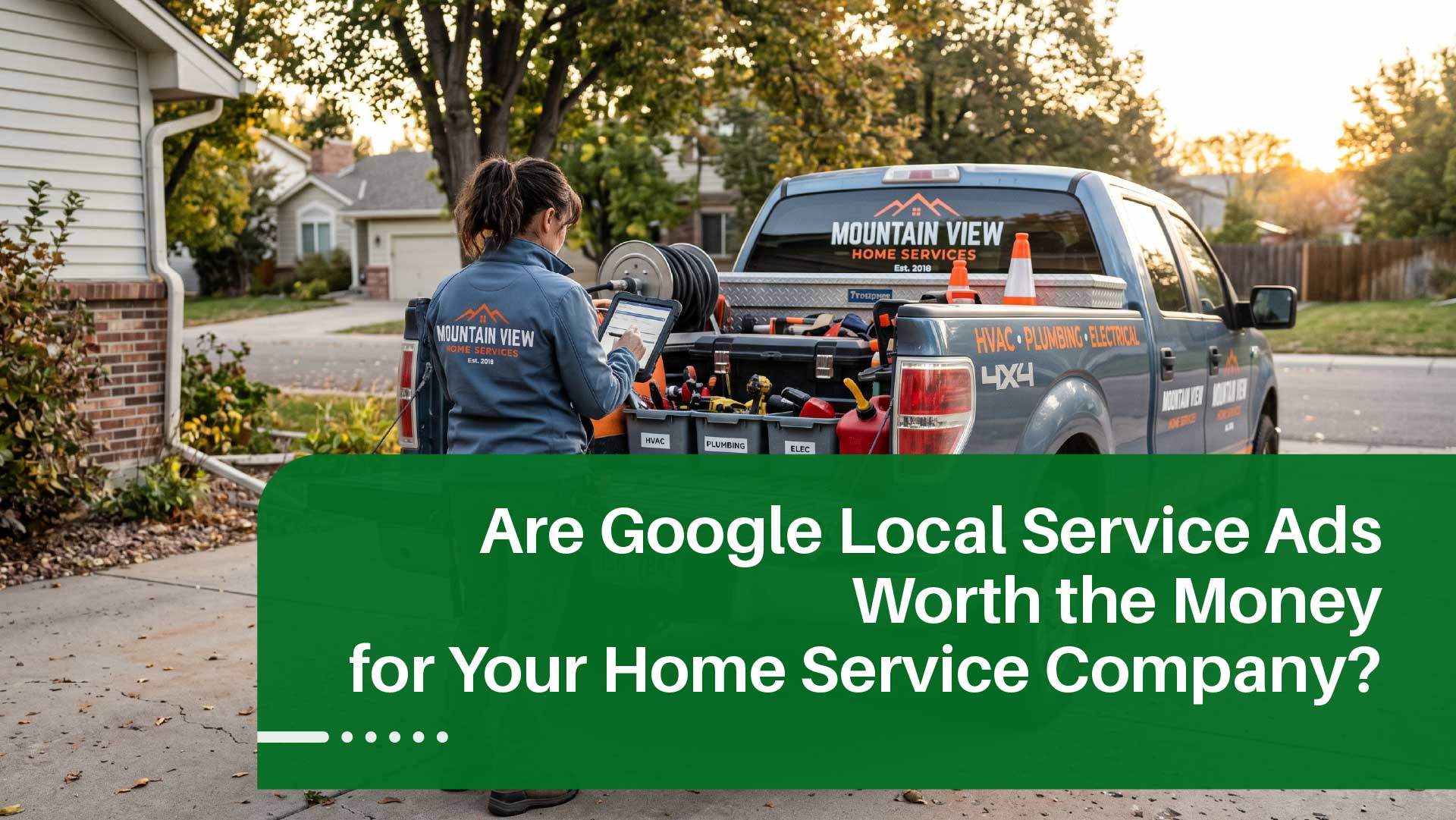
Your trucks tell homeowners whether you are an established local company or a guy with a magnet sign. A clean, wrapped vehicle reads as professional and permanent. ARD Ventures found that a single wrapped vehicle generates 30,000 to 70,000 daily vehicular impressions in a typical market.
That reach is not just about strangers on the highway. The wrapped truck parked in a driveway tells the whole street that a neighbor trusted you with their home. In a Nielsen study, 64% of people said they had noticed vehicle graphics in the past month.
There is a second payoff that owners miss. A homeowner who sees your truck around town for weeks does not call right away. They call when something breaks. By then, your name already feels familiar and safe, which is half the battle in a market where people are wary of who they hire. A plain white van earns none of that recognition.
A wrap also has to match the rest of your brand. Same colors, same logo, same phone number as your website and your shirts. When a homeowner sees the truck, then later finds your site, the match builds quiet confidence. Mismatched or faded graphics do the opposite.
How Do Branded Uniforms Build Customer Trust at the Door?
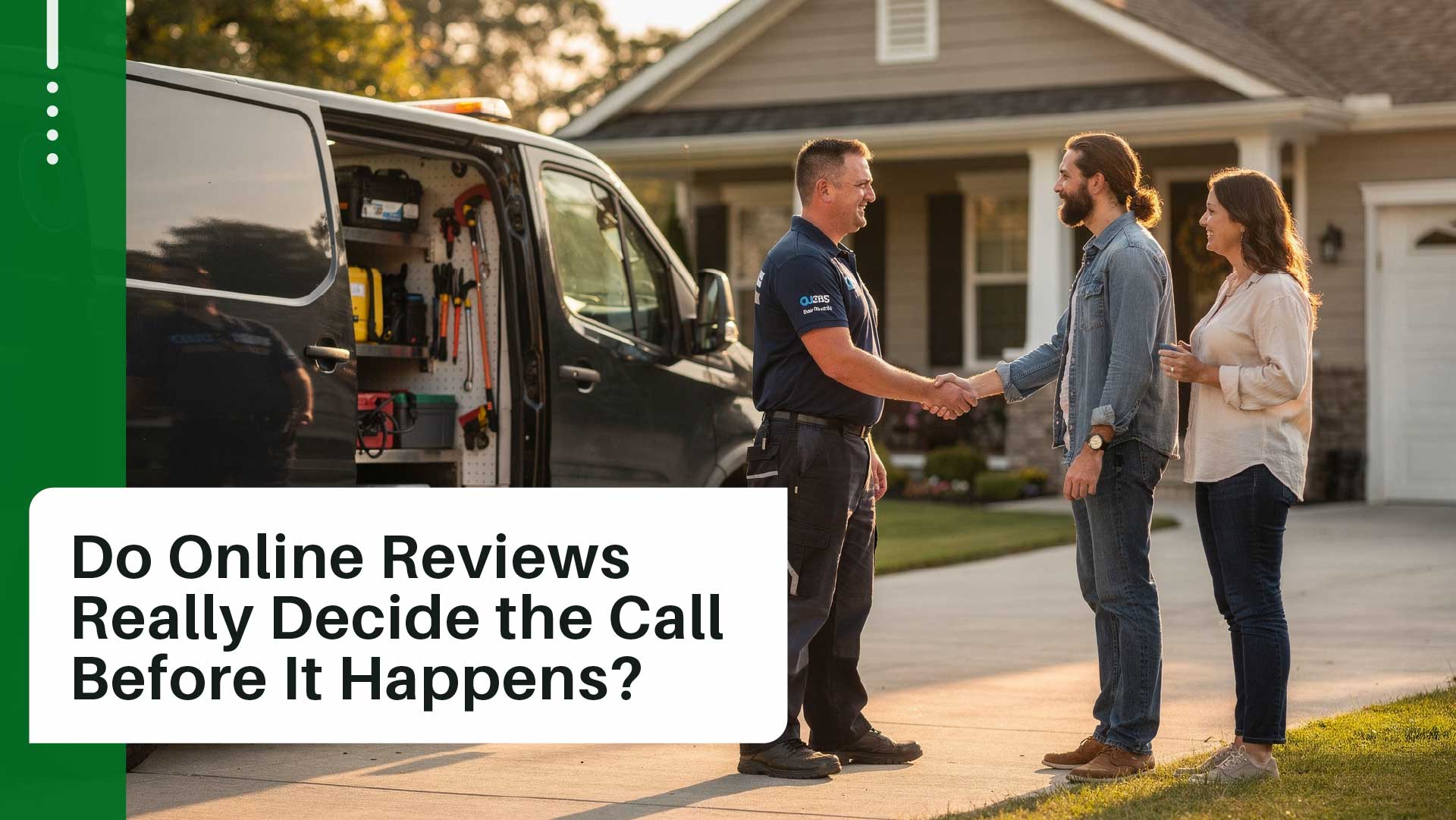
Branded uniforms build trust by signaling that a real company stands behind the person at the door. A 2020 study in the Journal of Applied Social Psychology found that a uniform makes customers credit good service to the whole company, not just the individual technician.
Think about it from the homeowner's side. They are deciding whether to let a stranger into their house, often with kids or pets nearby. A clean, branded shirt answers the safety question before anyone speaks. A Harris Poll found that 81% of adults are more likely to trust a home service professional in a uniform. That poll was commissioned by a uniform company, but it lines up with the independent academic research.
The same poll found that 88% of adults would ask for identification before letting a service professional who was not in uniform inside their home. That is a real hurdle for your tech to clear at the door. A branded uniform clears it for them, and it does the same job whether you send your most experienced plumber or your newest hire.
Clean matters as much as branded. A wrinkled, stained shirt undoes the whole effect. A simple polo with your logo, kept neat, costs little and pays back every single visit.
Do Branded Materials Like Invoices and Door Hangers Really Matter?
Branded materials matter because consistency is what makes a small company look bigger and steadier than it really is. When your invoice, door hanger, and business card match your truck and your website, you look like one organized company instead of a hobby. Lucidpress found that consistent branding can lift revenue by as much as 33%.
Real branding for your home service company is more than a logo slapped on a shirt. It is the same look and feel across every piece a customer touches. A branded invoice tells a customer you run a real business. A door hanger left after a job in the neighborhood turns one call into three.
These small pieces are cheap to produce and easy to forget. That is exactly why they set you apart. Most of your competitors are still handing out handwritten receipts and generic forms.
What Does Professional Design Look Like for an Expanding Home Service Company?
Picture an eight-truck HVAC and plumbing operation expanding into a neighboring county. The work is excellent, and referrals are steady, but the company looks scattered. Two trucks are wrapped, three have peeling decals, and three are plain white. The website was built six years ago and barely works on a phone. Techs wear whatever shirt they grabbed that morning.
In a market where they already have a good reputation, that scattered look is fine. In the new county, where no one knows them yet, it reads as a fly-by-night risk. The fix does not require a national-brand budget. It requires consistency.
Over a few months, they wrap the rest of the fleet in matching graphics, rebuild the website to load fast and convert on mobile, and put every tech in a clean, branded polo. Invoices and door hangers pick up the same colors and logo. None of this changes the quality of the HVAC work. It changes whether a stranger in a new market believes the quality is there before the first visit. That belief is what fills the schedule.
Your Brand Is Already Making an Impression. Make It a Good One.
You do not get to opt out of first impressions. Your trucks, your website, your uniforms, and your paperwork are forming one right now, for better or worse. The companies that win the close calls are not always the best in the field. They are the ones who look like the safe choice in the half-second a homeowner decides.
The fixes are within reach for a company of your size: a fast, clear website, consistent truck wraps, clean branded uniforms, and printed materials that match. Each one is a vote for your credibility before you ever say a word. If you want a second set of eyes on how your company looks to a first-time customer, schedule a conversation. No pressure, no pitch, just honest feedback.
Frequently Asked Questions
How Much Does It Cost a Small Home Service Company to Look Professional?
Less than most owners expect. Branded polos and basic printed materials are low-cost and pay back fast. A truck wrap and a website refresh are bigger investments, but you can phase them in. Start with the touchpoints customers see most often, then build out as cash flow allows.
Do Truck Wraps Actually Bring in Calls?
Yes, and the reach is large. A single wrapped vehicle generates 30,000 to 70,000 views a day in a typical market. A wrap works best paired with a matching website and uniforms, so a homeowner who sees your truck recognizes you later when they search. Treat it as one part of a consistent brand, not a standalone ad.
What Matters Most: The Website, the Truck, or the Uniform?
The website usually comes first, because most homeowners look you up online before they call. That is why a professional website for your home service business usually earns the first read, then the touchpoints your specific customers see most. A residential company benefits heavily from trucks and uniforms. The real win comes from consistency across all of them, not perfecting any single piece.
How Do I Keep My Branding Consistent Across Everything?
Pick one set of colors, one logo, and one font, then apply them everywhere: website, trucks, shirts, invoices, and door hangers. Write down those choices in a simple one-page brand guide. When you add a truck or print new forms, match the guide. Consistency is what makes a small company look established.