There is a version of summer break where your school's marketing department goes dark for three months. Social media goes silent. The website sits untouched. Google Ads pause because "nobody is looking right now." Then August rolls around, and suddenly it is a four-alarm fire to get enrollment numbers where they need to be. If that sounds familiar, you are not alone. At Cube Creative Design, we work with K-12 private schools across the country, and the ones who win the fall enrollment race are the ones who planned their summer school marketing prep before the last school bus left the parking lot.
Summer break is not a pause in your enrollment funnel. It is actually when a significant portion of families make their school decisions. Think of it like farming: you do not stop watering the field just because it is hot outside. That is exactly when the crop needs you the most.
Why Does Summer Marketing Matter for Private Schools?
Summer is when prospective families shift from casual browsing to serious decision-making. The enrollment cycle does not take a vacation just because your campus does. Parents who missed the spring application window are still looking. Families relocating over the summer are searching for schools in their new area. And current families who skipped re-enrollment are quietly weighing their options. Your school's visibility during these months directly influences which direction those decisions go.
Research from the NAIS 2024-2025 State of Independent School Marketing report shows that the top two marketing goals for independent schools are growing enrollment and strengthening the school's brand. Both of those goals require year-round effort, not a nine-month sprint followed by a three-month nap.
The schools that maintain marketing momentum through summer also benefit from lower advertising costs. When competitors pause their paid campaigns, cost-per-click drops, and your ads reach families with less noise in the feed. It is the marketing equivalent of having the pool to yourself.
What Should You Plan Before the School Year Ends?
The best summer marketing plans are built in April and May, not improvised in June. Here is what your pre-summer checklist should include.
Content Calendar
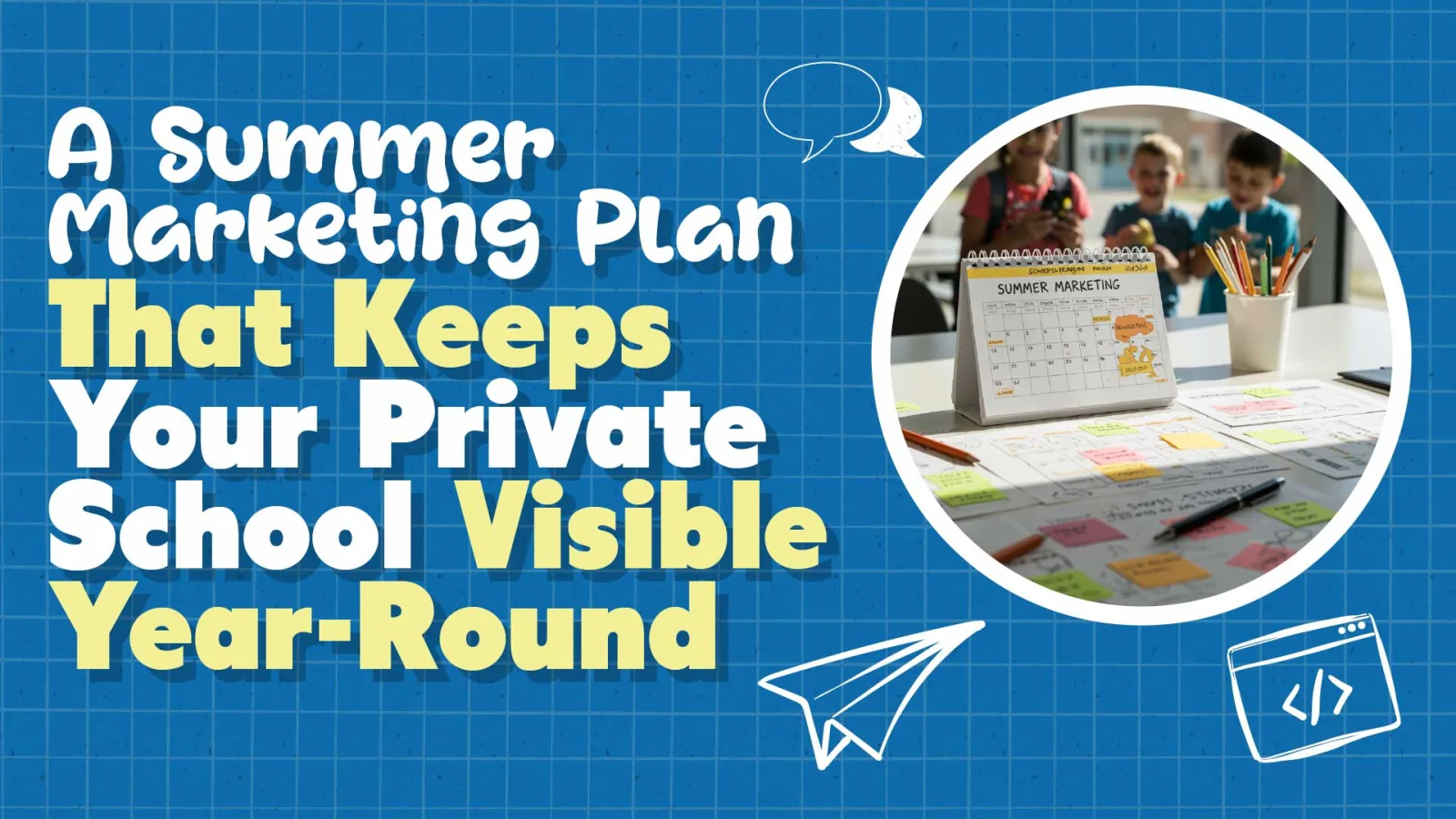
Map out every blog post, social media update, email newsletter, and ad campaign for May through August. Batch-create content while the campus is still active and you have access to students, teachers, and events for photos and stories. If you need a framework, a year-round content strategy makes the summer calendar much easier to build. A content calendar created in April means your summer content practically runs on autopilot.
Ad Schedules and Budget Allocation
Decide now how your paid advertising budget will be distributed across the summer months if your school runs Google Ads or social media campaigns, set up the creatives and targeting before break. The NAIS cost-per-enrollment study found a median cost of $3,677 per enrolled student, so every dollar you spend during the lower-competition summer months stretches further.
Email Automation
Set up automated email sequences for summer inquiries. When a family submits an inquiry form in July, they should not wait until August for a response. Build a drip sequence that nurtures enrollment inquiries by acknowledging their interest immediately, providing key information about your school, and scheduling a follow-up for when your admissions team is back at full capacity.
Team Roles and Coverage
Determine who monitors what during the summer. Even if your marketing director takes a vacation, someone needs to check inquiry forms, respond to social media comments, and monitor ad performance. A coverage schedule prevents the dreaded "we missed that inquiry for six weeks" scenario.
Testimonial and Story Collection
Before the school year ends, gather testimonials from current families, teachers, and graduating students. These quotes, video clips, and written stories become summer content fuel. It is significantly easier to collect authentic testimonials when people are still on campus than to chase them down in July when everyone is at the beach.
How Should You Structure a Summer Marketing Calendar?
A month-by-month approach keeps your summer marketing focused without overwhelming your team. Here is a framework that works for most private schools.
May: Wrap and Prep
May is the bridge between the school year and summer. Capture end-of-year content while it is happening: graduation photos, award ceremonies, field trips, student spotlights. Archive everything you will need for summer and fall campaigns. Finalize your summer content calendar and get the first two weeks of June content scheduled and ready to publish.
June: Launch and Sustain
June is when summer marketing kicks into gear. Launch your summer ad campaigns targeting families searching for schools. Publish blog content that addresses summer-specific parent concerns: "Is it too late to enroll for fall?" and "What to look for when touring a private school." Send your first summer newsletter to prospective families on your inquiry list.
July: Build and Improve
July is the quiet month, and that is exactly what makes it valuable. Use this time for projects you cannot tackle during the school year. Update your website. Rewrite admissions page copy. Improve page load speed. Audit your SEO and fix technical issues. Redesign landing pages that are not converting. July is your school website's spa day.
Research from the NAIS 2024-2025 State of Independent School Marketing also highlights that the typical independent school has three or fewer full-time marketing staff, which means the school year rarely offers time for these larger projects. Summer is when those improvements happen.
August: Ramp and Transition
August is the sprint to the finish line. Shift your ad messaging from general school awareness to back-to-school urgency. Send deadline-focused emails to prospective families who have been in your nurture pipeline all summer. Prepare your fall marketing campaigns so they launch on day one. Update your Google Business Profile with new school year hours, contact information, and upcoming events.
Review your summer campaign performance data to inform fall strategy. Which blog posts got the most traffic? Which email sequences had the highest open rates? Which ad creatives produced the lowest cost-per-click? These insights shape your September through December marketing approach. August is not the time to start planning; it is the time to execute what you already planned and learn from what the summer taught you.
What Website and SEO Work Should Happen Over Summer?
Summer is the single best window for website improvements. During the school year, your site is actively driving traffic and converting inquiries; making major changes mid-cycle risks disrupting what is working. Summer gives you room to make those changes without impacting live enrollment campaigns.
Priority Website Projects
Start with an audit. A comprehensive website review helps you identify what is working and what needs attention. Review your top-performing pages and your worst-performing pages. Which admissions pages have high bounce rates? Which program pages never get visited? Use Google Analytics data from the past school year to identify what needs attention.
Common summer website projects include rewriting tuition and financial aid pages for clarity, updating photo galleries with current students and campus images, rebuilding the mobile experience for families browsing on phones, and creating new landing pages for fall enrollment campaigns. The goal is to enter the new school year with a website that works harder for you.
SEO Improvements
Summer is also ideal for SEO work that takes time to produce results. If you have not built a formal SEO strategy for your school, summer is the time to start. Update title tags and meta descriptions on key pages. Publish new content targeting keywords you want to rank for by fall. Fix broken links and redirect old pages. Build out location-specific content if your school draws from multiple towns or neighborhoods.
Search engines need weeks to index and rank new content. An SEO improvement made in June starts showing results by August, just when families are actively searching. An SEO improvement made in September might not pay off until November, after the enrollment window has largely closed. The timeline matters, and summer gives you the head start that fall does not.
How Do You Handle Social Media When Campus Is Empty?
Limited campus activity does not mean limited social media content. It just means you need a different approach. (For a full breakdown, see our guide to summer social media strategies for private schools.)
Content Ideas for the Off-Season
Shift from live campus content to evergreen material. Feature alumni stories and where-are-they-now profiles. Share teacher preparation content as staff gear up for fall. Post throwback content from the school year's highlights. Create a "meet the teacher" series that introduces new faculty before school starts. Run parent testimonial posts from families who enrolled during the previous year.
Behind-the-scenes content also performs well during the summer. Show campus maintenance and improvements. Document new classroom setups. Share curriculum updates and program additions. Families want to see that the school is active and improving, even when students are not on campus.
Posting Frequency
You do not need to maintain the same posting frequency during the summer that you keep during the school year. Three posts per week during the academic year can drop to two per week during the summer without losing momentum. What matters is consistency. Posting twice a week for 12 weeks beats posting five times a week for two weeks and then going silent until August.
Paid Social Strategy
If your school runs paid social campaigns, summer is not the time to pause them. It is time to adjust them. Shift targeting toward families in the research phase. Use retargeting campaigns to stay visible to families who visited your website during the spring but did not apply. Test new ad creatives and messaging with smaller budgets before scaling up for the fall push.
What Does a Practical Summer Marketing Plan Look Like?
Consider a mid-sized college preparatory school with roughly 550 students and a marketing director managing a team of two. Their annual marketing budget sits around $150,000, and the director reports directly to the head of school.
In April, the marketing director maps out a 16-week summer plan. She batches four blog posts and schedules them for June and July publication. She creates three email sequences: one for new inquiries, one for families who toured but did not apply, and one for wait-listed families. Her Google Ads budget shifts from $2,000 per month during the school year to $2,500 per month during summer to take advantage of lower competition.
In May, the team shoots photos and video at graduation, the spring musical, and the last week of classes. They archive everything in a shared drive organized by content type. The social media calendar for June is loaded and scheduled.
By June, the marketing director is checking dashboards twice a week instead of daily. Automated emails are handling inquiry responses. Blog posts are being published on schedule. Social media is running from the pre-loaded calendar. She spends her reduced oversight time on the July website overhaul, rewriting the admissions landing page, and building a new virtual tour page.
When August arrives, the team shifts into back-to-school mode with fresh ad campaigns, an updated website, and a pipeline of nurtured inquiries ready to convert. The fall enrollment push feels like a continuation, not a cold start.
The difference between this school and one that paused marketing for the summer is not talent or budget. It is preparation. The April planning session took one afternoon. The summer execution took minimal daily effort. And the August enrollment results reflected three months of consistent visibility instead of three months of silence.
Conclusion
Summer marketing is not about working through your vacation. It is about planning well enough in April and May that your marketing keeps running while your team takes a well-deserved break. The schools that treat summer as a marketing opportunity consistently enter fall with stronger enrollment pipelines and less panic. They also enter with better websites, stronger SEO rankings, and a library of fresh content ready to deploy.
If you are staring down the end of the school year and your summer marketing plan is still a blank page, reach out. We help private school marketing teams build strategies that work twelve months a year, not just nine.
Frequently Asked Questions
How Far in Advance Should Schools Plan Their Summer Marketing?
Start planning in April, at a minimum. The best summer marketing plans are finalized before May so that content, ad campaigns, and email automation are ready to launch when the school year ends. Waiting until June means you are already behind.
Should Private Schools Pause Google Ads During Summer Break?
No. Summer is actually a strategic time to run ads because many competitors pause their campaigns, which lowers cost-per-click and reduces competition for enrollment-related keywords. Shift your messaging toward families actively researching schools for the upcoming year.
How Much Budget Should Schools Allocate to Summer Marketing?
Most schools benefit from maintaining or slightly increasing their monthly marketing spend during summer. Lower ad competition means your budget stretches further. A school spending $2,000 per month on ads during the school year might increase to $2,500 during summer for better reach at a similar or lower cost-per-click.
What Website Changes Are Best to Make During Summer?
Prioritize updates that are too disruptive for the school year: admissions page rewrites, photo gallery updates, mobile experience improvements, landing page redesigns, and SEO technical fixes. These projects need time to implement and time for search engines to index before the fall enrollment season.