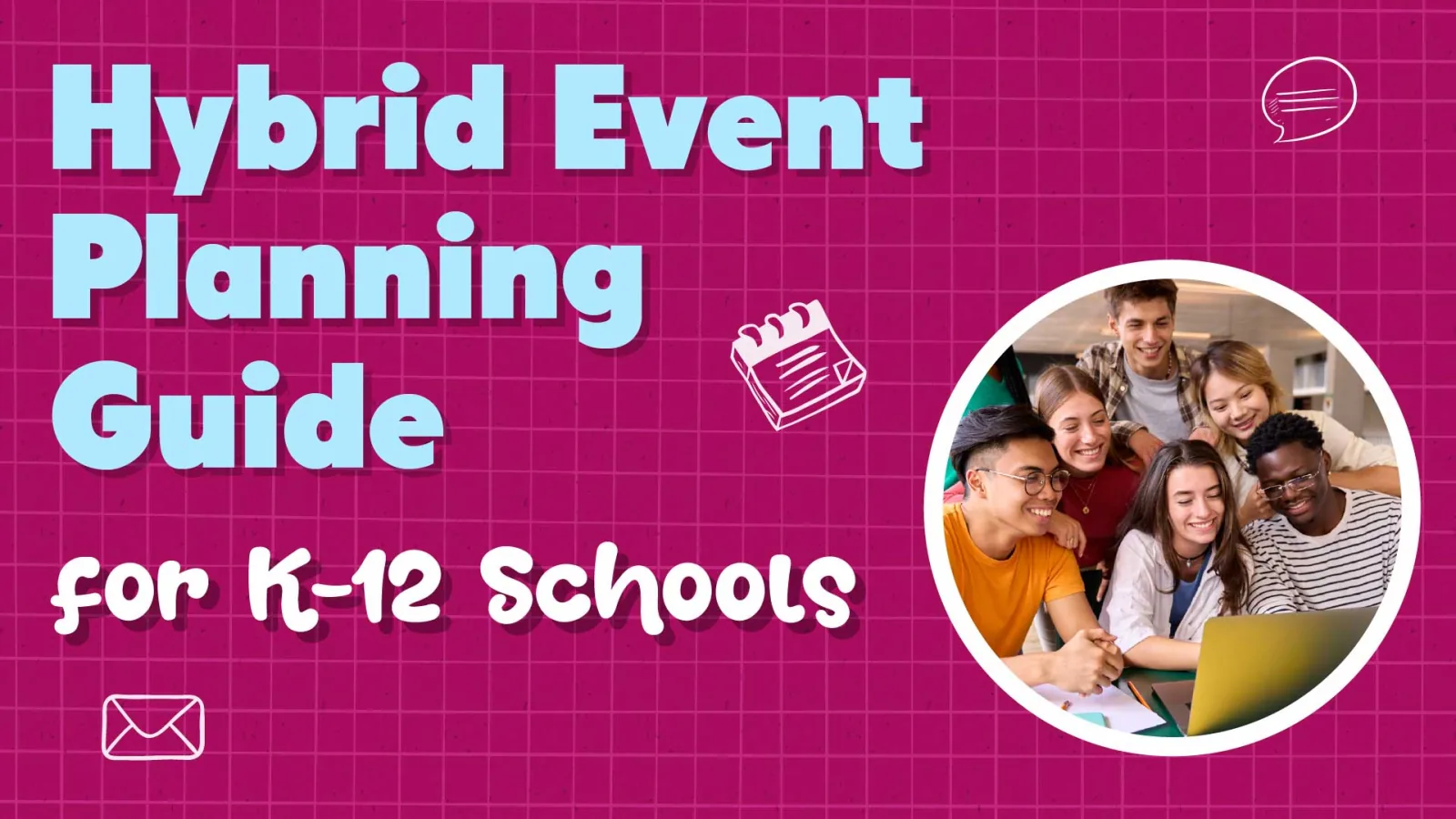
Let's face it—if the pandemic taught us anything, it's that adaptation isn't just helpful, it's essential. And while we all initially groaned at the thought of another Zoom meeting, hybrid events have evolved from a necessary evil to a powerful opportunity for private schools to expand their reach, enhance parent engagement, and showcase their technological prowess.
The data speaks for itself: recent polling reveals that 72% of parents are considering new school options, with 49% preferring their child learn at home at least one day a week. For K-12 private schools, this shift in parent expectations extends beyond just classroom learning to school events and activities. Parents now expect the flexibility and accessibility of hybrid options for everything from parent-teacher conferences to school performances.
The transition to hybrid events isn't just about keeping up with the times—it's about leveraging a powerful tool to differentiate your school in an increasingly competitive educational marketplace. When done right, hybrid events can:
- Increase attendance and participation from busy parents who might otherwise miss out
- Create meaningful engagement opportunities for distant family members (grandparents, etc.)
- Showcase your school's commitment to innovative educational approaches
- Build a stronger, more connected school community across physical boundaries
- Provide valuable content that can be repurposed for marketing and recruitment
But let's be honest—many schools rushed into hybrid events without proper planning during the pandemic, resulting in awkward experiences that felt like poor substitutes for in-person gatherings. The good news? We've learned a lot since those early days, and this guide will help you create hybrid events that aren't just adequate alternatives but genuinely enhanced experiences for everyone involved.
Event Structure: Building the Perfect Hybrid Framework
The foundation of any successful hybrid event is a thoughtfully designed structure that considers both your in-person and virtual audiences. Unlike fully virtual or fully in-person events, hybrid events require careful orchestration of two parallel experiences that still feel cohesive and connected.
Selecting the Right Events for a Hybrid Format
Not every school event is ideal for a hybrid approach. Consider these factors when deciding which events to offer in a hybrid format:
- Value to remote attendees: Will virtual participants gain meaningful value, or will they feel like passive observers?
- Technical complexity: Does your team have the capabilities to execute the technical requirements?
- Engagement opportunities: Can you create genuine interaction between in-person and virtual attendees?
- Budget considerations: Do you have the resources to create a quality experience for both audiences?
Events that typically work well in a hybrid format include the following:
- Parent information sessions and curriculum nights
- Student performances and showcases
- Guest speaker presentations
- School-wide assemblies and celebrations
- Board meetings and strategic planning sessions
- Alumni events and fundraisers
Events that may present more challenges (though not impossibilities) include:
- Hands-on workshops
- Athletic competitions
- Networking-focused gatherings
- Multiple-location activities
Creating a Balanced Agenda
The key to a successful hybrid event lies in crafting an agenda that serves both audiences equally. Your event should include proven techniques like Q&A sessions with key speakers, but you can also push the boundaries with creative elements like live audience quizzing with prizes. Here's how to structure a balanced hybrid event:
- Shared core content: Ensure all essential information and presentations are accessible to both audiences.
- Parallel experiences: When in-person attendees break for networking or hands-on activities, provide virtual attendees with their own valuable experience (dedicated breakout rooms, virtual tours, etc.).
- Transition buffers: Allow extra time for technology transitions between segments, which benefit both audiences by creating a smoother experience.
- Designated interaction periods: Schedule specific times for in-person and virtual audiences to interact with each other.
- Varied presentation formats: Alternate between formats (presentations, panels, interactive segments) to maintain energy and engagement.
A sample agenda for a hybrid parent information night might look like this:
6:30-6:45 PM: Welcome and School Updates (Livestreamed)
6:45-7:15 PM: Curriculum Presentation (Livestreamed)
7:15-7:30 PM: Q&A from both in-person and virtual attendees (Moderated)
7:30-8:00 PM:
In-Person: Classroom visits with teachers
Virtual: Breakout rooms with department heads + pre-recorded classroom tours
8:00-8:15 PM: Closing remarks and next steps (Livestreamed)
8:15-8:30 PM: Open networking/questions for both audiences
By thoughtfully structuring your event, you ensure that virtual attendees aren't merely passive observers but active participants in a carefully crafted experience.
Technical Setup: The Backbone of Successful Hybrid Events
Even the most brilliantly planned hybrid event will crumble without reliable technology. The technical setup is where many schools falter—either overcomplicating the production or underestimating the requirements for a professional experience.
Essential Equipment
For hybrid events, using at least one camera is encouraged as it can be more engaging for the virtual audience than viewing slides and audio only. Consider adding a second camera to provide another angle option for both wide shots and close-ups. Your equipment needs will vary based on your event's scale, but here's a foundational list:
Audio:
- Quality microphones for presenters (lavalier or handheld)
- Ambient microphones to capture audience questions
- Audio mixer for managing multiple audio sources
- Speakers for in-room amplification
Video:
- Primary camera for main presentation focus
- Secondary camera for audience or alternative angles (optimal)
- Document camera or screen sharing capability for presentations
- Video switcher for managing multiple video sources
Connectivity:
- Dedicated, reliable internet connection (wired preferred)
- Backup internet option (mobile hotspot)
- Sufficient bandwidth for high-quality video streaming
Other Technical Essentials:
- Adequate lighting for video clarity
- Projection/displays for in-room participants
- Dedicated computer for streaming
- Platform-specific hardware requirements
Flexible learning spaces equipped with advanced audiovisual capabilities are becoming essential in modern K-12 education, supporting various teaching methods and activities while adapting to different subjects and needs. If your school is considering a long-term investment in hybrid capabilities, creating a dedicated space with permanent equipment setups can dramatically reduce the stress and complexity of hybrid events.
Streaming Platforms and Software
Selecting the right platform is crucial for your hybrid event's success. Consider these options based on your specific needs:
Video Conferencing Platforms:
- Zoom: Familiar interface, breakout rooms, Q&A features
- Microsoft Teams: Good integration with Office 365, robust security
- Google Meet: Simple interface that integrates with Google Workspace
Dedicated Event Platforms:
- Hopin: Comprehensive event management with lobby, stages, and networking
- Airmeet: Interactive features like social lounge for networking
- Whova: Strong community engagement features
Streaming Services:
- YouTube Live: Wide accessibility, automatic recording
- Vimeo Premium: Professional appearance, no ads
- Facebook Live: Good for community-oriented events
Education-specific streaming video systems like DEVOS can help private schools economically broadcast live events and morning announcements, allowing scheduling and multiple device access. These specialized platforms often include additional features tailored to educational settings.
Technical Testing and Redundancy
Technical failures can quickly derail your hybrid event, making thorough testing essential:
- Complete rehearsal: Run through the entire event with both in-person and virtual components.
- Connection testing: Verify bandwidth capabilities at the expected audience size.
- Backup planning: Establish protocols for technical failures:
- Audio issues (backup microphones, alternate audio feed)
- Video problems (backup camera, pre-recorded content)
- Internet failure (secondary connection, recorded content options)
- Team assignments: Designate specific roles:
- Technical director
- Virtual audience moderator
- In-person audience facilitator
- Troubleshooting specialist
Remember, the goal isn't to create a Hollywood production—it's to ensure your message reaches both audiences with clarity and professionalism. As noted by education experts, one rule to follow when tapping the benefits of hybrid approaches is to "keep it simple." Think about streamlining applications to reduce the number of passwords and logins; simplicity benefits students, teachers, and parents alike.
Engagement Strategy: Creating Meaningful Connections
The greatest challenge of hybrid events is creating genuine engagement between two fundamentally different audience experiences. Without strategic planning, virtual attendees can feel like passive observers rather than active participants.
Bridging the Physical-Virtual Divide
A key strategy for hybrid event success is bringing in-person and virtual attendees together by using a digital platform as your primary medium for audience participation. Consider these approaches:
- Unified Q&A: Use a digital platform for questions from both audiences, ensuring equal opportunity for participation.
- Joint polling and surveys: Conduct real-time polls that aggregate responses from both audiences and share results visually.
- Shared activities: Create exercises that both audiences can participate in simultaneously (e.g., collaborative document creation, shared brainstorming).
- Cross-audience interaction: Facilitate conversations between virtual and in-person participants through moderated discussions.
- Visual recognition: Display virtual attendees on screens that are visible to the in-person audience and ensure in-person participants are visible in the stream.
Many third-party tools can enhance engagement across both audiences:
- Mentimeter: Interactive presentations with real-time polling
- Padlet: Collaborative digital bulletin boards
- Slido: Q&A and polling platform
- Jamboard: Digital whiteboarding for joint activities
Participation Incentives and Activities
Active learning strategies can be particularly effective for promoting engagement, with techniques like the "pause procedure" (pausing every 12-15 minutes for discussion) and "three-step interview" (where group members interview each other) keeping participants involved. Adapt these classroom techniques to your school events by:
- Creating friendly competition: Trivia contests about school history or curriculum that involve both audiences.
- Offering recognition incentives: Feature participants who ask thoughtful questions or provide valuable input.
- Using breakout activities: Assign mixed groups of in-person and virtual participants for short collaborative tasks.
- Implementing gamification: Award points for participation that can be redeemed for school merchandise or privileges.
Surprisingly, according to a Gallup Poll, 30% of K-12 teachers report that digital learning tools help engage students with learning and school activities, while a whopping 9 out of 10 of 3rd to 5th-grade students claim they use e-learning materials frequently in class. Leveraging this existing comfort with digital tools can make hybrid event participation feel natural for students and, by extension, their families.
Optimizing for Different Stakeholders
Different members of your school community will have varying needs and expectations for hybrid events:
Parents:
- Clear, accessible information
- Opportunities to ask questions
- Efficient use of their time
- Connection with their child's experience
Students:
- Interactive, engaging content
- Opportunities to showcase their work
- Peer recognition and involvement
- Age-appropriate participation methods
Faculty/Staff:
- Professional presentation platform
- Manageable technical requirements
- Support for their presentation style
- Tools that enhance rather than complicate their message
Extended Family/Alumni:
- Easy access without technical barriers
- Context for understanding school culture and changes
- Ways to support current students
- Connection to school traditions and values
By designing your engagement strategy with these stakeholder-specific needs in mind, you'll create a more inclusive and satisfying experience for your entire community.
Measuring Success: Beyond Attendance Numbers
Evaluating hybrid events requires metrics that capture both quantitative data and qualitative experiences. This measurement goes beyond simple headcounts to understand genuine engagement, satisfaction, and impact.
Quantitative Metrics
Track these data points to measure the technical and participatory success of your events:
- Attendance dynamics:
- Total attendance compared to previous in-person-only events
- Ratio of in-person to virtual participants
- Attendance duration and drop-off patterns
- Geographical distribution of virtual attendees
- Engagement Indicators:
- Questions submitted via various channels
- Poll/survey participation rates
- Chat activity metrics
- Interactive feature usage
- Technical performance:
- Stream quality and stability metrics
- Platform performance and issues
- Device and access method distribution
- Support requests and resolution times
Research has found that parental involvement tends to decline as students get older, with studies showing parental involvement between third through fifth grade and middle school. Tracking attendance patterns by grade level can help you tailor hybrid strategies to combat this natural decline in engagement.
Qualitative Feedback
While numbers tell part of the story, understanding participant experiences requires qualitative assessment:
- Post-event surveys: Separate surveys for in-person and virtual attendees to compare experiences
- Focus groups: Small discussions with representatives from different stakeholder groups
- Individual interviews: One-on-one conversations with selected participants from both attendance modes
- Social listening: Monitoring unofficial feedback on social media and in community conversations
Key questions to include in your qualitative assessment:
- Did participants feel equally valued regardless of attendance mode?
- Were participants able to contribute and ask questions effectively?
- What technical or logistical challenges impacted the experience?
- Would participants choose the same attendance mode for future events?
- What features or elements would improve the experience?
Continuous Improvement Framework
Your first hybrid event might not go perfectly, but each event offers a valuable learning opportunity. Use technology to monitor key metrics to understand success by tracking participant activity and generating summary reports of audience numbers, engagement metrics, and survey results. Implement a structured improvement process:
- Pre-event baseline: Establish clear goals and expectations for each event
- Real-time monitoring: Track technical and engagement metrics during the event
- Immediate debrief: Gather team insights while the experience is fresh
- Comprehensive analysis: Compare metrics against goals and previous events
- Action planning: Identify specific improvements for future events
- Knowledge sharing: Document lessons learned for institutional knowledge
Consider creating a hybrid event playbook that evolves with each event, capturing best practices, technical specifications, and improvement opportunities for your specific school context.
Conclusion: The Future of Hybrid Events in Private Education
As we look ahead, hybrid events will continue to evolve from a pandemic necessity to a strategic advantage for forward-thinking private schools. The education conference landscape is already embracing this format, with events like the National Hybrid Schools Conference gathering educators, innovators, and policymakers to explore the future of hybrid learning. Your school can be at the forefront of this evolution.
The most successful private schools will recognize that hybrid events aren't simply about broadcasting in-person gatherings—they're about reimagining community engagement for a connected world. This approach aligns perfectly with what today's parents increasingly seek in education: flexibility, accessibility, and technological competence combined with strong community values.
Rigorous research has demonstrated that one study found that sharing information with parents about their students' assignments, grades, and absences reduced course failures by 28% and increased attendance by 12%. Hybrid events can be a powerful tool in your parent engagement strategy, making it easier for busy families to participate meaningfully in school life.
Rigorous research has demonstrated that parental engagement programs show measurable results, with one study finding that sharing information with parents about their students' assignments, grades, and absences reduced course failures by 28% and increased attendance by 12%. (Source: Overdeck)
As you implement the strategies in this guide, remember that perfection isn't the goal—connection is. Each hybrid event you host will teach valuable lessons that improve future experiences. The investment in equipment, training, and planning will yield returns not just in attendance numbers but in the strength and reach of your school community.
Private schools have always distinguished themselves through personalized attention and community connection. Hybrid events expand these core values beyond physical limitations, allowing you to maintain the intimate, high-touch experience parents expect while embracing the technological fluency students need for their future.
By mastering the art of hybrid events, you're not just adapting to current circumstances—you're positioning your school as an educational leader ready for whatever the future holds.
Ready to take your school's hybrid events to the next level? Connect with me today! My team and I can provide personalized guidance for your specific needs and challenges.