Remember when choosing a school meant driving around the neighborhood and asking the lady next door about her kids' teachers? Those days are as extinct as dial-up internet and just about as useful for today's parents navigating the complex world of K-12 private school choice.
Today's parents don't just research schools—they conduct full-scale digital investigations that would make a private detective proud. They cross-reference online reviews, analyze social media feeds, scrutinize websites for outdated information, and join Facebook groups where they dissect everything from cafeteria menus to teacher turnover rates. It's a brave new world where a school's Instagram presence might matter as much as its test scores.
The stakes couldn't be higher. For parents, choosing the right school represents one of the most important decisions they'll make for their children's future. For schools, understanding how today's digitally-savvy parents research and evaluate their options isn't just helpful—it's essential for survival in an increasingly competitive educational landscape.
The digital parent research process has fundamentally changed how families choose schools, creating new opportunities and challenges for both parents and educational institutions. Success in this new reality requires understanding not just what information parents want, but how they find it, evaluate it, and ultimately use it to make decisions that will shape their children's educational journey.
The Evolution of Parent Research Behavior
Not too long ago, school choice was relatively straightforward. Parents typically sent their kids to the neighborhood school, maybe drove by a few options, and relied heavily on word-of-mouth recommendations from other families in their community. The information available was limited, and the research process was largely offline and informal.
Then the internet changed everything. Suddenly, parents had access to unprecedented amounts of information about schools—test scores, teacher credentials, curriculum details, and opinions from other parents. What started as a trickle of online school directories and basic websites has become a flood of digital touchpoints that parents now navigate as naturally as they scroll through social media.
The transformation has been dramatic. According to the National School Choice Awareness Foundation, 72% of parents considered new schools for their children in 2024, compared to just 52% in 2022—that's a 35% increase in just two years. Even more telling, 64% of parents say they wish they had more information about education options for their children, suggesting that despite having more access to information than ever before, parents still feel underinformed about their choices.
| School Choice Steps | Considered a new school | Searched for a new school | Enrolled in a new school |
|---|---|---|---|
| All parents | 72% | 63% | 44% |
| Black parents | 76% | 67% | 47% |
| Hispanic parents | 66% | 57% | 38% |
| White parents | 73% | 64% | 43% |
The COVID-19 pandemic accelerated this digital transformation exponentially. As schools moved online and parents became more involved in their children's daily education, families developed new expectations for transparency and digital communication. Parents who had never considered alternatives to their local public school suddenly found themselves researching virtual learning options, private schools, and homeschooling programs—all primarily through digital channels.
Research from McKinsey shows that consumers across all industries now expect immediate gratification and convenience, spending their time and money differently than they did just five years ago. This shift in consumer behavior has directly impacted how parents approach school research, with digital-first expectations becoming the norm rather than the exception.
Today's parents don't just use digital tools—they expect them. They want comprehensive websites, active social media presence, online application systems, and immediate responses to their inquiries. Schools that haven't adapted to this new reality aren't just missing opportunities; they're actively driving away prospective families who interpret poor digital presence as a red flag about the school's overall quality and forward-thinking approach.
Mapping the Digital Parent Journey
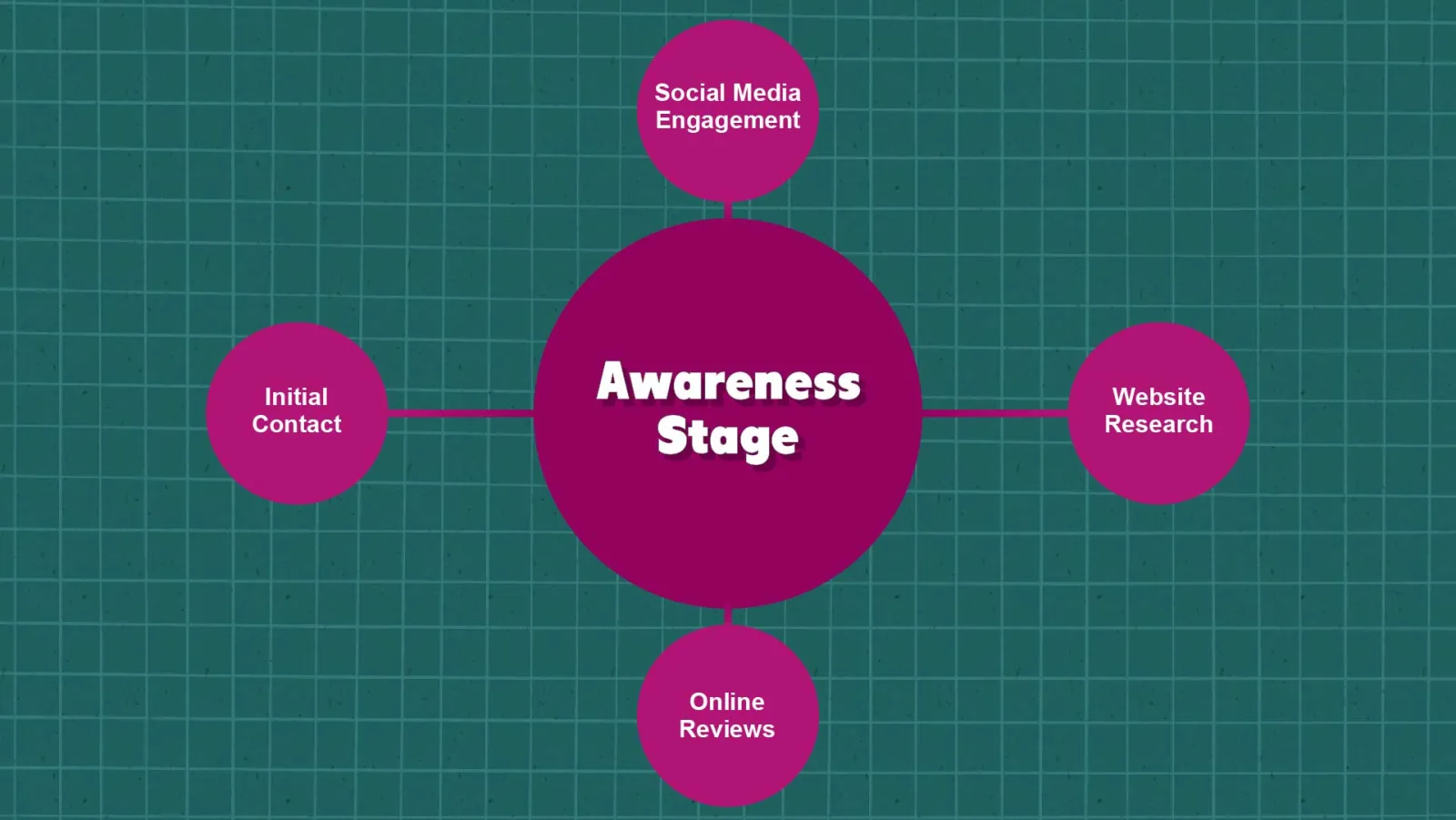
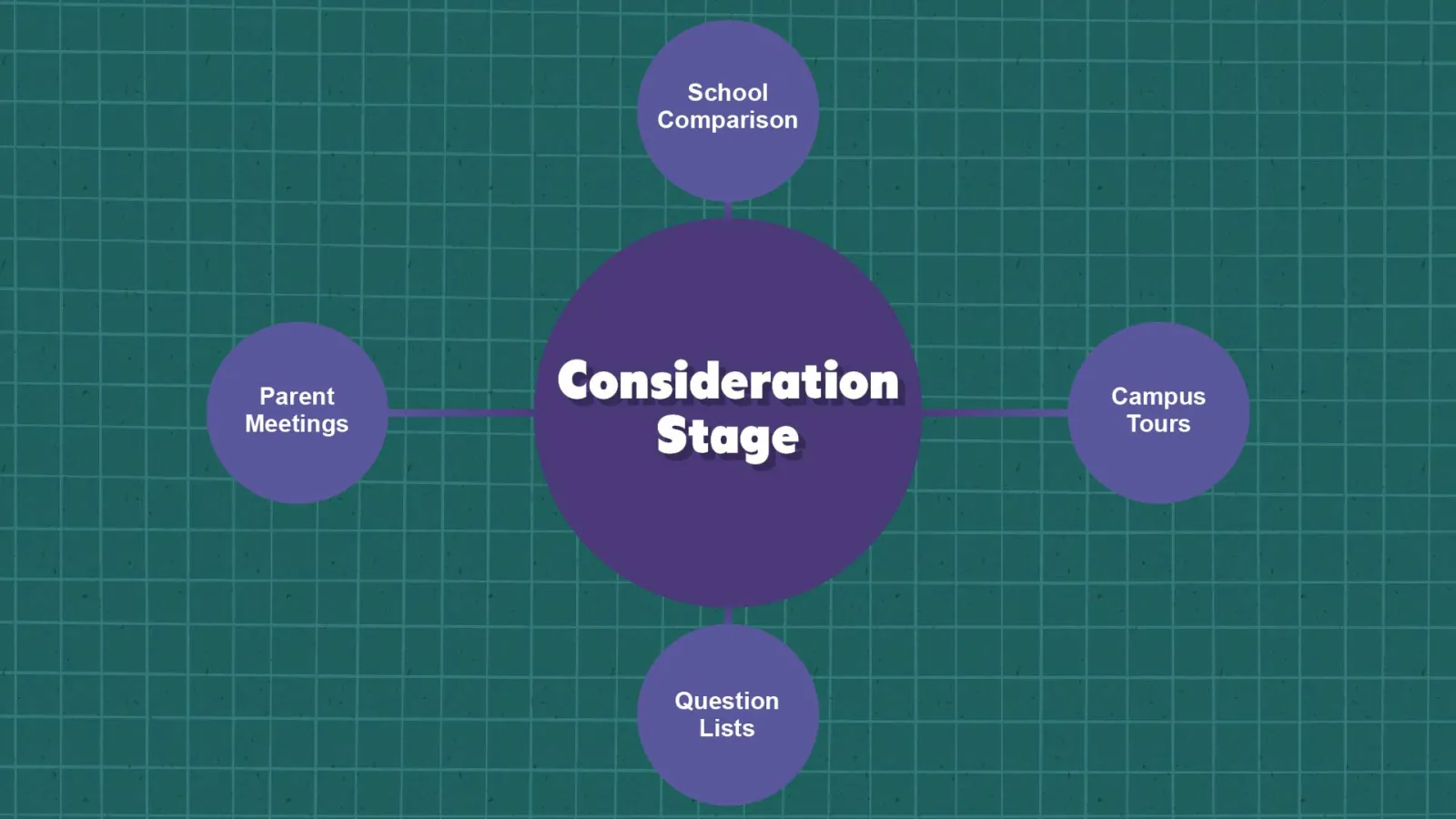
Understanding how parents research schools online requires mapping their journey from initial awareness through final decision. This process rarely follows a linear path, but most parents progress through three distinct phases, each with its own digital touchpoints and behavioral patterns.
Awareness Stage: When Research Begins Online
The journey typically starts with a broad online search. Parents experiencing dissatisfaction with their current school situation, facing a move, or simply exploring options begin with general searches like "private schools near me" or "best schools in [city]." This stage is characterized by information gathering and option identification rather than deep evaluation.
During this phase, parents typically engage with search engines as their primary research tool, scan online directories and review sites, and begin following schools on social media platforms. They're not yet ready to engage directly with schools—they're still figuring out what's even available in their area.
Consideration Stage: The Deep Research Phase
Once parents have identified potential schools, they enter the deep research phase. This is where the real work begins, and where schools can make or break their chances of earning a prospective family's consideration.
Parents in this stage dive deep into school websites, seeking detailed information about curriculum, faculty, student outcomes, and school culture. They read every page, scrutinize photo galleries, and watch promotional videos. They're looking for substance beyond marketing copy—they want to understand what their child's daily experience would actually be like.
Online reviews become crucial during this phase. Parents scour platforms like GreatSchools.org, Niche.com, and Google Reviews, reading both positive and negative feedback from other families. They're particularly interested in reviews from parents whose children have needs similar to their own, whether that's academic acceleration, learning support, or extracurricular interests.
Social media plays an increasingly important role here as well. Parents join Facebook groups dedicated to school choice in their area, ask questions on neighborhood platforms like Nextdoor, and follow schools' Instagram accounts to get a sense of daily life on campus. They're seeking authentic glimpses into the school community that go beyond official marketing materials.
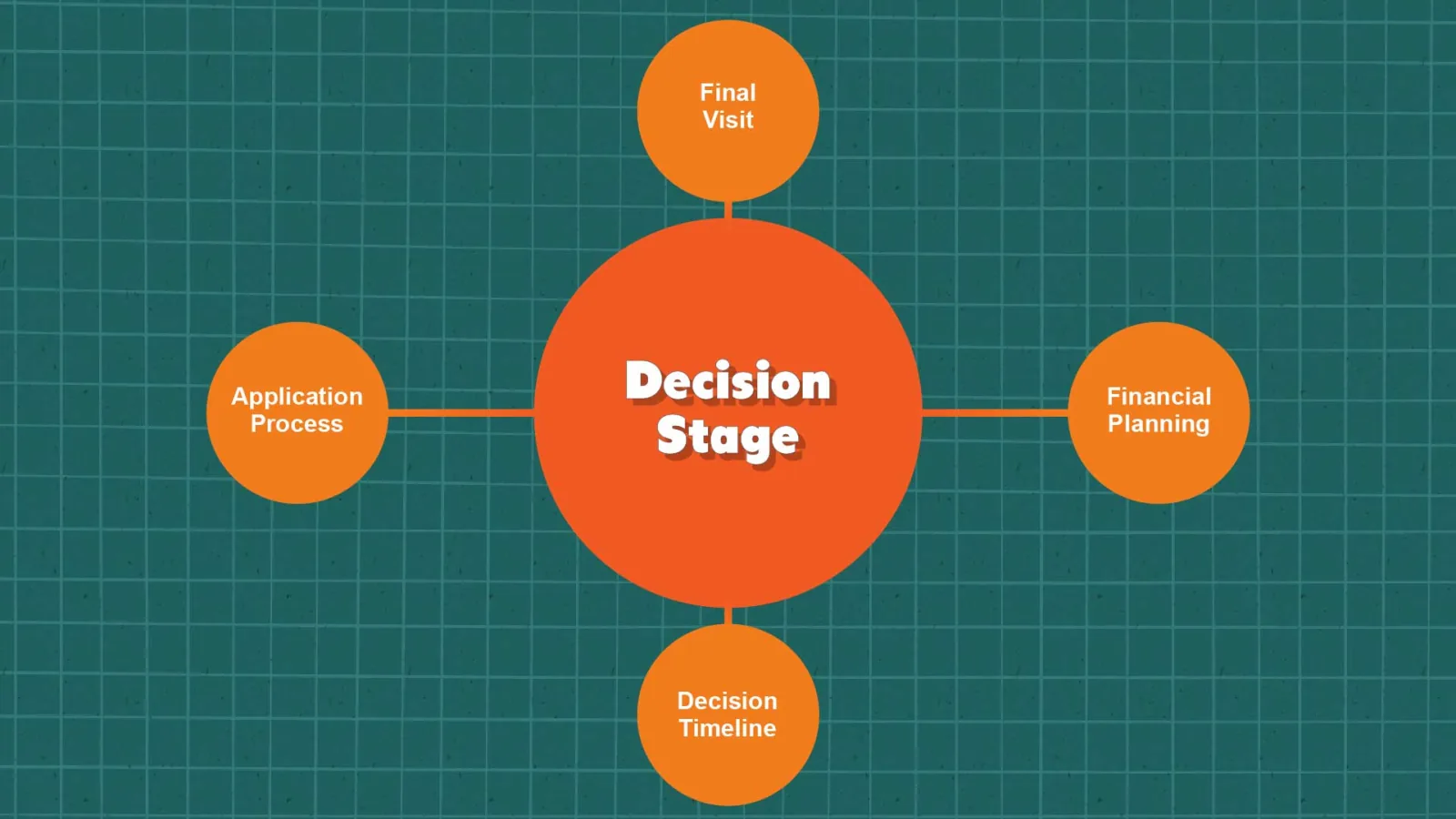
Decision Stage: Final Validation
In the final stage, parents engage in what might be called "digital due diligence." They're not just researching anymore—they're validating their impressions and checking for any red flags that might change their minds.
This includes checking recent news about the school, verifying accreditation status, and looking at the most recent online reviews to ensure there haven't been any significant changes since their initial research. Parents also tend to return to the school's website multiple times, often with specific questions or to show the site to other family members involved in the decision.
The decision stage is also when parents most actively seek personal connections—they might reach out to current families through social media, attend virtual information sessions, or schedule campus visits. However, even these traditional touchpoints now have digital components, with parents often following up on in-person interactions by checking the school's social media or website for additional information.
Key Digital Touchpoints and Parent Behavior
Search Engine Behavior
Search engines serve as the primary gateway for parent research, making understanding search behavior crucial for both parents and schools. Most parents begin with location-based searches, with 80% of school-related searches including geographic terms like "near me" or specific city names.
The search patterns reveal interesting insights about parent priorities. Early-stage searches tend to be broad ("private schools," "best elementary schools"), while later-stage searches become more specific ("[School Name] reviews," "[School Name] tuition," "[School Name] academics"). This progression indicates that parents are moving from discovery to evaluation as their research deepens.
For schools, this search behavior has significant implications. Parents who can't find basic information about a school through search engines are likely to eliminate it from consideration entirely. Schools need to ensure their websites are optimized not just for their school name, but for the descriptive terms parents are most likely to use when searching.
Social Media Influence
Despite the wealth of information available through official channels, social media has become a critical component of parent research. However, the influence of social media on parent decisions is more nuanced than schools might expect.
McKinsey research shows that while consumers report social media as their least trusted source for brand recommendations, family and friends remain their most trusted sources, and social media is where many of these trusted conversations happen.
Parents use social media platforms differently throughout their research process. Facebook groups serve as forums for asking specific questions and getting recommendations from other parents. Instagram provides visual glimpses into school life that help parents assess culture and community. LinkedIn networking can connect parents with other professionals who attended or have children at specific schools.
The key insight for schools is that social media success isn't about follower counts or viral content—it's about authentic engagement with the parent community and consistent representation of school values and culture.
Online Review Platforms
Online reviews have become the digital equivalent of word-of-mouth recommendations, and their influence on parent decision-making cannot be overstated. Research shows that schools need a minimum of 4-star ratings to remain in consideration for most parents, with anything below 3.5 stars serving as an immediate disqualifier.
Parents have become sophisticated in their evaluation of online reviews. They look for specificity in feedback, consider the reviewer's relationship to the school, and assess the overall pattern of reviews rather than focusing on individual comments. Reviews that provide detailed information about specific programs, teachers, or experiences carry more weight than vague positive or negative statements.
The challenge for schools is that review platforms like Google, Niche, and GreatSchools operate differently, with varying approaches to review verification and different algorithms for displaying feedback. Schools need to monitor multiple platforms and understand how each one influences parent perceptions.
School Website Expectations
A school's website serves as its digital front door, and parents have high expectations for what they'll find there. Modern parents expect websites to be mobile-friendly, fast-loading, and easy to navigate. They want immediate access to practical information like tuition costs, admission requirements, and contact information.
But parents also expect depth. They want to read detailed curriculum information, learn about individual teachers, and understand the school's educational philosophy. They're looking for evidence of academic outcomes, examples of student work, and authentic testimonials from current families.
Perhaps most importantly, parents expect websites to be current. Outdated information, broken links, or stale content serves as a red flag that the school may not be well-managed or forward-thinking. In an era where parents are making decisions about their children's future, every digital touchpoint reflects on the school's overall quality and professionalism.
The Psychology of Digital Parent Decision-Making
Information Overload Challenge
The abundance of available information creates both opportunities and challenges for parents researching schools. While having access to detailed data about schools is generally positive, many parents report feeling overwhelmed by the sheer volume of information available online.
This information overload can lead to decision paralysis, where parents become so focused on gathering more data that they struggle to actually make a choice. Research shows that parents develop various strategies to manage this challenge, including setting time limits for research, creating structured comparison frameworks, and relying more heavily on trusted sources to filter information.
Schools can help address information overload by organizing their digital content logically, providing clear navigation paths, and offering personalized information sessions that allow parents to focus on the details most relevant to their specific situation.
Trust and Credibility Online
Trust remains the most important factor in parent decision-making, but establishing trust in digital environments requires different strategies than traditional face-to-face interactions. Parents develop trust through consistent messaging across platforms, professional presentation of information, and responsive communication when they reach out with questions.
Credibility signals in digital environments include professional website design, regular content updates, active social media presence, and positive online reviews from verified sources. Parents are particularly attuned to inconsistencies—if a school's website says one thing but social media shows something different, it raises questions about the school's authenticity and attention to detail.
The hierarchy of trust in digital research typically follows this pattern: recommendations from family and friends carry the most weight, followed by online reviews from other parents, then official school information, and finally paid advertising or promotional content.
Emotional vs. Rational Decision-Making
While parents gather extensive rational data about schools—test scores, teacher credentials, college placement rates—the final decision often comes down to emotional factors. Parents want to feel confident that their child will be safe, happy, and able to thrive in the school environment.
Digital research helps parents gather the rational data they need to justify their decision, but emotional connections are often formed through more subtle digital interactions—seeing photos of engaged students, reading testimonials from happy families, or observing how the school responds to questions or concerns on social media.
The most effective school digital strategies recognize this balance, providing comprehensive factual information while also conveying the emotional benefits of being part of the school community.
Demographic Differences in Digital Research
Not all parents approach digital school research the same way. Understanding these differences is crucial for schools developing targeted digital strategies and for parents who want to understand their own research biases and blind spots.
Generational Patterns
Millennials, who now make up the largest group of parents with school-age children, are digital natives who naturally turn to online sources for research. They're heavy users of social media platforms, rely significantly on online reviews, and expect immediate responses to digital inquiries. This generation is also more likely to trust peer recommendations found through social media than traditional marketing materials.
Gen X parents, currently in their 40s and 50s, take a more balanced approach to digital research. They use online tools extensively but often combine digital research with traditional methods like phone calls to schools and in-person visits. They tend to be thorough researchers who systematically work through multiple information sources before making decisions.
Baby Boomers, while fewer in number among current parents, still prefer phone calls and in-person interactions even when they begin their research online. They're more likely to view a school's website as a starting point rather than a comprehensive information source, and they place higher value on direct communication with school staff.
Socioeconomic Factors
Family income significantly influences digital research behavior. Higher-income families tend to research multiple school options extensively, often spending months comparing private schools, charter schools, and elite public school districts. They're more likely to pay for premium access to school rating sites and use professional educational consultants who supplement their digital research.
Budget-conscious families focus their digital research on value-oriented factors like financial aid availability, scholarship opportunities, and cost-effectiveness. They're more likely to engage with schools through social media to ask specific questions about affordability and payment options.
Geographic location also plays a role, with urban parents having access to more school options and therefore conducting more extensive comparative research. Rural parents often have fewer choices but may research alternative options like online schooling or private schools that serve broader geographic areas.
School Type Preferences
Parents researching different types of schools demonstrate distinct digital behavior patterns. According to EdChoice, private school parents list a safe environment as their top priority (50%), followed by academic quality (47%). This contrasts with public school parents, who prioritize location (56%) as their primary decision factor.
Top 3 Reasons for School Enrollment by School Type
| District School Parents | Percentage | Private School Parents | Percentage |
|---|---|---|---|
| Location | 56% | Safe environment | 50% |
| Academic quality | 29% | Academic quality | 47% |
| Safe environment | 27% | Class size | 31% |
These different priorities drive different research behaviors. Private school parents spend more time researching school culture, discipline policies, and community values. They're more likely to read detailed reviews and seek out information about the school's educational philosophy and approach to character development.
Parents considering public schools focus more on logistics—bus routes, before and after-care programs, and proximity to home. Their digital research tends to be more practical and less extensive, since they're often researching a single neighborhood school rather than comparing multiple options.
Implications for Schools and Marketing Directors
Understanding digital parent research behavior has profound implications for how schools approach their marketing and communication strategies. Schools that successfully adapt to these new realities will have significant advantages in attracting and enrolling families.
Digital Presence Essentials
Your school's website is no longer just a digital brochure—it's your primary enrollment tool. Parents expect comprehensive, current information that answers their questions without requiring them to make a phone call or send an email. This means detailed curriculum information, faculty profiles with credentials, clear tuition and fee structures, and authentic examples of student work and school life.
Mobile optimization isn't optional anymore. With parents conducting research on phones during commutes, lunch breaks, and other brief moments throughout their day, a website that doesn't work well on mobile devices will lose prospective families before they even learn about your school's programs.
Page loading speed directly impacts parent impressions. If your website takes more than three seconds to load, many parents will move on to researching other schools. Fast, responsive websites signal that your school is well-managed and technologically competent.
Content Strategy That Resonates
The content that resonates most with researching parents is authentic, specific, and addresses their actual concerns. Generic marketing copy about "excellence" and "preparing students for success" doesn't differentiate your school from hundreds of others making similar claims.
Instead, parents want to see specific examples of how your school serves students. They want to read about the science teacher who stays after school to help students with robotics projects, the literature class that publishes a student anthology every year, or the support program that helped a struggling student discover their passion for mathematics.
Student and parent testimonials carry significant weight, but they need to be specific and credible. A quote from "Sarah, Class of 2023" about how much she "loved the school" is far less valuable than a detailed story from "Sarah Johnson, Class of 2023" about how the school's internship program helped her discover her interest in environmental science and gain admission to her top-choice college.
Review Management Strategy
Online reviews significantly influence parent decisions, but many schools take a passive approach to review management. Schools need proactive strategies for encouraging satisfied families to share their experiences online while also having plans for addressing negative reviews professionally.
The most effective approach involves regularly asking satisfied parents to share their experiences on review platforms. This doesn't mean pressuring families or requesting fake reviews, but rather making it easy for happy families to share their authentic experiences when they feel motivated to do so.
When negative reviews do appear, schools should respond professionally and constructively. A thoughtful response that acknowledges concerns and explains steps being taken to address issues often carries more weight with prospective parents than the original negative review.
Social Media Strategy
Social media success for schools isn't about going viral or having thousands of followers—it's about authentic engagement with your community and consistent representation of your school's values and culture.
The most effective school social media strategies focus on storytelling that helps parents understand what daily life is like at the school. This might include behind-the-scenes glimpses of classroom activities, highlights of student achievements, or features on dedicated teachers and staff members.
Consistency matters more than perfection. Regular posting of authentic content about school life is more valuable than occasional professional videos or photos. Parents want to see that your school is active, engaged, and has something positive happening on a regular basis.
Implications for Parent Researchers
For parents navigating the digital research landscape, understanding common pitfalls and best practices can help you make more informed decisions while avoiding information overload and decision paralysis.
Research Best Practices
Effective digital research requires a systematic approach. Start by identifying your non-negotiables—the factors that absolutely must be present for you to consider a school. This might include location, cost, specific academic programs, or a philosophical approach to education.
Create a research framework that helps you evaluate schools consistently. This might include categories like academic program quality, school culture, extracurricular offerings, and practical considerations like location and cost. Having a structured approach helps you avoid being swayed by impressive websites or marketing materials that don't actually address your priorities.
Set time limits for your research phases. It's easy to spend endless hours reading reviews and comparing schools, but at some point, additional research provides diminishing returns. Give yourself specific deadlines for completing different phases of research, and stick to them.
Information Verification Strategies
Not all online information is current or accurate. School websites sometimes contain outdated information, and online reviews may not reflect recent changes in administration, faculty, or programs. Always verify important information through multiple sources.
Check the dates on school information, especially for things like tuition costs, admission requirements, and program descriptions. If you're seeing information that seems too good to be true or significantly different from other sources, contact the school directly for clarification.
Be particularly cautious about online reviews that seem overly positive or negative, lack specific details, or appear to be posted by people with limited connection to the school. Look for patterns in reviews rather than focusing on individual comments.
Avoiding Digital Research Pitfalls
One of the biggest mistakes parents make is over-relying on online ratings and rankings. While these can be useful starting points, they often don't capture the factors that matter most for your individual child's needs and learning style.
Don't let perfect be the enemy of good. No school will excel in every area, and waiting to find the "perfect" school often means missing application deadlines or enrollment opportunities at schools that would be excellent fits for your child.
Remember that your child's needs and interests may be different from those of other families, leaving reviews. A school that wasn't the right fit for one family might be perfect for yours, depending on your child's personality, learning style, and interests.
Future Trends in Digital Parent Research
The digital landscape continues to evolve, and several emerging trends will likely shape how parents research schools in the coming years.
Emerging Technologies
Virtual and augmented reality technologies are beginning to offer parents more immersive ways to experience schools remotely. Virtual campus tours that allow parents to "walk through" classrooms and common areas are becoming more sophisticated, potentially reducing the need for in-person visits during initial research phases.
Artificial intelligence is starting to play a role in matching families with appropriate schools based on their specific needs and preferences. These systems can analyze family preferences, student needs, and school characteristics to suggest schools that might be good fits, potentially helping parents navigate the overwhelming number of options available in some areas.
Real-time communication tools are becoming more sophisticated, allowing parents to connect instantly with school representatives, current families, or other prospective parents. These tools can provide immediate answers to questions and help parents feel more connected to school communities even before enrollment.
Evolving Parent Expectations
Parents are increasingly expecting transparency in all aspects of school operations. This includes not just academic outcomes and college placement rates, but also information about teacher retention, disciplinary policies, and how schools handle challenges or concerns.
Personalization is becoming more important, with parents expecting schools to provide information tailored to their specific child's needs and interests. This might include customized information packets, personalized campus tours, or connections with current families whose children have similar needs or interests.
Response time expectations continue to decrease, with parents expecting faster replies to inquiries and more immediate access to information. Schools that can't respond quickly to parents' questions may lose prospective families to competitors who can provide more immediate engagement.
Privacy and Security Considerations
As parents become more aware of digital privacy issues, schools need to be more transparent about how they collect, use, and protect family information gathered through digital channels. Clear privacy policies and secure data handling practices are becoming minimum requirements rather than nice-to-have features.
Parents are also becoming more concerned about their children's digital footprints and how schools manage student information online. Schools need to balance the desire to showcase student achievements and school life with respect for family privacy preferences.
Actionable Strategies and Takeaways
For Marketing Directors
Audit Your Digital Presence Regularly: Conduct quarterly reviews of your school's website, social media presence, and online reviews. Check for outdated information, broken links, and inconsistent messaging across platforms.
Develop a Systematic Review Strategy: Create a plan for encouraging satisfied families to share their experiences online. This might include following up with families after positive experiences, providing easy links to review platforms, or incorporating review requests into your regular parent communication.
Invest in Mobile-First Design: Ensure your website works flawlessly on mobile devices. Test loading speeds, navigation, and content readability on various devices and screen sizes.
Create Content That Answers Parent Questions: Develop blog posts, FAQ sections, and information pages that address the questions parents most commonly ask during the research process.
For Parent Researchers
Develop a Research Framework: Create a systematic approach to evaluating schools that includes both rational factors (academics, cost, location) and emotional factors (culture, community, fit).
Use Multiple Information Sources: Don't rely solely on school websites or online reviews. Combine digital research with conversations with current families, school visits, and direct communication with school staff.
Set Research Boundaries: Establish time limits for different phases of research to avoid analysis paralysis. Give yourself deadlines for completing initial research, school visits, and final decisions.
Trust Your Instincts: While thorough research is important, don't ignore your gut feelings about schools. If something doesn't feel right during your research, investigate further or consider other options.
For School Leaders
Invest in Digital Infrastructure: Allocate budget and resources to maintaining a professional, current, and comprehensive digital presence. This includes website maintenance, social media management, and online review monitoring.
Train Your Team: Ensure staff members understand how to communicate effectively in digital environments and represent the school appropriately online.
Monitor and Measure: Track metrics like website traffic, social media engagement, and online review ratings to understand how your digital presence is performing and where improvements are needed.
Stay Current: Keep up with evolving parent expectations and digital trends. What worked for parent communication five years ago may not be effective today.
Conclusion
The digital transformation of parent school research represents one of the most significant changes in education marketing and family decision-making in decades. Today's parents have unprecedented access to information about schools, but they also face new challenges in navigating the overwhelming amount of data available online.
For schools, success in this new landscape requires more than just having a website and social media presence. It demands a comprehensive understanding of how parents research, what information they prioritize, and how they make decisions in digital environments. Schools that can effectively communicate their value proposition through digital channels while maintaining authentic connections with prospective families will have significant advantages in enrollment and community building.
For parents, the key to effective digital research lies in balancing thorough investigation with practical decision-making. The goal isn't to find the perfect school through online research alone, but to use digital tools to identify schools that warrant further investigation and to make informed decisions based on comprehensive information from multiple sources.
As we look toward the future, the integration of digital and traditional research methods will likely become even more sophisticated. Virtual reality tours, AI-powered school matching, and real-time communication tools will continue to enhance the parent research experience. However, the fundamental need for authentic information, transparent communication, and genuine connections between schools and families will remain constant.
The digital parent research revolution has fundamentally changed how families choose schools, but it has also created new opportunities for schools to connect with prospective families and for parents to make more informed decisions about their children's education. Understanding and adapting to this new reality isn't just helpful—it's essential for success in today's educational landscape.
Ready to optimize your school's digital presence for today's research-savvy parents? Contact me to discuss strategies that will help you connect with families throughout their digital research journey and convert online interest into enrollment success.
Frequently Asked Questions
How much time should parents spend researching schools online?
Most education experts recommend spending 2-3 weeks on initial online research, followed by 1-2 weeks for school visits and final decision-making. However, this can vary based on the number of options available and the complexity of your family's needs. The key is setting boundaries to avoid endless research that delays decision-making.
What are the most reliable online sources for school information?
The most reliable sources combine multiple perspectives: school websites for official information, platforms like GreatSchools.org and Niche.com for aggregated data and reviews, and social media or parent groups for authentic community insights. Always verify important information through multiple sources, especially regarding costs, admission requirements, and program availability.
How can parents evaluate the credibility of online school reviews?
Look for reviews that include specific details about the reviewer's experience, mention both positive and negative aspects, and are written by people who have clear connections to the school. Be wary of reviews that are entirely positive or negative, lack specific details, or appear to be posted by people with limited school experience. Focus on patterns across multiple reviews rather than individual comments.
What digital red flags should parents watch for when researching schools?
Major red flags include outdated website information, unresponsive communication, consistently negative online reviews, lack of specific information about programs or staff, and absence of current photos or examples of student work. Also, be cautious of schools that seem to avoid transparency about costs, admission requirements, or academic outcomes.