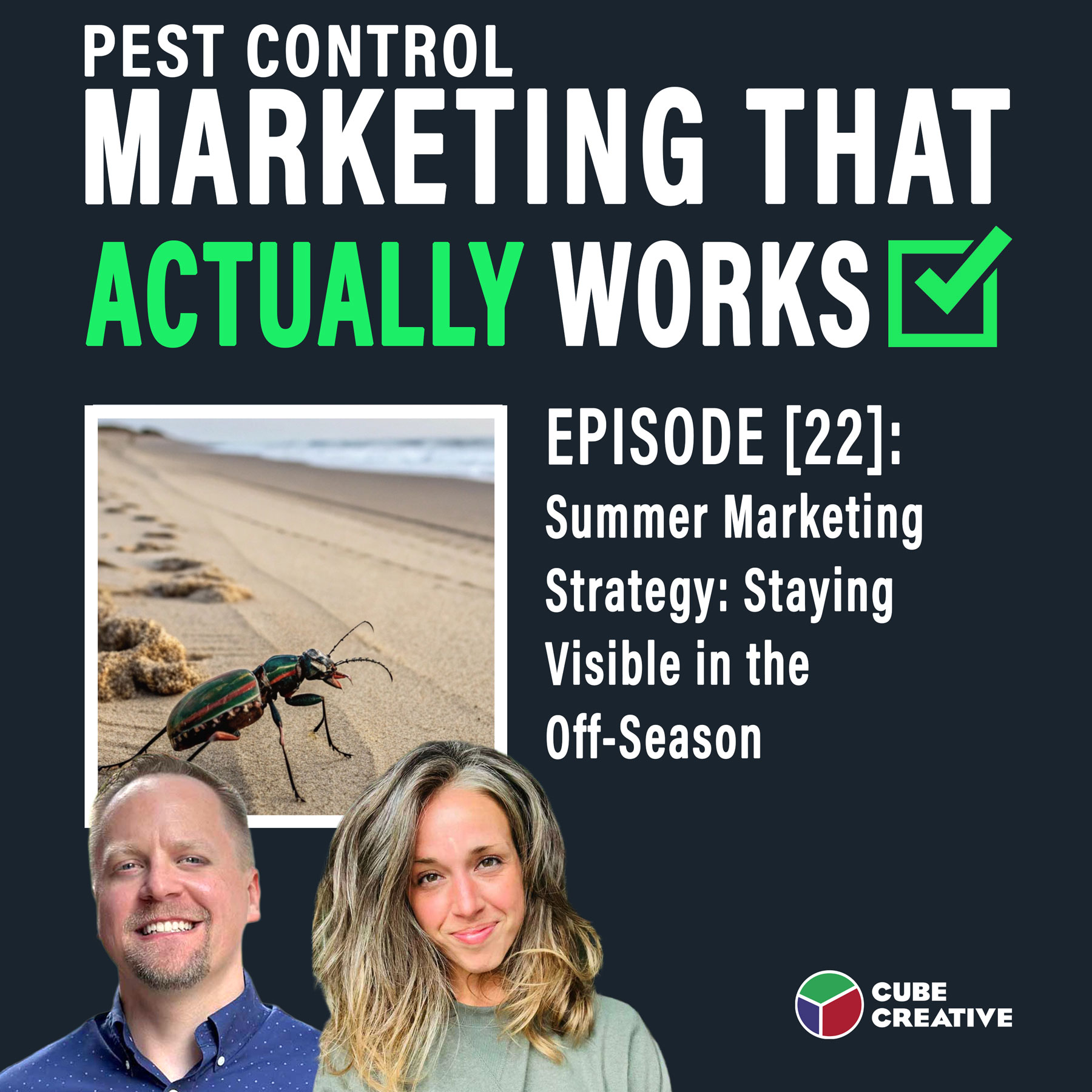
Most pest control operators pause their marketing when business picks up in the summer. That pause builds a revenue cliff they hit every fall. In this episode, Adam and Elisabeth break down why stopping and restarting costs more than maintaining momentum, and lay out three low-effort strategies to keep your pipeline full during busy season.
They cover a seasonal content plan that practically writes itself, a fall pre-sell email strategy that booked one client 40 jobs in three weeks, and three automated systems that run in the background while your trucks are on the road. If your marketing goes quiet every June, this episode explains what it's costing you and how to fix it.
In This Episode, You'll Learn
- Why the start/stop marketing cycle is the most expensive pattern in pest control
- How pausing Google Ads for three months can increase your cost per lead by 30 to 50 percent when you restart
- Why your competitors going quiet in summer is an advantage for companies that stay visible
- How Google and AI reward consistent content publishing and penalize long gaps
- Why a homeowner who loved your service in April won't refer you in August if they haven't heard from you
- How to build a summer content plan around the pests that are active in your market right now
- Why a single blog post about seasonal pests can drive traffic for years, not just the month you publish it
- How to turn one blog post into a full week of social media content
- Why educational content about quarterly treatment plans converts better in summer than any other time of year
- How to pre-sell fall and winter services like rodent exclusion and wildlife prevention while customers are still engaged
- The early booking email strategy that booked one client 40 rodent exclusion jobs in three weeks
- When to send renewal campaign reminders (60, 30, and 14 days before expiration)
- How to keep your Google Business Profile active in five minutes per week
- Why automated review requests keep building your local search ranking all summer without manual effort
- How a five-email drip sequence recovers 10 to 15 percent of leads who don't book on first contact
- The three automated systems that let you market effectively while your trucks are on the road
Resources Mentioned
New episodes drop every Tuesday. Subscribe on Apple Podcasts or Spotify so you don't miss an episode.
Frequently Asked Questions
Should pest control companies market in the summer?
Yes. Summer is peak service season, but it's not the time to stop marketing. Companies that market year-round spend less per lead than the ones that stop and restart.
What happens if I pause Google Ads for the summer?
It costs you. Pausing for three months can raise your cost per lead by 30% to 50% when you restart, because your quality score has to rebuild. The start-stop cycle is the most expensive pattern in pest control.
How do I market in summer without eating into field time?
Three low-effort moves: publish seasonal pest content, pre-sell fall and winter services to current customers, and keep posting on your Google Business Profile. None of them require much time.
Does pre-selling fall services actually work?
It does. One company's early-booking email booked 40 rodent exclusion jobs in three weeks. Your summer customers are the easiest people to book for fall, and it smooths out the slower months.
How do I keep leads warm during a busy summer?
Use an automated email drip. A simple sequence recovers 10% to 15% of leads who don't book on the first contact, without anyone on your team lifting a finger during the rush.
Why is consistent marketing cheaper than seasonal bursts?
Because stopping resets your momentum. Ad platforms rebuild your costs when you restart, and your search presence fades. Steady spending keeps your cost per lead low and your pipeline full.