The pest control industry rakes in a whopping $26 billion every year, according to IBiSWorld. Interest in DIY pest control has surged as homeowners look for safe, budget-friendly options in their pantries. Google has seen a spike in keywords like "eco-friendly"," non-toxic", and "smart pest control.”
The aisles of commercially available products are a typical first line of defense against pests before calling an exterminator for help.
Store-bought products rely on the consumer to identify the pest and understand the instructions. Even if the consumer clears those hurdles, the products on the shelves are less effective than those used by the pros.
With so much room for error, we can identify opportunities to educate the target market and turn them into paying customers.
How DIY Pest Tips Can Drive More Paid Services
- Establish authority as a trusted source: Keyword-heavy blog posts, expert quotes, and reviews from satisfied customers build brand/domain authority. A sleek mobile-friendly website and quality backlinks let customers know your site is legit.
- Position your brand as an expert: Stick to what you know. If your brand is an environmentally friendly pest control company, target that market. Known for ways to deter rodents? Make your brand synonymous with your service through strategic content marketing.
- Provide valuable, free content to build credibility: By offering customers honest, high-quality content, you are more likely to have your information shared and circulated. All those extra eyes on your content boost your authority as an expert source.
Practical Strategies to Use DIY Tips as a Funnel to Paid Services
Now that you have the trust and interest of your market, it's time to funnel them into paying customers. By the time most homeowners notice a pest problem, an infestation has already happened, and infestations require professional intervention.
- Set Realistic Expectations: Since the goal of offering free pest tips is to be top of mind when DIY pest control fails, it's essential to inform customers of the limitations of DIY pest control.
- Clarify when professional intervention is necessary: Since we can't see into the target's home, it's safe to assume they need to hire pest control services. Complex pest problems, such as bed bugs and termites, will undoubtedly require professional treatment. However, rodent droppings and multiple pest sightings also warrant a thorough home inspection.
Use a uniform CTA, or call to action, persuading those on the fence to book a service is a way to coax straggling prospects into paying customers.
Here is a closer look at how to funnel free content into paid services:
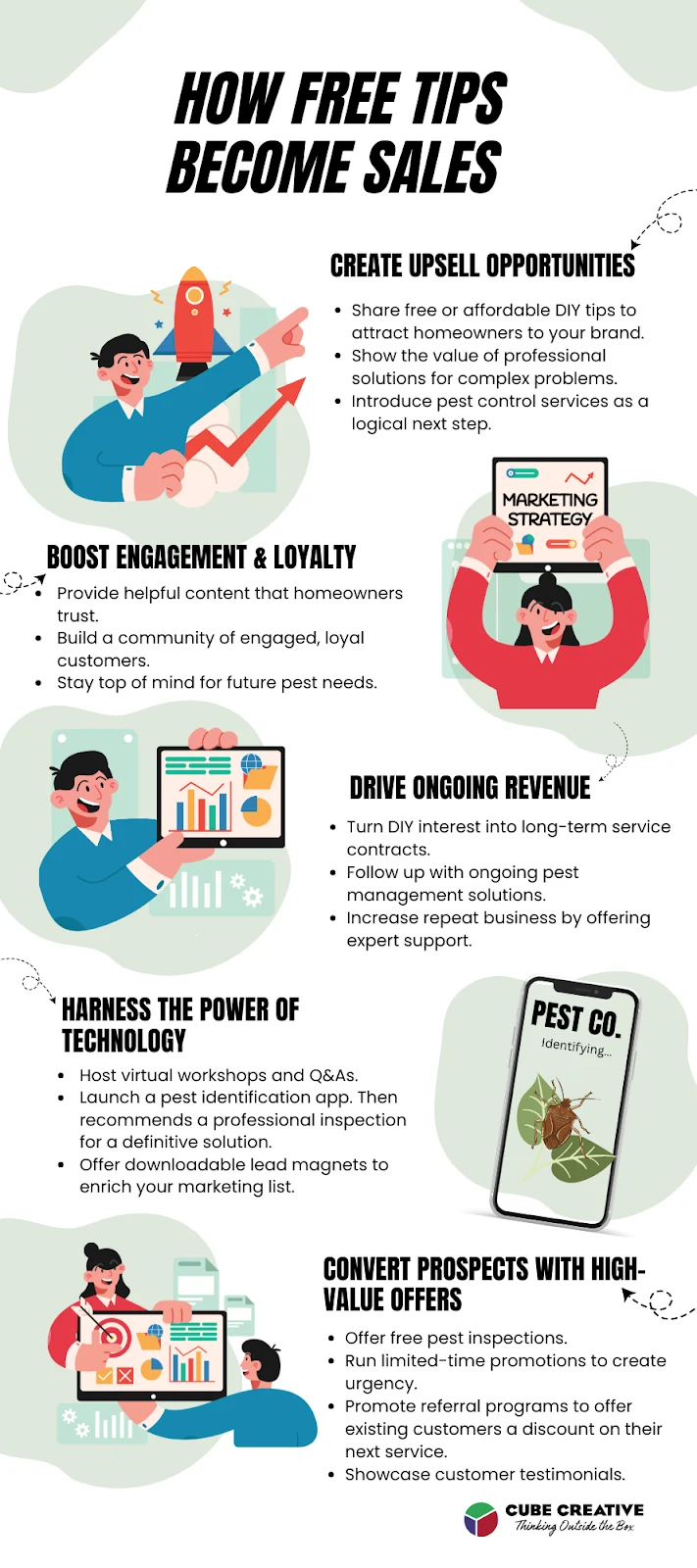
Infographic Created on Canva by Caleb Leonard
Common Mistakes to Avoid When Promoting DIY Pest Tips
Offering DIY tips is a shrewd strategy to transform your pest control sales, but avoid these common mistakes:
- Overpromising DIY results: Don't get so caught up in helping the customer that you lead them astray – remember to protect your brand's authority and keep the opportunity for sales alive.
- Not guiding customers toward booking a service: Your content should encourage prospective buyers to take action. Even free advice should be a friendly sales pitch. A compelling CTA should persuade the customer to pick up the phone. A site-wide CTA works for larger companies, but custom CTA's are a way small businesses can cut through the noise.
- Neglecting professional follow-up: As marketers, we tend to get ahead of the sales department, especially when trying new things.
Let's say you uploaded a how-to video to Instagram outlining how to bait and set mouse traps. Hoping to stand out from the competitors, the tech leading the tutorial is wearing a rat costume and intentionally snaps the trap on his oversized glove. The video ends with the tech telling interested customers to comment "pest" for a free consultation.
This locally targeted ad goes semi-viral, and now people hundreds of miles outside your service range are indicating their interest.
As your sales team sifts through the leads, the viable customers are seeking alternatives. Failure to follow up with prospective customers within a reasonable timeframe damages your reputation and brand authority.
If you've ever needed pest control, you understand the urgency with which customers are seeking professional intervention.
Frequently Asked Questions
Won’t Giving Away DIY Pest Tips Cost Me Sales?
Usually not. Most DIY attempts fall short, and the company that helped is the one homeowners call next.
Store-bought products depend on the homeowner identifying the pest and following the instructions, and they are less effective than professional products. By the time most homeowners notice a pest problem, an infestation has already started. Free tips keep your company top of mind for that moment.
When Should DIY Content Tell Readers to Call a Professional?
Say it plainly whenever the problem is beyond a quick fix.
Bed bugs and termites need professional treatment. Rodent droppings or several pest sightings also call for a full home inspection. Being honest about the limits of DIY protects your credibility and sets up the service call.
How Do I Turn DIY Readers Into Paying Customers?
Set realistic expectations, explain when a pro is needed and end every piece with a clear call to action.
A consistent call to action nudges readers who are on the fence to book a service. Larger companies can use one site-wide CTA. Smaller companies can stand out with CTAs written for each topic.
What Mistakes Should I Avoid With DIY Pest Content?
Overpromising results, forgetting to ask for the booking and following up too slowly.
Don’t suggest DIY will solve every problem, or you weaken your authority and lose the sale. Every piece should point readers toward booking. And when content brings in leads, answer them fast. People with pests want help now, and a slow reply sends them to a competitor.
What Kind of DIY Content Builds the Most Trust?
Honest, high-quality advice on the services you’re known for.
Stick to your specialty, such as eco-friendly treatment or rodent control, so your brand becomes linked with it. Content that is genuinely useful gets shared, and that reach builds your authority. Expert quotes, customer reviews, a fast mobile-friendly site and quality backlinks all add to that trust.
Cover Image by Alexa from Pixabay