You spent real money on your pest control website. The homepage looks sharp, your phone number sits in the header, and your services are listed in the menu. But the service pages themselves often do nothing. They don't bring in calls, they don't show up when someone searches "termite treatment near me," and they sit there like a service truck stuck in the shop with a busted alternator. After auditing 300 websites built for pest control companies in 2026, the same pattern keeps showing up: service pages that look fine to a visitor but read like wallpaper to Google.

Written By: Chad J. Treadway | June 29, 2026
Chad is a Partner and our Chief Smarketing Officer. He will help you survey your small business needs, educating you on your options before suggesting any solution. Chad is passionate about rural marketing in the United States and North Carolina. He also has several certifications through HubSpot to better assist you with your internet and inbound marketing.

Your admissions team is drowning in routine tasks. Inquiry responses, family record creation, status updates, and email sequences. They're all necessary, but they're eating the time your counselors should spend on actual conversations with families. And here's the tension: you know your school's greatest competitive advantage is the personal touch. So how do you modernize without becoming a robot?
The answer isn't choosing between automation and human connection. It's recognizing that private school admissions work best when systems and people play different roles. Automation handles what's predictable. People handle what's nuanced.
This post walks you through where to place automation in your admissions workflow and, more importantly, where to keep humans in charge. You'll see how the best-performing schools aren't the ones doing everything by hand or the ones that fire-and-forget emails to families. They're the ones that let technology free up human attention so meaningful conversations can actually happen.

Written By: Adam Bennett | June 29, 2026
Adam is the president and founder of Cube Creative Design and specializes in private school marketing. Since starting the business in 2005, he has created individual relationships with clients in Western North Carolina and across the United States. He places great value on the needs, expectations, and goals of the client.
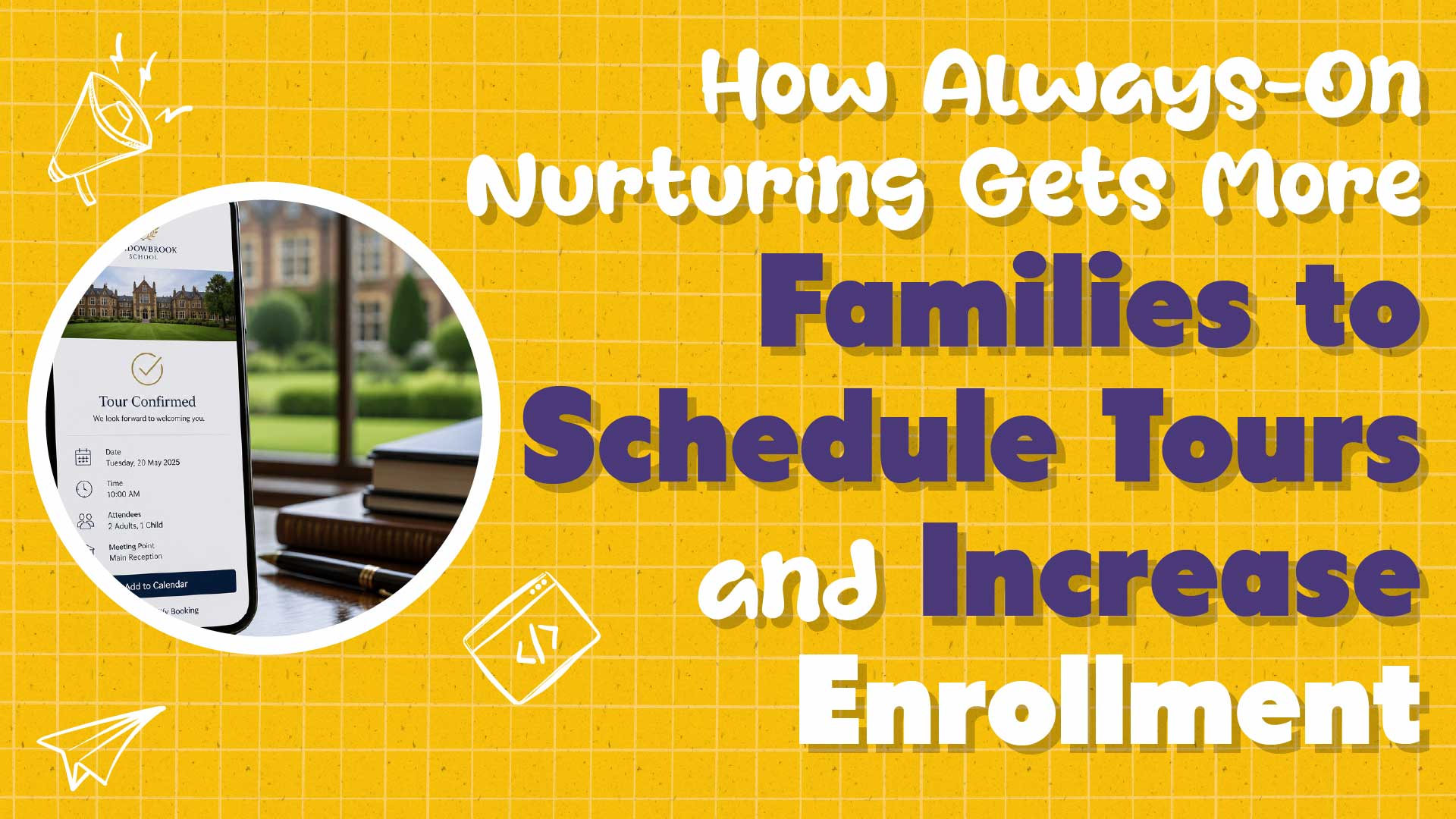
Timing is everything in admissions. Families research on their own schedule. late at night, on weekends, between meetings. They compare schools, download guides, and click through your email campaigns. But if your admissions team only follows up during business hours or when someone has bandwidth, you're watching enrollment opportunities slip away.
Here's the hard truth: if your school only responds to inquiries when someone notices them, you've already lost momentum. Private school marketing teams are stretched thin, especially during peak season. You're managing tour requests, student applications, financial aid questions, and parent calls. often with just one or two people. Something has to give, and usually it's the speed of first contact.
That's where automating the first response comes in. It's not about replacing your team. It's about ensuring that families hear from you immediately, consistently, and with relevance, regardless of when they reach out. No more families waiting days for a reply. No more inconsistent follow-ups. No more lost chances because your admissions director was in a meeting or out sick.
Let's walk through how always-on nurturing works and why it's the competitive edge your school needs.
Written By: Adam Bennett | June 26, 2026
Adam is the president and founder of Cube Creative Design and specializes in private school marketing. Since starting the business in 2005, he has created individual relationships with clients in Western North Carolina and across the United States. He places great value on the needs, expectations, and goals of the client.
If you have ever wondered why a competitor with a worse website outranks you in the map pack, the answer usually sits inside their Google Business Profile, not their website. We audited 300 pest control websites going into 2026 and pulled the GBP data alongside it. The patterns repeat from Charlotte to Cleveland: incomplete profiles, mis-pinned service areas, residential addresses, and review counts that have not moved since 2022. This is the GBP companion piece to our pest control geo-page guide, written specifically for pest control companies trying to figure out why their local visibility has stalled.
Written By: Chad J. Treadway | June 26, 2026
Chad is a Partner and our Chief Smarketing Officer. He will help you survey your small business needs, educating you on your options before suggesting any solution. Chad is passionate about rural marketing in the United States and North Carolina. He also has several certifications through HubSpot to better assist you with your internet and inbound marketing.