
Listen up, small school warriors. I see you over there, trying to make your limited marketing budget stretch in ways that seem impossible. You're wearing seventeen different hats, personally giving tours to prospective families at 7 AM, and still somehow expected to craft a marketing strategy that brings in enough students to keep the lights on.
But here's the thing – you can actually succeed with what you have.
Research shows that small private schools can achieve impressive marketing outcomes regardless of budget constraints. The key isn't throwing money at the problem; it's leveraging strategic, high-trust, precision-targeted approaches that play to your unique strengths as a smaller institution.
Let's cut through the noise and get right to the strategies that will help you maximize enrollment – regardless of your budget constraints.

Written By: Adam Bennett | September 24, 2025
Adam is the president and founder of Cube Creative Design and specializes in private school marketing. Since starting the business in 2005, he has created individual relationships with clients in Western North Carolina and across the United States. He places great value on the needs, expectations, and goals of the client.
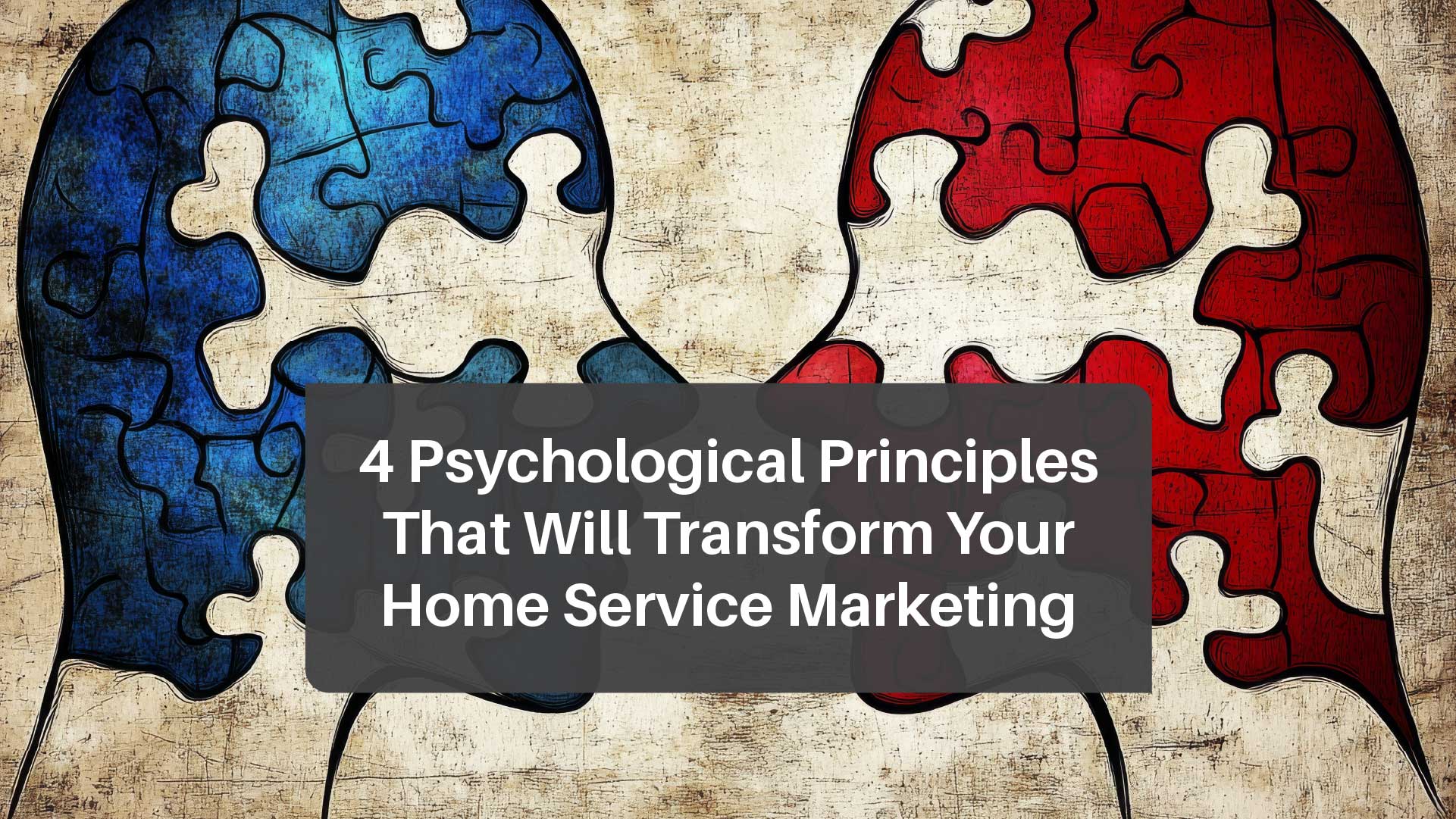
Let's be honest; most homeowners don't think about you until something breaks. Their basement is flooding at 2 AM, their AC dies during a heatwave, or that weird smell in the kitchen finally becomes unbearable. By then, they're frantically searching for anyone who can help them right now.
How do you make sure your home service business is the one they call first? The secret lies not in flashy ads or discount coupons, but in understanding what makes your customers tick.
The human mind is predictable in its unpredictability. While psychologists have spent decades mapping its quirks and tendencies, smart home service business owners can leverage these same insights to connect with customers before emergencies strike.
From plumbing to roofing, HVAC to general contracting, these four psychological principles will give you the edge your business needs in a crowded marketplace. No manipulative tactics or sleazy sales pitches required; just smart marketing that speaks directly to how homeowners actually make decisions.
Written By: Adam Bennett | September 23, 2025
Adam is the president and founder of Cube Creative Design and specializes in private school marketing. Since starting the business in 2005, he has created individual relationships with clients in Western North Carolina and across the United States. He places great value on the needs, expectations, and goals of the client.

Is your pest control website generating the leads you need, or is your conversion rate crawling along like a bed bug in broad daylight? If you're not seeing the traffic flow to service calls you expected, your homepage might be missing some crucial elements.
You've probably invested good money in getting your pest control website up and running. Maybe you've made it look professional, ensured it loads quickly, and even added some pictures of your team and service vehicles. That's a solid foundation—but in today's competitive pest management market, the bare minimum just won't cut it anymore. Stanford's Web Credibility Project found that 75% of users admit to making judgments about a company's credibility based on their website's design, and it takes just 50 milliseconds for visitors to form their first impression.
Research from Adobe shows that nearly 38% of people will stop engaging with a website if the content or layout is unattractive. (Source: HubSpot) Think of these elements as the essential tools in your pest management toolkit—without them, your online performance will never reach its full potential. Pages that take longer than three seconds to load experience a 53% abandonment rate on mobile devices, and each one-second delay in page response can result in a 7% reduction in conversions—devastating for a pest control business during peak season.

Written By: Chad J. Treadway | September 22, 2025
Chad is a Partner and our Chief Smarketing Officer. He will help you survey your small business needs, educating you on your options before suggesting any solution. Chad is passionate about rural marketing in the United States and North Carolina. He also has several certifications through HubSpot to better assist you with your internet and inbound marketing.

While your enrollment marketing campaigns spin beautiful narratives about student success and academic excellence, there's an unaddressed elephant standing awkwardly in the corner of your admissions office: What happens when things go spectacularly wrong?
Let's face reality. The National Center for Education Statistics reported, "Sixty-seven percent of schools reported having at least one violent incident" during a recent school year. Meanwhile, "10% of K–12 students will experience sexual misconduct by a school employee by the time they graduate from high school." (Source: U.S. Department of Justice)
These aren't pleasant statistics to consider over your morning coffee. But while most marketing firms are busy selling you strategies to increase applications by 15%, precisely zero of them are preparing you for the crisis that could undo years of reputation-building overnight.
Consider this your wake-up call. The communications playbook nobody talks about isn't just a nice-to-have — it's the insurance policy your school desperately needs but probably doesn't have.
Written By: Adam Bennett | September 22, 2025
Adam is the president and founder of Cube Creative Design and specializes in private school marketing. Since starting the business in 2005, he has created individual relationships with clients in Western North Carolina and across the United States. He places great value on the needs, expectations, and goals of the client.