
SE Ranking API is a top Ahrefs API alternative. The SE Ranking API offers a focused set of endpoints tailored to practical SEO applications. Instead of trying to cover every possible dataset, it prioritizes the data most teams actually use—such as rankings, keywords, and search visibility. This approach results in faster integration and more predictable usage.
The best Ahrefs API alternatives allow flexible, linear scaling. Start with a $40 production plan. Scale to 5 million requests when the application actually gains traction and requires it. Never pre-purchase massive capacity based on assumed growth. Because when you dump three million rows into a Postgres database without sanitizing the JSON-RPC response first, you end up with massive memory leaks anyway.
Choosing an Ahrefs API competitor depends entirely on the technical stack you already use. Looker Studio integrations require clean CSV formats or native connectors. RAG agents require MCP servers to function correctly. Define the absolute output requirement first. Then select the provider that matches that exact schema.
Your pest control company's logo is the visual anchor of your brand. It appears on truck doors, technician uniforms, service vehicles, Google Business Profiles, and business cards. Yet many pest control startup owners treat their logo like an afterthought; something to check off the branding checklist without real thought or investment.
That's a mistake. Your logo is often the first impression a homeowner gets of your company. If it looks unprofessional, cluttered, or generic, you're fighting uphill from that first glance. If it looks sharp and trustworthy, you've already won half the battle before the call even connects.
The challenge is that pest control companies face unique branding constraints. Your logo needs to work at tiny sizes on a pest control patch, bold and readable on a full truck wrap, and clean enough to scale down to a website favicon. Most generic logo design advice doesn't account for these service-business realities.
This guide walks you through the fundamentals of logo design for pest control, the current trends shaping brand identity in 2025-2026, practical cost considerations for startups, and the mistakes that eat budgets and tank your first impression.

Written By: Chad J. Treadway | April 29, 2026
Chad is a Partner and our Chief Smarketing Officer. He will help you survey your small business needs, educating you on your options before suggesting any solution. Chad is passionate about rural marketing in the United States and North Carolina. He also has several certifications through HubSpot to better assist you with your internet and inbound marketing.
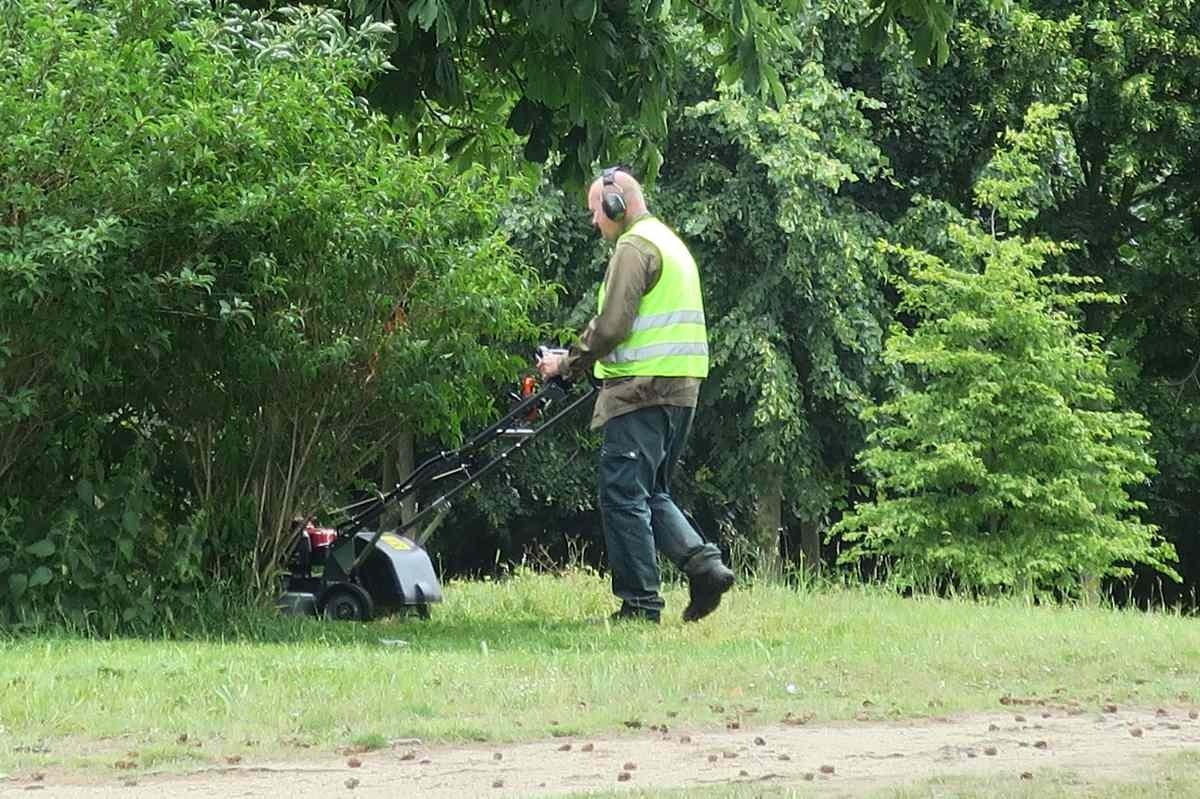
In an industry dominated by large, national lawn care companies, it’s easy to assume that smaller, independent businesses are at a disadvantage. Bigger companies have larger crews, bigger marketing budgets, and more widespread brand recognition.
But in reality, small lawn care businesses like my own have something far more powerful: the ability to deliver a level of care, consistency, and personal connection that national brands often struggle to match.
By focusing on quality work, building trust locally, and using simple but effective online strategies, small businesses can not only compete but stand out.
You're fighting for survival in a market where Terminix, Orkin, and Rentokil have marketing budgets that dwarf yours. They've got national name recognition, TV commercials, and resources you'll never match. So how does a regional pest control operator actually win?
The answer isn't outspending them. It's out-branding them.
Your brand is the reason a homeowner picks you instead of the name they recognize. It's why a business manager chooses your company for their restaurant. It's the difference between being the cheap option and being the trusted expert. And for pest control companies with 51-100 employees operating across multiple locations, strategic branding is the single biggest lever you have to compete effectively and command premium pricing.
This is a comprehensive guide to building pest control branding that actually stands out.
Written By: Chad J. Treadway | April 28, 2026
Chad is a Partner and our Chief Smarketing Officer. He will help you survey your small business needs, educating you on your options before suggesting any solution. Chad is passionate about rural marketing in the United States and North Carolina. He also has several certifications through HubSpot to better assist you with your internet and inbound marketing.