 use Joomla\CMS\Uri\Uri;
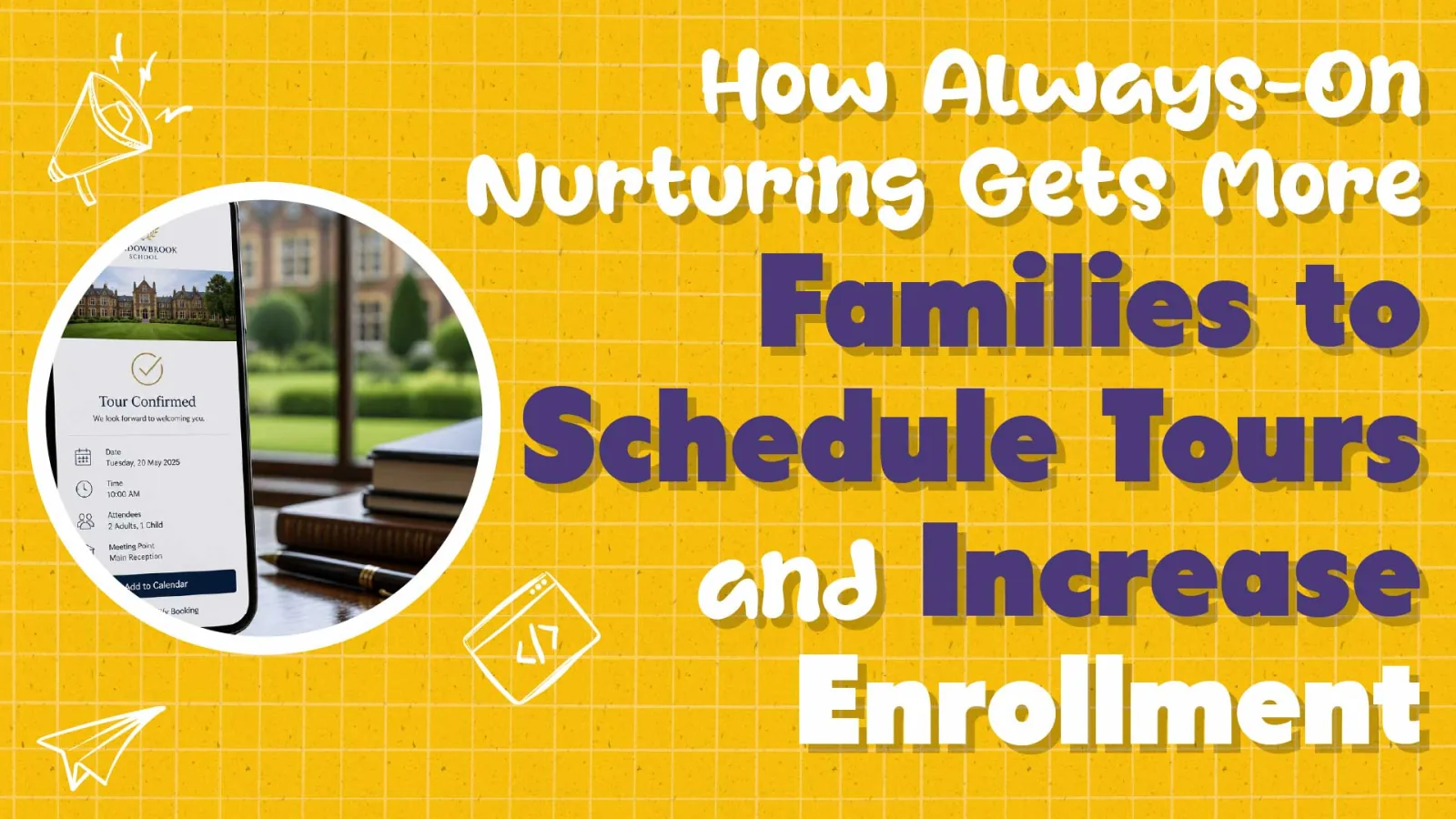
Timing is everything in admissions. Families research on their own schedule. late at night, on weekends, between meetings. They compare schools, download guides, and click through your email campaigns. But if your admissions team only follows up during business hours or when someone has bandwidth, you're watching enrollment opportunities slip away.
Here's the hard truth: if your school only responds to inquiries when someone notices them, you've already lost momentum. Private school marketing teams are stretched thin, especially during peak season. You're managing tour requests, student applications, financial aid questions, and parent calls. often with just one or two people. Something has to give, and usually it's the speed of first contact.
That's where automating the first response comes in. It's not about replacing your team. It's about ensuring that families hear from you immediately, consistently, and with relevance, regardless of when they reach out. No more families waiting days for a reply. No more inconsistent follow-ups. No more lost chances because your admissions director was in a meeting or out sick.
Let's walk through how always-on nurturing works and why it's the competitive edge your school needs.

Written By: Adam Bennett | June 26, 2026
Adam is the president and founder of Cube Creative Design and specializes in private school marketing. Since starting the business in 2005, he has created individual relationships with clients in Western North Carolina and across the United States. He places great value on the needs, expectations, and goals of the client.
If you have ever wondered why a competitor with a worse website outranks you in the map pack, the answer usually sits inside their Google Business Profile, not their website. We audited 300 pest control websites going into 2026 and pulled the GBP data alongside it. The patterns repeat from Charlotte to Cleveland: incomplete profiles, mis-pinned service areas, residential addresses, and review counts that have not moved since 2022. This is the GBP companion piece to our pest control geo-page guide, written specifically for pest control companies trying to figure out why their local visibility has stalled.

Written By: Chad J. Treadway | June 26, 2026
Chad is our Chief Smarketing Officer. He will help you survey your small business needs, educating you on your options before suggesting any solution. Chad is passionate about rural marketing in the United States and North Carolina. He also has several certifications through HubSpot to better assist you with your internet and inbound marketing.

Here's what keeps most admissions directors awake at night: your school isn't struggling to get inquiries. You've got plenty of those. What you're struggling with is having enough time to work on the ones that matter.
Your team is buried. Writing one-off follow-ups after initial conversations. Sending generic check-ins to families who visited your website once six months ago. Manually tracking who engaged with what. Spending hours educating families who won't decide for another year. Meanwhile, the family who's actually ready to schedule a tour and move forward sits in your inbox because you haven't had time to circle back yet.
This is the hidden cost of manual nurturing. It steals your team's attention from the high-value conversations that close enrollments.
This is where private school marketing changes. Automated nurturing doesn't replace your team; it amplifies them. It handles the repetitive, timing-sensitive work of early-stage follow-up and education so your admissions director can do what only humans can do: build trust, answer nuanced questions, and guide families through enrollment decisions.
When paired with intelligent engagement tracking, automation becomes even more powerful. Instead of generic "check in" emails, you're delivering targeted messages based on what families actually do on your site. Instead of chasing cold leads, you're activating families who show real interest. Instead of spending 40 hours a week on administrative work, your team spends that time closing enrollments.
Written By: Adam Bennett | June 26, 2026
Adam is the president and founder of Cube Creative Design and specializes in private school marketing. Since starting the business in 2005, he has created individual relationships with clients in Western North Carolina and across the United States. He places great value on the needs, expectations, and goals of the client.
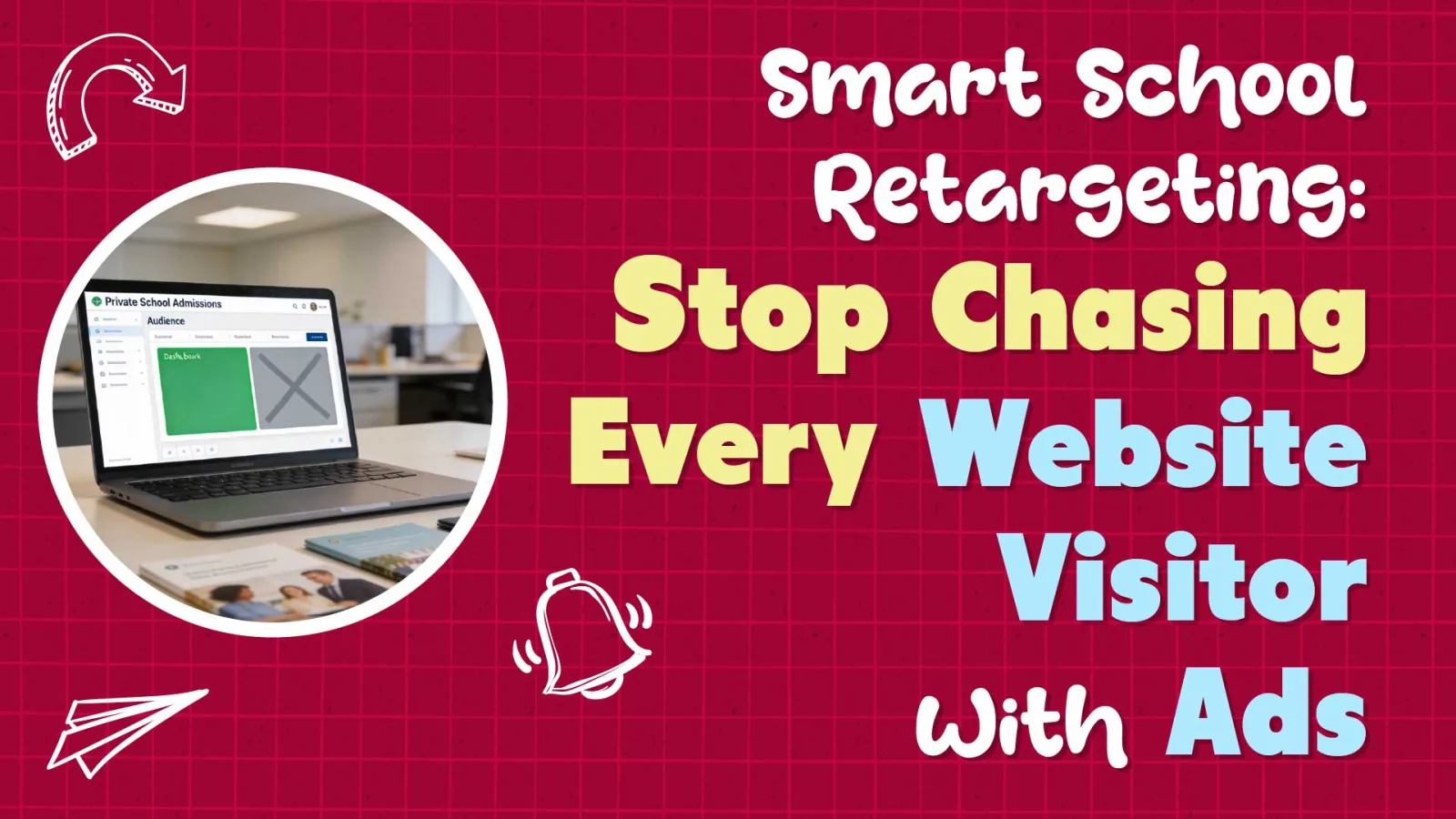
Your school's marketing director has probably heard the pitch: "Retarget everyone who visited your site, and watch the conversions roll in."
Here's the problem. Everyone includes the parent who accidentally clicked a Google Ad, spent three seconds on your admissions page, and never came back. It includes the curious high schooler shopping around for their younger sibling. It includes the tire-kicker who bookmarks every school within 50 miles and never intends to apply.
Pixel-only retargeting shows ads to all of them equally. And that costs money you don't have.
Retargeting itself is smart. But the traditional approach (dropping a cookie on anyone who lands on your site, then chasing them across the internet with the same message) is inefficient for private schools running lean marketing budgets. Research shows that retargeting typically wastes 20 to 30% of the budget on recent website visitors who will never convert, while another large chunk lands on the wrong message at the wrong time.
The fix isn't to stop retargeting. It's to retarget smarter by layering in identity and behavior. When you know who's actually visiting your site and what they're doing there, you build smaller, sharper audiences of families worth targeting. You stop chasing everyone and start investing in the people who matter.
Written By: Adam Bennett | June 25, 2026
Adam is the president and founder of Cube Creative Design and specializes in private school marketing. Since starting the business in 2005, he has created individual relationships with clients in Western North Carolina and across the United States. He places great value on the needs, expectations, and goals of the client.
Geo-pages are not optional anymore for any pest control company trying to compete past its own ZIP code. But here is the part nobody tells you up front: building them wrong is worse than not building them at all. Think of it like termite bait stations. Putting a hundred of them in the ground does nothing if none are placed where the termites actually feed. The data backs that up, and the rest of this post shows you exactly where the bait should go.
Written By: Chad J. Treadway | June 25, 2026
Chad is our Chief Smarketing Officer. He will help you survey your small business needs, educating you on your options before suggesting any solution. Chad is passionate about rural marketing in the United States and North Carolina. He also has several certifications through HubSpot to better assist you with your internet and inbound marketing.
It is May. The phones are ringing, the trucks are out, and your Google Ads dashboard shows a cost-per-click that would have given you a panic attack three years ago. You are paying it anyway, because the calls are converting. This is the same play you ran last June, the same play you have queued up for next June, and somewhere in the back of your head, you have probably wondered whether running it during the most expensive month of the year is the smartest move on the board.
It is not. Independent pest control operators with 5 to 25 trucks have spent decades concentrating their marketing budget in May through August because that is when the demand is loudest. The intuition is fine. The economics are not. The operators who quietly outperform their markets have learned to push spend earlier in the calendar, hold it through the shoulder months, and treat peak season as a discipline problem rather than a budget problem.
We work with pest control companies of every size on this exact question, and the pattern is consistent enough that it has stopped feeling like a coincidence. The companies with the cleanest financials already pulled this lever. The ones still front-loading are usually one bad summer away from realizing they had to.
Written By: Adam Bennett | June 24, 2026
Adam is the president and founder of Cube Creative Design and specializes in private school marketing. Since starting the business in 2005, he has created individual relationships with clients in Western North Carolina and across the United States. He places great value on the needs, expectations, and goals of the client.
"Known families" are the website visitors your analytics can recognize and tie to real households. Your school's site gets hundreds of visits every month. But most of them are ghosts. Someone spends 20 minutes reading your tuition page, checks out your middle school program details, reviews your admissions timeline, and then vanishes. Your analytics shows the page views. You have no idea who was looking.
This is the missing link between "lots of traffic" and "predictable enrollment."
Most private school marketing programs follow a predictable pattern: drive demand with ads and content, capture interest with forms, nurture leads with email. But there's a massive blind spot in the middle. Dozens of families are actively researching your school right now. reading reviews, checking programs, and evaluating whether they can afford you. Most never fill out a form. So admissions never hears about them. Competing schools might not know they exist either. But you've invested in getting them there.
The question isn't whether families are visiting your site. They are. The real question is whether you're satisfied watching them in a Google Analytics dashboard, or whether you're ready to actually know who they are, what they care about, and when they're ready to talk.
Written By: Adam Bennett | June 24, 2026
Adam is the president and founder of Cube Creative Design and specializes in private school marketing. Since starting the business in 2005, he has created individual relationships with clients in Western North Carolina and across the United States. He places great value on the needs, expectations, and goals of the client.
If you run a pest control company and your website traffic dropped sometime in 2024, you are not imagining it. You are not behind on something everyone else figured out. And no, your old web guy did not break something on the way out. Three separate Google changes landed inside a nine-month window, and pest control sites took the brunt of all three because of how the industry built its websites between 2015 and 2023. The companies that held up did three specific things differently. The companies that did not are the 90%.
This post is the longer mechanical explainer behind what we have been calling the Triple Convergence. We work with pest control marketing clients across the country, and the same three patterns show up everywhere. If you want the audit summary and the diagnostic, the companion field report covers that. This post is for the owner who wants to understand why the rules changed and what an industry-wide algorithm shift actually looks like at the page level.
Written By: Chad J. Treadway | June 24, 2026
Chad is our Chief Smarketing Officer. He will help you survey your small business needs, educating you on your options before suggesting any solution. Chad is passionate about rural marketing in the United States and North Carolina. He also has several certifications through HubSpot to better assist you with your internet and inbound marketing.
There is a specific moment every growing home service business owner hits. You are sitting across from a potential commercial client, and you slide your business card across the table. The logo looks like it was designed in Microsoft Paint. The tagline references a service you stopped offering three years ago. And you realize that the brand representing your $800,000 company looks like it belongs to a one-man operation running jobs out of a pickup truck.
That moment is uncomfortable. It should be. Because your brand is the first thing people judge, and if it does not match the quality of your work, you are losing customers before you even get a chance to talk to them.
Rebranding is not vanity. For home service companies that have outgrown their original identity, it is a business decision with measurable impact. Research by Marq (formerly Lucidpress) found that consistent brand presentation across all channels increases revenue by up to 20% (1 in 5 dollars). The question is not whether your brand matters. It is whether your current brand is helping or hurting you.
Written By: Adam Bennett | June 23, 2026
Adam is the president and founder of Cube Creative Design and specializes in private school marketing. Since starting the business in 2005, he has created individual relationships with clients in Western North Carolina and across the United States. He places great value on the needs, expectations, and goals of the client.
If your pest control website's traffic is down, you are not imagining it. You are not behind on something everyone else figured out. You are sitting inside an industry-wide decline that started in 2024, and most of the field is still in denial about it. Our 2026 audit looked at 300 pest control companies across the country, and the pattern is the same almost everywhere: organic traffic is down, map pack visibility is shaky, and most of the marketing playbook that worked between 2018 and 2023 stopped working at roughly the same moment.
This post walks through what changed, what the audit found, and how to figure out which of the four most common problems is hitting your site right now. If you run a 6 to 20-technician shop and you have been wondering why the phone is quieter even though your service quality is the same, this is for you. We work with pest control business owners every day who are seeing the exact same numbers, and the diagnosis is almost never what owners think it is.
Written By: Chad J. Treadway | June 23, 2026
Chad is our Chief Smarketing Officer. He will help you survey your small business needs, educating you on your options before suggesting any solution. Chad is passionate about rural marketing in the United States and North Carolina. He also has several certifications through HubSpot to better assist you with your internet and inbound marketing.
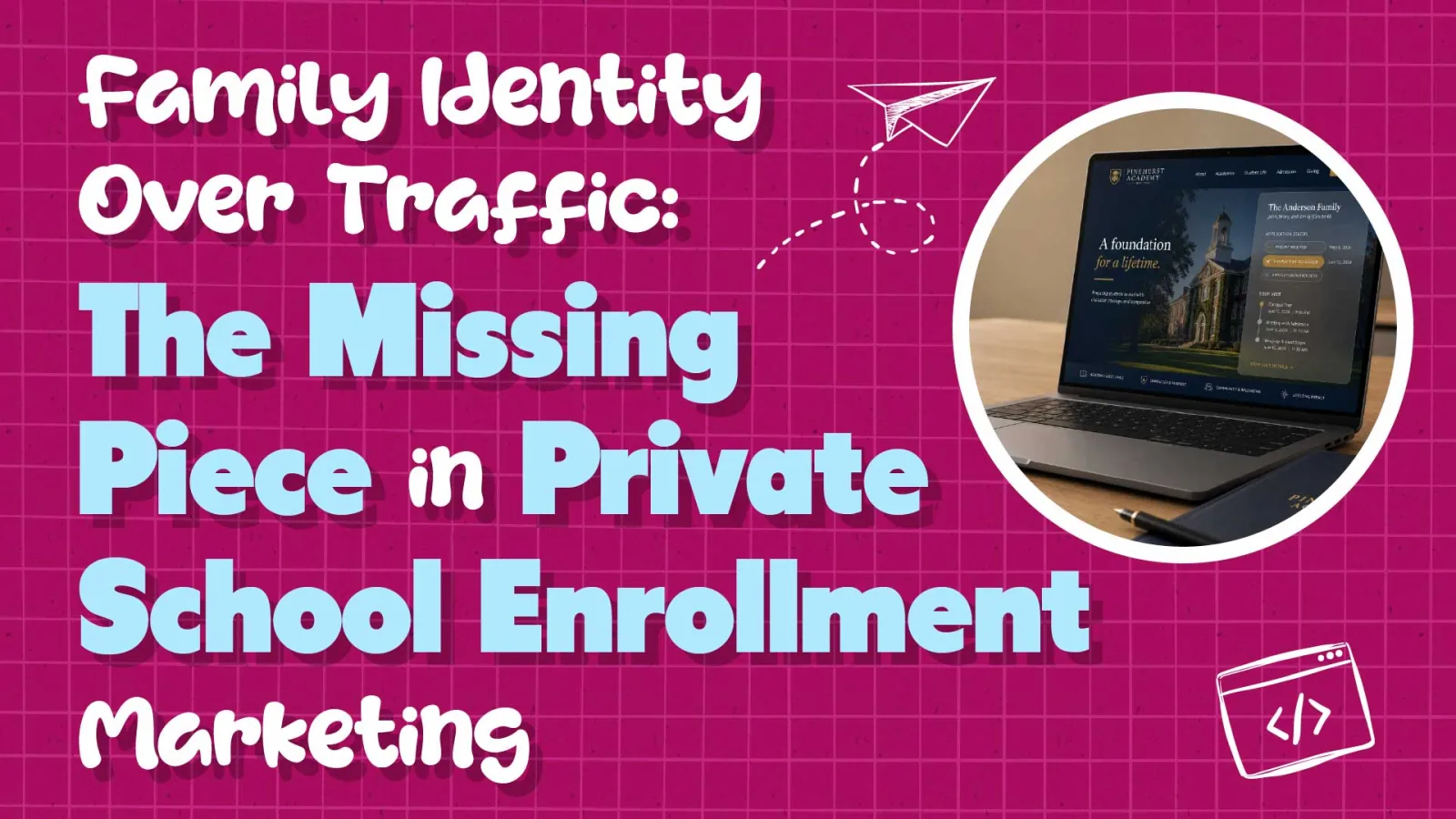
Most school marketing spends money to drive more traffic. More clicks, more visitors, more impressions. But here's the uncomfortable truth: traffic alone doesn't fill seats. If you can't see who is behind those visits or what they're actually researching on your site, you're leaving enrollment on the table.
An identity-first approach changes that equation. Instead of counting anonymous visitors, you identify families at the household level, enrich that data with demographic context, and track what they're actually researching across multiple visits. That's when your website stops being a traffic report and becomes an enrollment intelligence tool. We help private schools implement this exact system to turn traffic into qualified families ready to apply.
This isn't a replacement for your existing admissions system. It's a smarter way to power it. And it works because every meaningful interaction (pricing page, program details, financial aid information) becomes a signal you can act on immediately.
Written By: Adam Bennett | June 23, 2026
Adam is the president and founder of Cube Creative Design and specializes in private school marketing. Since starting the business in 2005, he has created individual relationships with clients in Western North Carolina and across the United States. He places great value on the needs, expectations, and goals of the client.
July 1 is halftime. The phones have been ringing since the first termite swarm in April, mosquito season is at its peak, and your route board is full enough that it feels like you can finally exhale. Don't. The operators who own the fall didn't start prepping in October. They started building their rodent pipeline in August, and by the time the first homeowner Googled "what's scratching in my walls," their page was already indexed, their reviews were already stacked, and their commercial accounts were already booked through January.
This guide is for independent pest control companies running 5 to 25 technicians who are sitting down for a quarterly review and asking the right question: what do we do for the next 90 days? It's a Q3 planning playbook with budget pacing, regional pest priorities, content timing, review acquisition, commercial moves, and the operational shifts that turn summer momentum into year-round revenue. The independent operator who treats July 1 like halftime, not the fourth quarter, walks into October with a plan instead of panic.
Written By: Chad J. Treadway | June 22, 2026
Chad is our Chief Smarketing Officer. He will help you survey your small business needs, educating you on your options before suggesting any solution. Chad is passionate about rural marketing in the United States and North Carolina. He also has several certifications through HubSpot to better assist you with your internet and inbound marketing.